What would William Shakespeare make of a robot dancing in Trafalgar Square? Would Florence Nightingale recognise the air she breathed? If a cohort of history’s most famous names were suddenly deposited in the heart of modern London, their astonishment might stem less from the futuristic skyline and more from the peculiar echoes of their own time.
This fanciful scenario, pondered by readers of a national newspaper, opens a window not just on our world, but on the tangible fabric of theirs. The very ground they would stand on, Trafalgar Square, is itself a piece of relatively modern history. Constructed between the 1820s and 1840s on the site of the former King’s Mews royal stables, it was named to commemorate the 1805 Battle of Trafalgar. The National Gallery facing it opened in 1824. As one reader astutely noted, this means Nightingale, who died in 1910, would likely find this central London vista familiar.
The weight of the air and the state of the river
Yet the sensory experience would be profoundly different. A common assumption might be that a figure from the past would choke on today’s polluted air. Historical research, however, suggests the opposite shock is just as likely. By the 1800s, industrialisation and the widespread burning of “sea coal” had shrouded London in thick, yellow fogs known as “pea-soupers”—pollution so severe it was estimated to be 100 times greater than in major US cities today and had earned London the nickname “the Big Smoke” centuries earlier.
The greater assault might be the absence of a far more potent stench. For most of London’s history, the River Thames served as an open sewer. The crisis culminated in the “Great Stink of 1858,” when summer heat made the smell of untreated human waste unbearable, finally prompting the construction of Joseph Bazalgette’s revolutionary sewerage system, completed in 1875. As one contributor put it, “The overwhelming smell in summer months was untreated sewage.” To a visiting Julius Caesar or Pocahontas, the relative cleanliness of the Thames today might be as startling as any skyscraper.
From horse power to headphone conversations
Transport would present another layer of disorientation. Before the motor car, London’s streets were a congested symphony of horse-drawn traffic. By the 1890s, the city relied on over 2,000 horse buses and an estimated 25,000 horses, with trams running on rails from the 1870s. Shakespeare’s cry for a horse in *Richard III* would have been a practical request in his day. Now, he might mistake pedestrians chatting on hands-free phones for people soliloquising to themselves, a confusion one reader noted experiencing as recently as the 1990s.
He might, however, find comforting continuity in the pub signs bearing his name, or in the fact that he, Nightingale, and Jane Austen have all been featured on Bank of England notes. Although, as another reader wryly observed, the combined value of those notes—£40—would scarcely cover a coffee and pastry in a nearby café today, a stark lesson in centuries of inflation.
A playwright’s enduring, remixed legacy
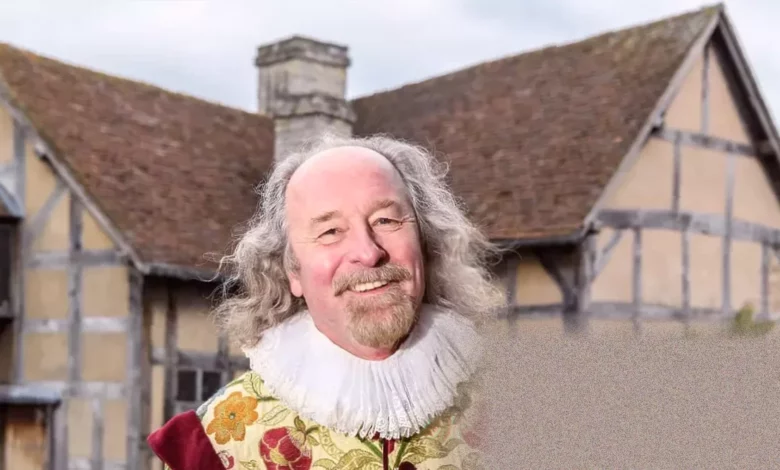
Shakespeare’s potential reaction to his own legacy is a rich vein of speculation. He might be “puzzled by the constant recycling/reimagining of his plays,” as one email correspondent suggested, or “appalled” by the tourist-focused Shakespeare industry in his hometown of Stratford-upon-Avon, where his birthplace is now a museum visited by luminaries from Charles Dickens to Thomas Hardy.
Yet that very recycling is testament to his enduring relevance. Research highlights how his work constantly fuels modern culture: *West Side Story* adapts *Romeo and Juliet*; *The Lion King* draws from *Hamlet*; *10 Things I Hate About You* reworks *The Taming of the Shrew*. From the Pulitzer-winning *Fat Ham* to the pop musical *& Juliet*, his narratives remain a living language. He might not recognise the plots, but the core human passions—ambition, love, betrayal—would be intimately familiar. As one reader mused, he would see that “politicians still betray each other” and find fresh material everywhere.
Ultimately, this exercise in historical time-travel, reminiscent of the 1989 film *Bill & Ted’s Excellent Adventure*, reveals a two-way mirror. We see our world through their imagined eyes, noting our noise, our pace, our strange coffee. But we also glimpse theirs: a world of woodsmoke and horse manure, of tangible coinage and new-found fame, where the foundations of Nelson’s Column were yet to be laid. The true revelation is not how far we have come, but how the human experience—in its humour, its curiosity, and its complaints—remains stubbornly, fascinatingly, the same.