A Tudor manor has remained in the same family for 500 years – and the secret to that survival, against all odds, was a quiet but unwavering Catholic faith that the Petre family refused to abandon, despite centuries when being a Catholic in England was not just illegal but often treasonous.
A Family’s Faith Against the Tide
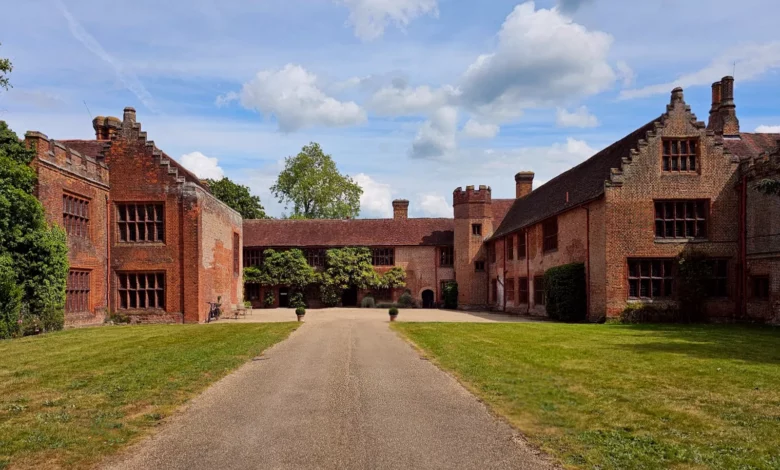
The story begins with Sir William Petre, a lawyer who served as Secretary of State to four Tudor monarchs: Henry VIII, Edward VI, Mary I and Elizabeth I. Soon after the Dissolution of the Monasteries, Petre was auditing land owned by Barking Abbey when he decided it was rather nice. He persuaded Henry VIII to sell it to him for approximately £850. Between 1539 and 1556 he built Ingatestone Hall, a Grade I listed red-brick manor in Essex, and the family have lived there ever since. His son was made the first Baron Petre.
To be a Catholic through the Reformation and its aftermath was perilous. The Petres managed it, retaining not just their heads but their manor. Their devotion is inscribed on the gatehouse clock tower with the family motto: Sans Dieu Rien – Without God, nothing. The house contains two priest holes, used to hide Catholic regalia and clergy from Protestant raids. One was lost for over a century until it was accidentally rediscovered; a modern viewing space now allows visitors to see inside. The second priest hole was found with chicken bones, suggesting it was used for storing food as well as hiding priests.
The Hall provided sanctuary to several Catholic figures. St John Payne, executed in 1582 for his faith, was arrested at Ingatestone in 1577 and may have used those priest holes upon his return. The composer William Byrd, himself a Catholic, spent Christmas at the Hall in 1589–90, assisting with secret Catholic worship and writing music for the family’s private chapels – some of his works were first heard there. Despite the dangers, the Petres also arranged marriages to illegitimate royal offspring, a strategic move that probably offered some protection from Protestant persecution and helped top up the cashflow with inheritances.
Queen Elizabeth I herself stayed at Ingatestone Hall for several nights in June 1561, holding court there; the Petres spared no expense in procuring lavish food and drink. The late Queen Mother visited in 1961 to commemorate the 400th anniversary. Another royal connection: Lady Katherine Grey, sister of Lady Jane Grey, was transferred to Sir William Petre’s charge in November 1564 and lived at Ingatestone for two years. Remarkably, Pope Paul IV later exonerated Petre from any charges relating to his acquisition of church property during the Dissolution.
The House and Its Secrets
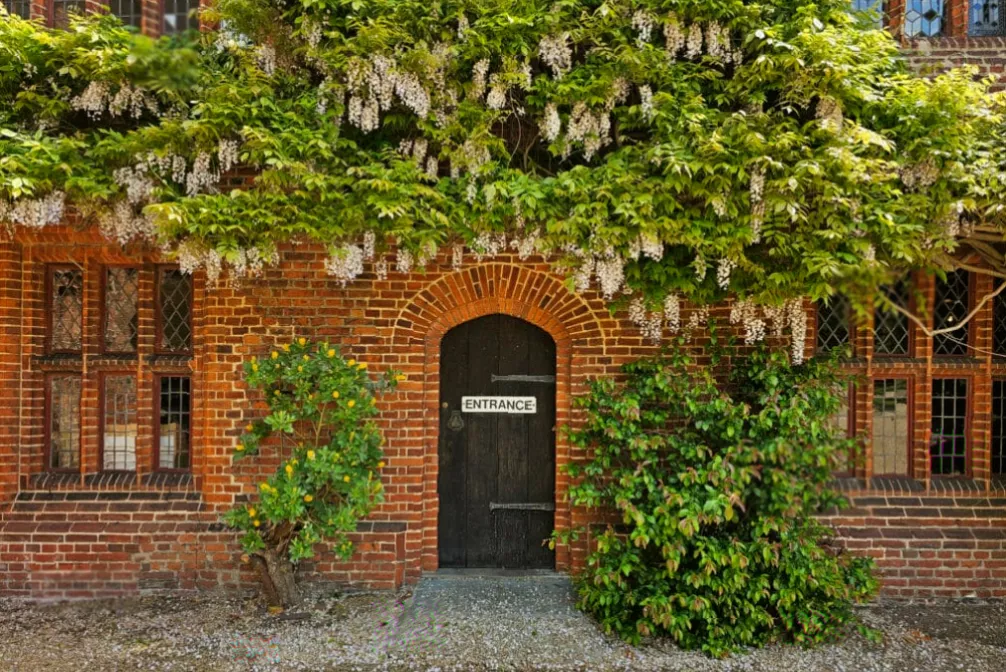
Despite centuries of alteration, Ingatestone Hall remains undeniably Tudor in appearance, thanks in part to an early 20th-century restoration. After the 16th Baron Petre died, his widow Lady Rasch undertook a major project to return the house to its original appearance. Architect W.T. Wood oversaw the replacement of later alterations with reproductions of Tudor features, including reinstating mullioned windows on the west side; the work was largely completed by 1922.
The house is built in English bond brickwork with high chimneys, crow-step gables, and a prominent crenellated turret containing an octagonal staircase. The crenellations themselves required the King’s permission in Tudor times, as they could be seen as a sign of fortification. The original Great Hall in the west wing was demolished in the late 18th century when the family seat shifted to Thorndon Hall; its replacement, the Stone Hall with flagstone flooring, was recreated in the 20th century. The Long Gallery – a feature every good Tudor home had – runs almost 29 metres and is lined with 40 portraits of the Petre family. The tour takes in about half the ground floor and upper floors, plus a walk around the outside pointing out changes in brickwork and where the grand hall used to stand.
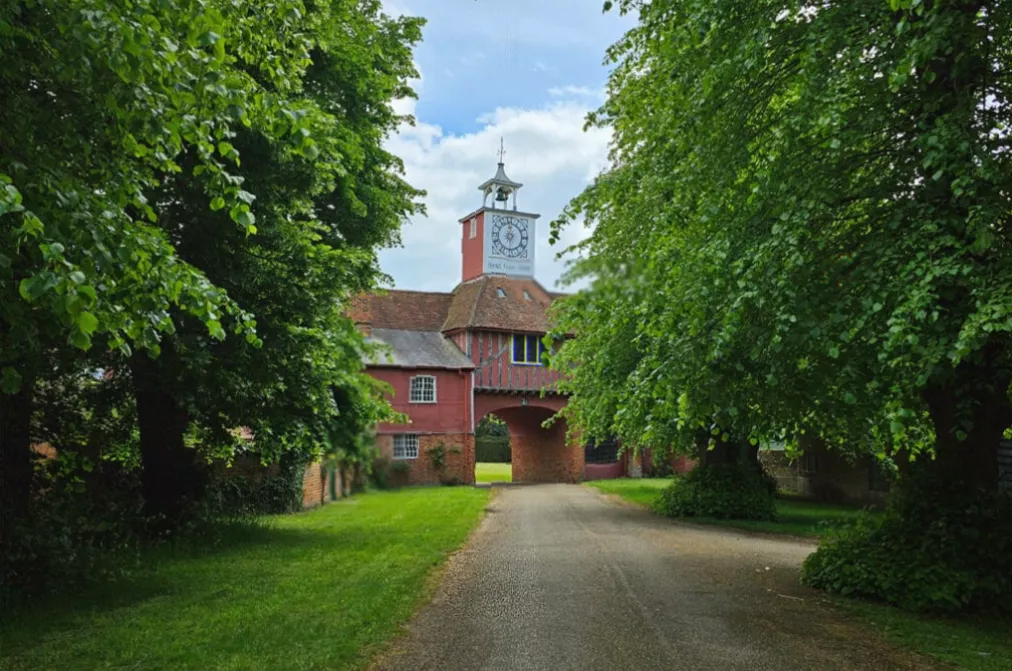
The house is still a lived-in family home. The current Lord Petre’s son and heir apparent occupies a private wing with his own family. This gives the rooms a set-piece feel – full of paintings, rare tapestries, old chests, silver, timber carving, and enough history to fill several books. Among the notable artworks are paintings by George Stubbs. Photography is not allowed inside, but the camera can come out for the gardens and grounds: ten acres of enclosed lawns, a walled garden, herbaceous borders, and a stew pond.
Ingatestone Hall’s authentic Tudor appearance has also made it a sought-after filming location. Productions shot here include Lovejoy, the BBC’s Bleak House, Horrible Histories, The Windsors, and The Crown.
Visiting Ingatestone Hall
Ingatestone Hall is open to the public from Easter to the end of September on Wednesdays, Sundays and bank holidays, from 12:00 noon to 5:00 pm (last entry 4:00 pm). Guided tours run roughly every half hour and last about an hour. You can pay on the day – no need to book – but it is advisable to check the website for any events that might change arrangements, such as the Essex County Craft Show on June 28, 2026. Group private guided tours can be arranged at other times, and special “Invitation to View” tours led by Lord Petre or his son Dominic include tea or coffee and cakes.
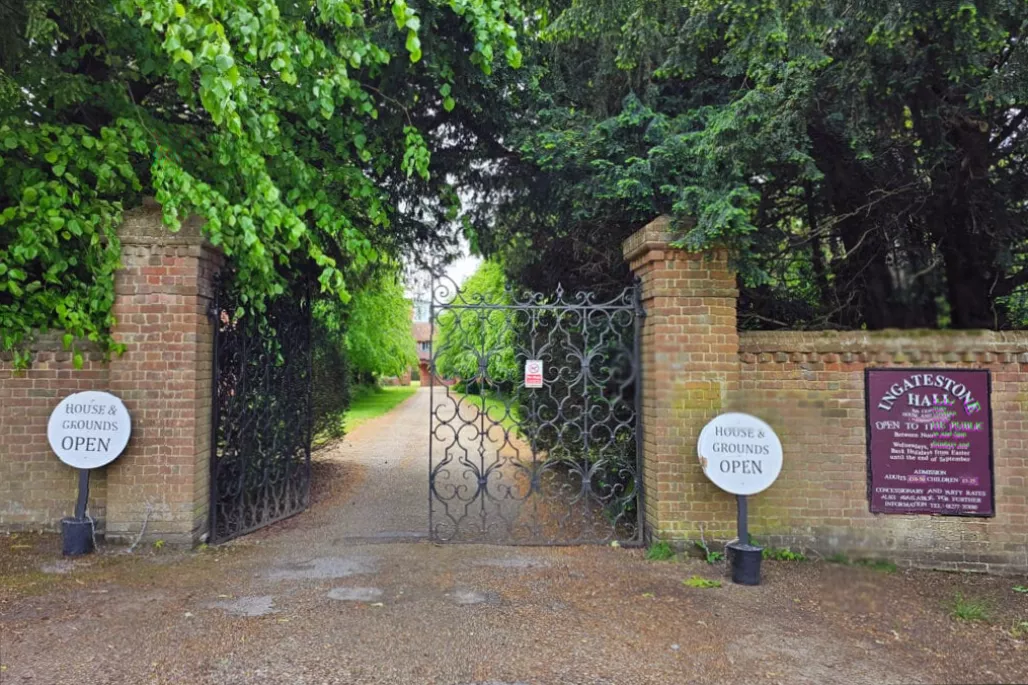
Admission prices for 2026 are: adults £10.50, pensioners £8.40, children aged 5–16 £5.25, under-fives free. Prices may vary for special events. The Summer Parlour serves teas and light lunches, and a gift shop is on site. Free parking is available in the Meadow Car Park, where picnicking is also permitted. Guide dogs are allowed, but other dogs are not permitted in the house or grounds. Unaccompanied children are not admitted. Accessibility is limited due to the 16th-century structure: there is no access to the upper floor, and some grounds have uneven surfaces and steep slopes. Accessible toilets are available.
Getting there is straightforward. Ingatestone Station is on the main line from London Liverpool Street – the journey takes about 35 minutes – and the hall is a 10-minute walk (0.75 miles) from the town centre. Trains run hourly, with more frequent services at peak times, but note that on Sundays they are only hourly, so check your return time. Bus service 351 runs from Brentwood and Chelmsford, stopping near Ingatestone High Street, hourly (every two hours on Sundays). By car, Ingatestone is off the A12 (exit 28 from the M25) between Brentwood and Chelmsford.
For those who fancy more of a day out, a 30-minute walk along Stock Lane from Ingatestone town centre leads to St Mary’s Church Buttsbury – a Grade II* listed parish church dating from the 14th century, believed to be the site where St Botolph preached in the 7th century. From there, a footpath through the fields brings you to the hall, an utterly lovely way to arrive.