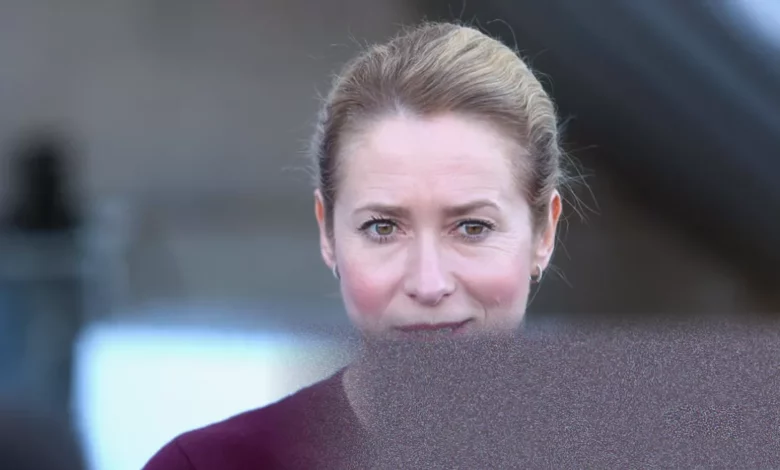
European Union foreign policy chief Kaja Kallas has accused Russia of setting a trap for the bloc by seeking to dictate who should lead potential peace negotiations over the war in Ukraine, as EU foreign ministers gathered in Cyprus for an informal meeting dominated by the question of how to approach any future talks with Moscow.
Speaking in Limassol ahead of the closed-door Gymnich session, Kallas warned that discussing individual candidates for a chief negotiator played directly into Russian hands. “It’s a trap that Russia wants us to walk into, that we discuss who talks to them, and they are already picking who is suitable, who is not. Let’s not walk into that trap,” she said. The former Estonian prime minister argued that negotiations were always a team effort, requiring a blend of roles and a clear strategy. “You have good cops, you have bad cops, you have a strategy [on] how you go to the table, so that is why the substance is much more important,” she added.
Kallas insisted that whatever the format, the EU would have to be represented in any future talks because the bloc holds key leverage over Russia. “If you think about what Russia is interested in, lifting the sanctions, for example, it’s a European decision,” she said, underscoring that collective European power cannot be circumvented.
The warning from the EU’s top diplomat comes after days of public discussion among European leaders about who could lead the continent’s side in peace negotiations. Several names have been floated, including Kallas herself and Finland’s President Alexander Stubb. The Finnish president has openly expressed his willingness to represent Europeans in potential talks, provided Russia agrees to a ceasefire. Other figures previously considered, according to EU sources, include former German chancellor Angela Merkel and former Italian prime minister Mario Draghi. EU foreign ministers are expected to discuss potential candidates during the two-day meeting in Cyprus, co-chaired by Kallas and Cypriot Foreign Minister Constantinos Kombos.
Kallas also strongly criticised Russia’s repeated warnings about possible further strikes on Kyiv, describing them as “terrorist attacks”. “This is what Russia does. Because it’s not really gaining ground on the battlefield, what they are doing now is really increasing the terrorist attacks, because you can’t really describe it in other ways, creating fear inside the society,” she said. “It hasn’t worked for four years, and I don’t think that it’s going to work now.” Her assessment reflects a broader picture of the war on the ground, where Russia’s strategy of attrition warfare has produced only slow, costly advances. Western estimates suggest nearly half a million Russian soldiers have been killed since the February 2022 invasion, with monthly casualties running at around 30,000 killed and wounded. Recent offensives, such as the push on Huliaipole between November 2025 and January 2026, saw Russian forces advance roughly 18.5 kilometres at an average of just 297 metres per day. Military analysts note that Russia is now “going backwards on the battlefield” for the first time since late 2022, with Ukraine considered to be in a stronger position than a few months ago, a view even US Secretary of State Marco Rubio has acknowledged.
Divisions among EU ministers over a single negotiator
Despite Kallas’s appeal to focus on substance, the question of whether to appoint a single EU negotiator for Russia has exposed clear divisions among member states. Austria’s Foreign Minister Beate Meinl-Reisinge argued strongly in favour of such a move, saying it would allow the EU to “position itself, to be able to negotiate beyond its own interests” and should press for the appointment of a chief negotiator.
Luxembourg’s Xavier Bettel took a more cautious line, suggesting that a single individual might not be the answer. “There are so many good people,” he said, adding that the negotiator should not be someone “who is a neighbour of Russia” but rather a figure more removed from the conflict. Bettel proposed a “triad of three people – head of states, minister of foreign affairs, former prime ministers?” and quipped that perhaps “ex-politicians are less scared about the results”. “We need to find someone who does not need a Nobel Peace Prize,” he joked, hinting at the difficulty of the task.
Ministers from the eastern flank, however, aligned firmly with Kallas. Lithuania’s Kestutis Budrys said: “This is not a time when we are discussing who is going to have the negotiations. We have to discuss what we are doing to put additional pressure on Russia.” Estonia’s Margus Tsahkna repeated Kallas’s language, calling the entire discussion a “trap” and adding: “Whoever would like to go right now – this guy is not going to have a Nobel Prize, because there won’t be any serious talks.”
The informal Gymnich format in Limassol, which also includes the participation of India’s External Affairs Minister Subrahmanyam Jaishankar and Saudi Arabia’s Foreign Minister Prince Faisal bin Farhan Al Saud, is expected to cover a broader European security strategy as well as ensuring supply chains amid the closure of the Strait of Hormuz. Ukrainian Foreign Minister Andrii Sybiha attended a welcome dinner on 27 May.
Hungary’s new prime minister in Brussels, Romania’s president follows
Separately, Hungary’s new prime minister, Péter Magyar, is in Brussels today for a two-day visit that is being closely watched as a test of the EU’s willingness to thaw relations after years of disputes under Viktor Orbán. Curiously, Magyar has begun his trip with bilateral talks with Belgium’s Prime Minister Bart de Wever and NATO Secretary General Mark Rutte, rather than the much-anticipated meeting to unlock the approximately €17 billion in EU funds frozen over rule-of-law concerns. That meeting with European Commission President Ursula von der Leyen is only scheduled for tomorrow afternoon, which could indicate that negotiations on how to resolve the lengthy problem of Orbán-era reforms are still ongoing.
Magyar’s government has signalled a commitment to reforms and strengthening the rule of law. Valdis Dombrovskis, the European Commission’s executive vice-president, has noted “good prospects” for the release of funds given the significant political shift represented by Magyar’s government, whose Tisza party belongs to the same European People’s Party family as von der Leyen. Hungary has already permanently lost approximately €2 billion due to missed deadlines in 2024 and 2025. A particularly urgent part of the frozen sum is €11 billion from the post-pandemic Recovery Fund, which must be accessed by 31 August 2026 to avoid being irrevocably lost.
Also in Brussels today is Romania’s president, Rumen Radev, who is discussing EU funds that have not yet been spent and risk expiring in August, as his country seeks to rescue as much of the money as possible before the deadline.
Ukraine-Sweden aviation deal expected
Elsewhere, Ukrainian President Volodymyr Zelenskyy is meeting Swedish Prime Minister Ulf Kristersson in Sweden today, with an announcement on air defence expected. According to the Swedish government, the two leaders will appear together at a press conference later. The Aftonbladet newspaper has reported that Sweden will announce the donation of JAS 39 Gripen fighter jets of the older C and D models to Ukraine, and will launch negotiations for the sale of the more recent E model to Kyiv. Ukraine and Sweden signed a letter of intent in October 2025 on Kyiv’s purchase of between 100 and 150 Gripen E aircraft, with deliveries expected to begin approximately three years after a contract is signed, subject to production capacity at Saab. The purchase is expected to be financed through European Union loan funds. Ukraine has also expressed interest in purchasing French Rafale fighters.
An unusual May heatwave continues to affect large parts of western Europe, with temperatures remaining unusually high for the time of year.