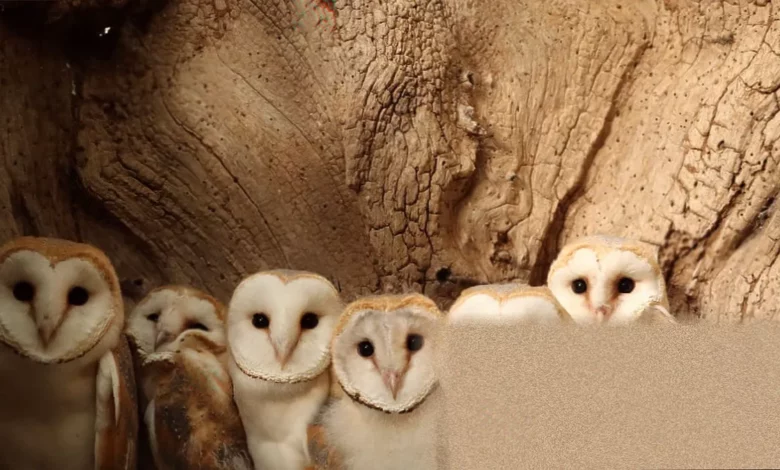
A wildlife artist from the Yorkshire Wolds is on the brink of a digital milestone: Robert Fuller’s YouTube channel, which livestreams the hidden lives of barn owls, kestrels and kingfishers from the nest boxes he builds by hand, is approaching one million subscribers. As of late May 2026, the channel had 998,000 followers, with up to 300 joining daily, and it now averages 2.8 million monthly views.
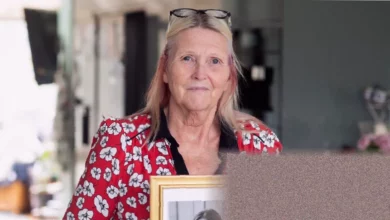
Fuller, 53, grew up on a farm in the Yorkshire Wolds where his father, Richard Fuller, was a wildlife author and recipient of the Silver Lapwing award for farm conservation. He began making nest boxes as a child, placing them in fallen trees and using a chainsaw to carve out natural cavities. The frustration of not being able to see inside drove him to install cameras, and he later decided to stream the footage live on YouTube. “I didn’t have any expectations at all,” he said. The audience grew slowly, then surged during the Covid-19 lockdowns. A Dutch bar even began livestreaming one of his barn owl nests instead of sport. Viewers from China, South Korea, India, the United States and across Europe became hooked.
His global audience is now led by the US, UK, India, Canada and Indonesia. The most-watched clips include a young barn owl’s reaction to thunder, which has 27.7 million views, and a film of a kestrel pair defending their nest from intruders, with 16.6 million views. Births, fledgling flights and first meetings are particularly popular. “Sometimes, the first time birds meet is live on camera,” Fuller said. “Then we see the courtship. It’s all awkward and they’re a bit like teenagers. The barn owls are especially hilarious. The male invariably does something wrong. He calls for weeks and then he rushes towards her and knocks her over.” One viewer called the streams “nature’s soap opera”; 70% of livestream watchers are repeat viewers.
The lengths behind the lens
Fuller’s dedication to capturing this “secretive life” is extraordinary. He works over 100 hours a week throughout the year, using professional equipment including Canon 1D Mark IV camera bodies and 500mm F4 lenses, alongside security cameras and a PC-based recording system. He builds hundreds of nest boxes, each meticulously designed for a specific species — considering shape, height, entrance size and predator deterrents. His little owl boxes feature a tunnel and a baffle to keep out jackdaws; his barn owl box is made from an old elm stump that has housed generations. He uses natural materials such as stumps and logs, fitting cameras discreetly into the walls. He also performs regular maintenance, cleaning out pellets and renovating structures to ensure they remain suitable.
Fuller runs his art business from Fotherdale Farm in Thixendale, Yorkshire, with his wife Victoria. His gallery attracts around 7,000 visitors annually — some of whom book holidays to the UK specifically to visit after watching his streams. The art business finances the filming operation. “The relatively small ad revenue that my YouTube channel generates goes towards staffing costs,” he said. Estimates for the channel’s ad revenue place it around £50,000 a year, but Fuller’s net worth is thought to include his wider art business, which sells paintings, limited edition prints, sculptures and gifts such as tea towels and mugs. Online sales took off after reliable broadband was installed at the farm.
His work has led to appearances on the BBC’s Springwatch and The One Show. A film of a cuckoo chick — the first he had captured in 30 years — was hailed as a “star” of a Springwatch series. He has also conducted a five-year project into the secret lives of stoats, featured in BBC Wildlife Magazine, and has worked to rehabilitate stoats and weasels for Mustelid Rescue UK. In 2011 he received an award for bravery from the RSPCA for helping to secure a conviction against badger baiters.
AI concerns cast a shadow
Despite his success, Fuller is uneasy about YouTube’s direction. He said people sometimes comment on his videos that they “must be AI because the footage is so good” — but he emphasises the immense human effort behind each frame. “It’s the lengths I go to get this footage,” he said. “I work over 100 hours a week throughout the year to do this.”
He described himself as “absolutely baffled” that the platform is allowing AI-generated content. Under YouTube’s rules, such material is supposed to be labelled. A spokesperson for YouTube said: “YouTube has said that not all content made with AI is poor quality and that it has a good track record for weeding out low-quality, clickbait and spammy content.” Fuller disagrees. “YouTube has been an incredible platform for people like myself, but with the AI tools that are now being supported, in my mind they’re unpicking what YouTube is actually about – which is to work with and support content creators like myself,” he said.
He has also been changed by the response from his viewers. “I live in the middle of nowhere and I just love filming my wildlife and studying it. I only get involved in the outside world a micro amount,” he said. “But I actually started thinking more about other people in a way, because of the letters and emails from all over the world saying how much it meant to them in lockdown and since. The difference it makes to people that are struggling is incredible.”