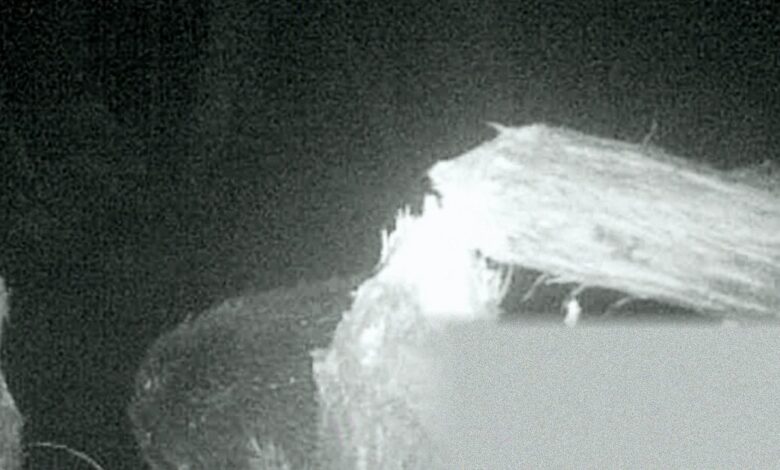
In a quiet corner of Norfolk, a centuries-old absence has been quietly filled. For the first time since the early 16th century, a wild beaver pair has settled in the county, captured on camera at Pensthorpe Nature Reserve just outside Norwich. The footage shows the two animals swimming and grooming each other, a significant development following the solitary beaver that made headlines in December.
A Mystery on the Riverbank
No one knows where the beavers came from or how they arrived in Norfolk. The age and sex of the animals are unknown, but their behaviour suggests a strong bond. “We won’t know for sure whether they’re a breeding pair until the camera shows they have kits, but they’re quite well bonded and they’re living together and behaving as a family unit,” said the reserve’s manager, Richard Spowage. He suspects both animals built the “family-size” lodge originally attributed to a lone beaver, noting that beavers are notoriously hard to catch on camera. The animals are clearly wild, avoiding human interaction completely.
Their presence is a mystery within a wider national story. The native species, hunted to extinction in Britain by the 16th century for fur, meat, and castoreum secretions, has been gradually re-establishing itself. The first wild kits in England were born in Devon in 2015, and populations have since been recorded in Cornwall, Somerset, Dorset, Herefordshire, Kent, Hampshire, Wiltshire, and Berkshire, with a Guardian reader reporting a sighting in his Berkshire garden.
Spowage suspects the Pensthorpe pair were illegally released last year, a practice colloquially known as “beaver bombing.” He stated the reserve does not condone such actions. “But our view is that now we have these animals here, playing a role in the ecosystem that was missing from our river, it’s our responsibility to protect them.” He expressed relief at discovering the second beaver, emphasising that “beavers live in family groups. They’re not brought up to be lone animals.”
Ecosystem Engineers at Work
In just three months, the beavers have begun transforming their stretch of river. Spowage reported they have cleared debris without affecting water levels. “You can now see a lovely riverbed, with sand and gravel starting to reappear at the base,” he said, adding that they are creating glades by felling willow and birch trees, which lets sunlight into the water. This activity classifies beavers as “ecosystem engineers,” whose dam-building can slow water flow, help ameliorate flooding, improve water quality, and create wetland habitats that support biodiversity. Studies indicate their dams can reduce downstream flood peaks and increase water storage, and evidence suggests a net positive impact on fish populations without impeding migration.
However, reintroduction is not without controversy. Professor George Holmes, who sits on a government advisory group for species reintroduction, acknowledged a “lot of frustration” among proponents who see the official licensing process as costly and time-consuming. He noted that beavers’ dams could cause flooding and their burrows undermine riverbanks, and once released, beavers are a protected species. “Introducing a species isn’t straightforward and it can go badly wrong,” he said, though he added that in a managed nature reserve like Pensthorpe, they are unlikely to cause major problems. Concerns from farmers and landowners about potential damage persist.
The National Picture and Policy Shift
The covert releases highlight tensions within a shifting policy landscape. The UK government recognised beavers as a native species in 2016 and granted them protected status in England in October 2022. Last year, it decided to grant licences for wild releases, but only two pairs and a family have been legally released so far, in Cornwall and Somerset. The first official wild release in England under the new approach occurred on the National Trust’s Purbeck Estate.
The government has announced a new strategy to allow beavers to live wild in England, with a licensing system and support for landowners. Existing wild populations are to be allowed to remain and expand naturally. Organisations like the Beaver Trust, a charity dedicated to restoring beavers to regenerate landscapes, along with Rewilding Britain and The Wildlife Trusts, are actively involved in conservation and public education.
Natural England, the government’s advisory body, stated it is investigating the reports of beavers at Pensthorpe and “working closely” with the reserve. Meanwhile, Spowage advocates for more beavers to be legally introduced into the wider River Wensum system. “Genetically, you can’t have just one pair of beavers on the river,” he said. “This is our opportunity to return an animal to our river system which has been missing for 500 years.”
The movement is more advanced in other parts of Britain. In Scotland, beavers have been a protected native species since a trial began in 2009; the population is now estimated at 1,500, and the government has a strategy to expand it into new catchments. A wild beaver has also been spotted on the River Dyfi in Wales. The reappearance of these keystone species is increasingly viewed as a significant step for nature recovery across the UK, capable of creating more resilient and biodiverse landscapes.