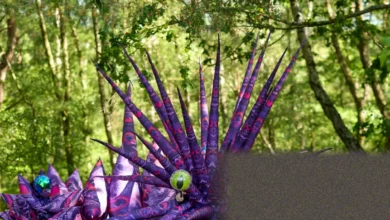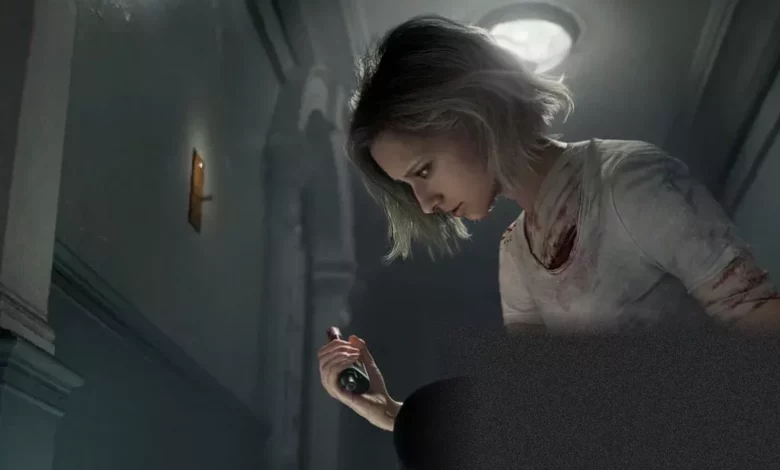
As it approaches its 30th anniversary on 22 March 2026, Capcom’s Resident Evil franchise is not merely surviving; it is breaking records. The latest mainline title, Resident Evil Requiem, released on 27 February 2026, sold six million copies worldwide in under three weeks—the fastest any game in the series has reached that milestone. This success has catalysed a wider resurgence, with five Resident Evil titles appearing in the UK’s top 10 physical sales charts in early March, demonstrating an enduring grip on the popular imagination that few entertainment properties ever achieve.
The Haunted House That Started It All
Contrary to its image as a bolt from the blue in 1996, the genesis of Resident Evil lies in a much older, more obscure title. In 1989, Capcom released a Famicom role-playing game called Sweet Home, a Japanese-only title about a film crew exploring a haunted mansion. While a modest domestic success, it planted a crucial seed. Tokuro Fujiwara, who directed Sweet Home, believed horror could become its own distinct game genre and was determined to revisit the concept with more advanced technology.
That opportunity arrived with the original PlayStation. In 1993, a young producer named Shinji Mikami was tasked with overseeing a horror project inspired by Sweet Home. He retained the mansion setting but radically shifted the inspiration, drawing from George A. Romero’s Dead trilogy and the 1992 PC horror adventure Alone in the Dark. His vision populated the location not with ghosts, but with zombies, mutants, and monsters, and introduced the world to the sinister Umbrella Corporation.
Technical limitations on the PlayStation hardware forced a now-iconic compromise. Abandoning plans for full real-time 3D, Mikami and programmer Yasuhiro Anpo combined 3D characters with pre-rendered 2D backgrounds viewed from fixed camera angles. This “survival horror” style—a term the game itself coined—created intense claustrophobia, with blind corners and shadowy doorways strategically withholding information from the player. This foundation of tension, omission, and restriction became the series’ bedrock.
Mutation as a Survival Strategy
The franchise’s three-decade reign is a masterclass in evolution. The early titles, including the critically acclaimed Resident Evil 2 and Code: Veronica, used “tank controls” and fixed cameras to generate fear. This began to shift with Resident Evil 4 in 2005, which adopted an over-the-shoulder perspective and real-time rendering, a view that would go on to popularise third-person action-adventure games. After a period of more action-focused entries, the series dramatically returned to its horror roots with Resident Evil 7: Biohazard in 2017, using a first-person perspective to immerse players in unprecedented dread.
This willingness to reinvent gameplay is matched by a deft blending of horror subgenres. The series contains gothic horror in its crumbling mansions, sci-fi horror in its nightmarish bio-weapons, and folk horror in its sinister villages and cults, as seen in Resident Evil 4 and 7. Its inspirations are proudly displayed: Hideki Kamiya’s direction on Resident Evil 2 drew heavily from Alien and Aliens, particularly in the design of the G-virus parasites, while the settings of Resident Evil 4 and 7 owe a clear debt to The Texas Chain Saw Massacre.
Critically, these horrors tap into persistent societal anxieties. “The Covid pandemic reminded us just how real our fear of viruses should be,” says Bernard Perron, a professor of cinema and video games at the University of Montreal. “The fear of a corrupt corporation like Umbrella, along with mad scientists… continues to resonate.” The series also explores class-based horror through its recurring aristocratic antagonists, from Lord Osmund Saddler to Lady Dimitrescu.
From Niche Horror to Global Phenomenon
The commercial figures underscore a journey from cult hit to entertainment juggernaut. As of December 2025, the franchise has sold over 183 million copies worldwide, making it Capcom’s best-selling series. Individual titles have shattered records: the 2023 remake of Resident Evil 4 sold four million copies in two weeks, while the 2019 remake of Resident Evil 2 is noted as the best-selling survival horror game as of 2023.
This accessibility is key to its reach. “The series offers deep and entertaining gameplay experiences, but with a very low barrier to entry, even for newcomers,” says Alex Aniel, author of the franchise history Itchy, Tasty. He notes the games are frequently on sale and available on every major platform, making them affordable globally. Requiem itself has been praised for its straightforward gameplay, ensuring it is easy to pick up.
The horror has long since escaped the confines of gaming. The live-action film series starring Milla Jovovich grossed over $1.2 billion worldwide, and a new film reboot, directed by Zach Cregger and hewing closer to the games, is slated for September 2026. The franchise has also expanded into television, with Netflix’s animated series Resident Evil: Infinite Darkness, and a wide array of novels, comics, and merchandise.
An Enduring Cultural Infection
The legacy of Resident Evil is cemented in its profound influence on popular culture. It is widely credited with defining the survival horror genre and revitalising zombies in mainstream media. Film critic Jamie Russell coined “The Resident Evil Effect” to describe its role in the zombie media resurgence, influencing films like 28 Days Later.
At its heart, the series’ longevity stems from a core, unchanging principle: vulnerability. Whether through limited inventory, scarce ammo, or careful pacing that oscillates between exploration, puzzle-solving, and combat, power is always an illusion. Victory feels earned and profoundly emotional. It allows players to project their own fears onto its framework, a framework that has continually mutated to reflect the anxieties of the era.
As Capcom prepares to mark the 30th anniversary with events at Universal Studios Japan and orchestral concerts, Resident Evil stands as a unique monolith. It mastered the art of fear through constraint, learned to adapt without losing its identity, and grew from a daring experiment on the PlayStation into a multi-billion dollar cross-media empire. Its greatest trick was making the feeling of being powerless, against all odds, so powerfully compelling.