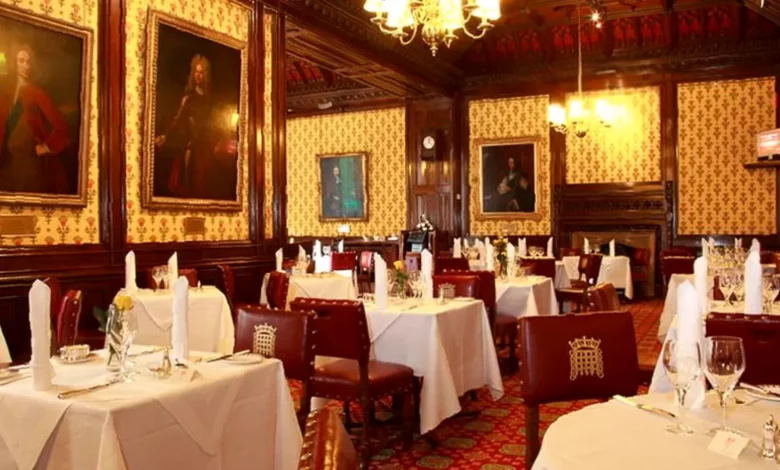
For a brief window next month, the exclusive world of the House of Lords will open its dining room doors to the public, offering a rare chance to eat within the Palace of Westminster while its political occupants are away.
The opportunity arises during the Easter parliamentary recess, when both the House of Commons and the House of Lords are closed for business from Friday 27 March until Sunday 12 April 2026. Between Tuesday 7 and Friday 10 April, the historic Peers’ Dining Room will serve a seasonal set menu to paying guests, at a cost of £70 per person.
The “Peers’ Experience” for the Public
This is a significant departure from the norm. The Peers’ Dining Room is typically reserved for members of the House of Lords and their guests. Opening it to the general public is a limited-time event, often used during recesses to generate income and foster public engagement with the institution.
Those who secure a booking will dine in a room steeped in political history. Originally a committee room for peers, it was converted into a dining facility around 1867 and has hosted prime ministers including Sir Winston Churchill and Margaret Thatcher. The atmosphere is described by past reviewers as one of “relaxed formality,” reminiscent of an Oxford or Cambridge college, complete with Pugin wallpaper and historical artwork.
The £70 price point, which does not include drinks and has a 12.5% service charge added, is consistent with previous public dining events here. Past seasonal set menus have featured dishes like Wye Valley asparagus, Suffolk Baron Bigod cheese, and poached Loch Duart salmon, with a dedicated vegan menu also available. Drinks are charged separately from a wine list.
Practicalities and Protocol
Gaining entry requires planning. Bookings must be made for two or more people; solo diners are not permitted. Upon arrival, guests with confirmed reservations must enter via the main Cromwell Green visitor entrance on St Margaret Street, presenting photo ID.
Security procedures are stringent, involving airport-style bag screening and metal detectors. Visitors are advised to arrive at least 20 minutes before their reservation and to bring only small bags, as no luggage storage is available.
Once inside, a specific dress code applies: smart casual. For gentlemen, collared shirts are preferred with long trousers and shoes. Sportswear and trainers are prohibited. While the historic requirement for a jacket and tie has been relaxed for the public, the room retains its traditional formality. As one past diner noted, the expectation of decorum remains high. In a nod to its usual clientele, the organisers have humorously confirmed that “Crowns and Ermine are not needed.”
To preserve the atmosphere, mobile phones and photography are strictly forbidden in the dining room, putting an end to any thoughts of sharing the experience on social media. While not explicitly confirmed for this sitting, previous public dining events have operated on a two-hour time slot basis.
A History of Hospitality and Other Options
The practice of opening parliamentary dining rooms is part of a longer evolution. In Victorian times, MPs often dined outside the Palace; in-house facilities developed later, with figures like John Bellamy instrumental in their establishment. Today, offering public access during recesses is a recognised income-generation strategy.
While the Peers’ Dining Room is the focus of this offer, it is not the only such facility within Parliament. The Members’ Dining Room in the House of Commons has also been opened for public events, offering Thames views, and the Strangers’ Dining Room—historically used by MPs to host guests—underwent restoration in 2015 and has welcomed the public. More casual options like the Terrace Cafeteria and Bellamy’s restaurant generally cater to staff and passholders.
This Easter event continues a pattern of popular public openings, following similar occasions in May 2017, June 2024, and during the April 2023 recess. It allows today’s public to step into the role of historical “Strangers”—the term once used for guests of MPs—and experience a slice of parliamentary life from within one of its most exclusive rooms.