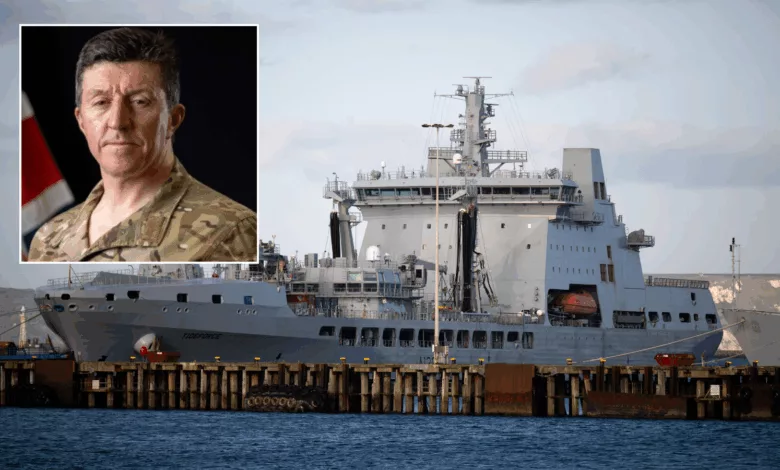
Britain’s most senior naval officer has declared that the Royal Navy must be prepared to “fail occasionally” and accept greater risk if it is to stay ahead of rapidly evolving threats, warning that clinging to the status quo is “simply not good enough” at a time of heightened global instability.
First Sea Lord General Sir Gwyn Jenkins, in a speech at the Royal United Services Institute, said the UK is at an “inflection point” and outlined a plan to leave the Navy “much stronger than the one I inherited” by 2029. He argued that the need for a fundamental shift in mindset became “irrefutable” after Russia’s full-scale invasion of Ukraine in 2022 and has been reinforced by the recent conflict in the Middle East, including the effective closure of the Strait of Hormuz by Iran.
“That rallying call has only grown louder with the geopolitical developments of the last four years,” Sir Gwyn said. “The most recent conflict … has also confirmed something else – sea power is vital if we are to maintain the free flow of trade, uphold freedom of navigation, deter our adversaries and safeguard Britain’s economy against the kind of global shocks we have been experiencing.”
The Admiral has repeatedly identified Russia as the “gravest threat to our security,” pointing to a near one-third increase in Russian incursions into British waters over the past two years. In 2025 alone, the Royal Navy was required to respond dozens of times to Russian surface vessels in support of homeland defence. He expressed particular concern about Moscow’s reinvestment in its submarine programmes, which he views as the most acute naval threat.
‘Hybrid Navy’ – crewed ships and drones working together
Central to Sir Gwyn’s vision is what he calls a “hybrid approach” in which crewed warships operate alongside uncrewed and autonomous systems, supported by other cutting-edge technology. He stressed this is not about replacing existing capabilities but about “increasing the survivability and lethality of our force” and ending the mentality that the Navy needs “ever more expensive and ever larger platforms.”
The Royal Navy has already begun testing this concept. Last month it held its first-ever Navy-wide wargame to trial the hybrid model, and the results showed a significant leap in warfighting capability. Sir Gwyn reported “clear evidence” that missile capacity increased “threefold to the level necessary to win a contest in the North Atlantic.”
A series of concrete initiatives are now under way. Uncrewed gliders designed to patrol the North Atlantic and detect hostile activity will be deployed this year as part of the “Atlantic Bastion” programme, one of three operational concepts – alongside “Atlantic Shield” and “Atlantic Strike” – that underpin the Navy’s contribution to North Atlantic deterrence. The service has also taken delivery of its first fleet of 20 uncrewed surface vessels under Project Beehive, acquired through a partnership with UK company Kraken, which will be used by 47 Commando Royal Marines for training and operations. In a further sign of ambition, Sir Gwyn said the goal is to have the first uncrewed escort ships sailing alongside Royal Navy warships within two years, while jet-powered drones are expected to be launched from aircraft carriers next year.
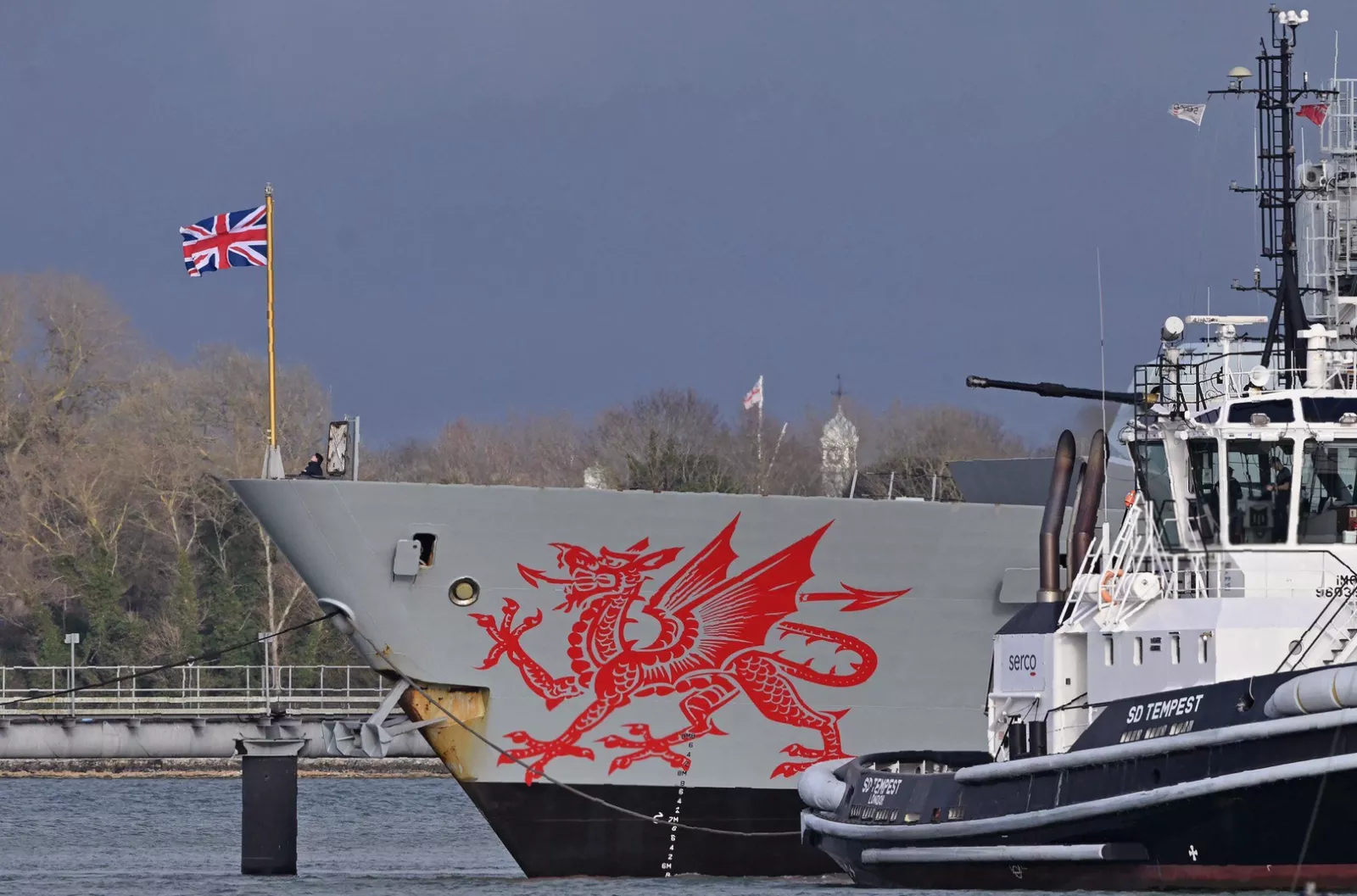
To make this transformation work, the Navy is overhauling how it trains personnel. Sir Gwyn emphasised “investing in the way we train” so that crews can focus their skills on “complex, high-threat battle scenarios, much of which can only be practised through simulation.” He called for a culture shift that requires “courage and getting used to failing occasionally in order that we succeed more often,” and insisted the service must “ruthlessly remove unnecessary regulations and other barriers holding us back so that we can cut the time it takes between trialling new systems and putting them to sea or alongside our commanders.”
The UK is also leading the formation of a new multinational maritime force with allies from Nordic, Baltic and other Joint Expeditionary Force countries to enhance deterrence in the region. A declaration of intent has been signed, with a formal declaration expected by the end of the year. The force aims to train, exercise and prepare together, sharing systems, networks, logistics and stockpiles.
Defence spending and political battles
The Navy chief’s call for greater risk-taking comes against a backdrop of intense political debate over the level of defence spending. The Labour government has committed to increasing defence expenditure to 2.5 per cent of GDP by April 2027, with an ambition to reach 3 per cent in the next parliament as economic conditions allow. The government has also updated the definition of defence spending to include security and intelligence agencies, effectively raising the 2027 target to 2.6 per cent of GDP. Beyond that, the UK has signed up to a Nato-agreed target of 3.5 per cent of GDP by 2035, and some reports have suggested a potential commitment to 5 per cent if wider resilience measures are included.
Speaking at Prime Minister’s Questions, Sir Keir Starmer said his government had increased defence spending to “the highest since the Cold War” and contrasted that with the record of the previous Conservative administration. “When they came into power, defence spending was 2.5% and when they left power, it was 2.3%, and even their own Secretary of State admitted they hollowed out our armed forces,” Starmer said. “So we’ll take no lecture from them on defence.”
Conservative leader Kemi Badenoch responded by accusing the government of “spending so much on welfare that we cannot afford to defend the country.” She has argued that the Conservatives considered raising defence spending but found it impossible due to high welfare and debt costs. Starmer shot back that the Labour government had delivered the “biggest sustained increase in defence spending since the Cold War.”
Underpinning the spending commitments is a broader industrial strategy that positions defence as an “engine for growth.” A £400 million innovation fund has been established with a focus on autonomy and directed energy, and the UK Defence Innovation office is actively seeking out cutting-edge technology from non-traditional firms and small and medium-sized enterprises. The government has also set a target to double defence exports from £14 billion to £28 billion by 2035, aiming to make the UK a major defence industrial power within a decade.