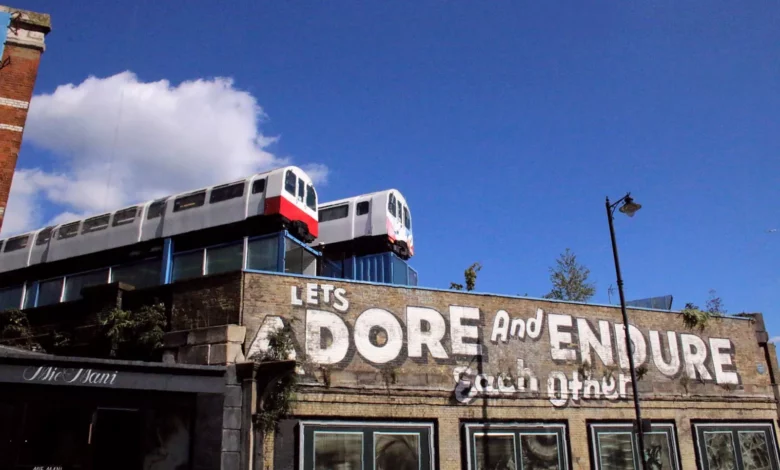
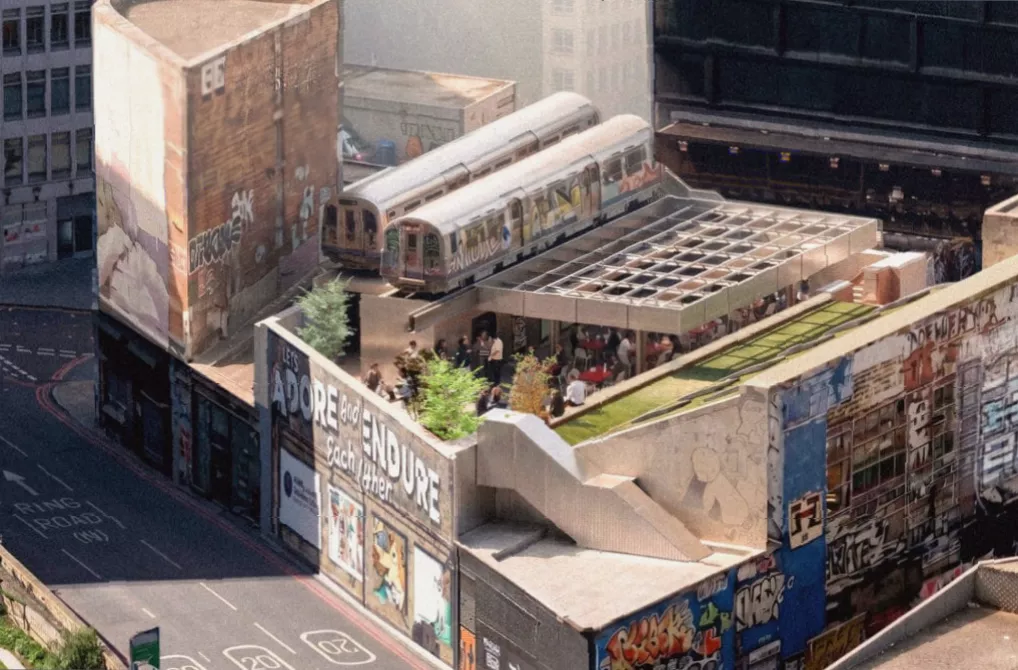
Shoreditch’s disused tube trains, long a private workspace for artists, are being transformed into a public rooftop bar — opening the iconic carriages to the wider community for the first time in their two-decade history on the capital’s skyline.
Four former Jubilee line carriages have sat high above Holywell Lane on a surviving stretch of the railway viaduct that once carried trains into the old Broad Street station, which closed in the 1980s. For the past 20 years the carriages, alongside a pair of shipping containers, have served as studio and workspace units for artists and creatives at Village Underground — a social enterprise founded in 2006 by furniture designer Auro Foxcroft to provide affordable creative workspace in London.
Rooftop bar opens in July
The new rooftop terrace will open to the public on Friday 3rd July, operating from Wednesday to Sunday. Designed by architecture and design studio MOBO Works, the space has a capacity of 300 people and will include a central bar, draught beers, signature pours and a curated wine selection. It will also be available for private hire.
National Pizza of the Year UK award winner Bad Boy Pizza Society has been confirmed as the food partner, bringing its 12-inch New York-inspired pizzas to the terrace. The London‑based pizzeria, founded by four university friends in 2018, won the National Pizza Awards in 2024 for its ‘Sausage Party’ pizza and is planning to open its first bricks-and-mortar restaurant in Bethnal Green.
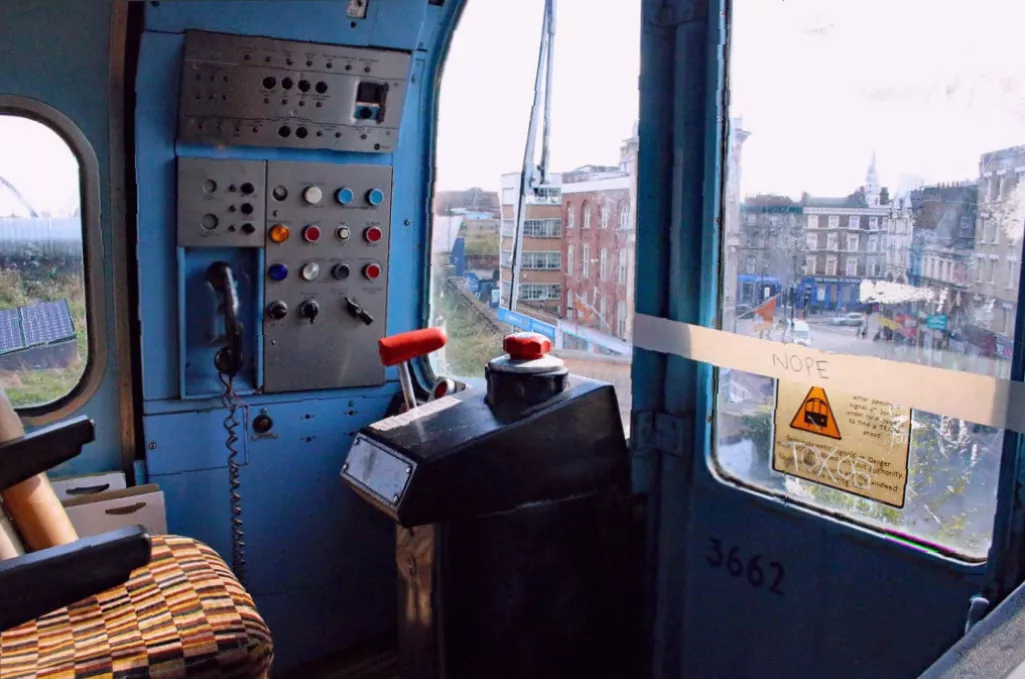
How the train carriages will work as both workspaces and part of the bar
As part of the redevelopment, two of the four original tube carriages were removed earlier this year to make way for a new covered pergola area and expanded outdoor seating. The remaining two carriages will stay in place and function as flexible artist workspaces during the day before switching over to support the evening venue. This dual-use arrangement — part creative studio, part bar infrastructure — is central to the redesign, allowing the carriages to serve the artists who have used them for two decades while also becoming a public feature.
The carriages themselves date from the 1983 Jubilee line stock, introduced in 1984, and were notoriously unreliable during their service life. Foxcroft reportedly negotiated their purchase from London Underground for a nominal sum, taking responsibility for removal and installation. His inspiration came from observing train carriages in the Swiss mountains, where he saw their potential as contained, airy spaces. Installed on the viaduct in the late 2000s, they have become a notable part of Shoreditch’s skyline, their graffiti exteriors repainted every three months by renowned street artists. Over the years, the carriages have hosted everything from daytime creative work to artist interviews, though the uninsulated metal interiors could be “too cool in winter, and too hot in summer”, according to those who used them.
The wider Village Underground site includes a renovated Victorian warehouse beneath the viaduct, which formerly served as a coal store for the railway. That space has been transformed into a multi-purpose venue for concerts, club nights, exhibitions, theatre and live art, with a capacity of around 1,000 people (the entire venue can accommodate up to 700 standing guests).
A 20‑year journey from private studio to public terrace
Village Underground was founded in 2006, with the main warehouse venue opening the following year. Early mentions of the recycled train carriages as studios appear from 2008. The venue operates as a social enterprise, with commercial activities supporting its not-for-profit mission to provide affordable space for artists. It has remained independent throughout Shoreditch’s rapid transformation, and the opening of the rooftop bar coincides with its 20th anniversary. The venue also pursues sustainability through solar panels and wind turbine energy, helping it maintain carbon‑neutral status.
The location itself has deep historical roots. Holywell Lane is named after a “sweet, wholesome, and clear well” recorded by the 17th‑century topographer John Stow, and was associated with the Holywell Priory and early London theatres, including “The Theatre” where Shakespeare’s company performed. The railway viaduct is a remnant of the line that led to Broad Street station, a major London terminus that closed in 1986 after a period of decline; its site was later redeveloped into the Broadgate complex.
Auro Foxcroft, founder and CEO of Village Underground, said: “For nearly 20 years, we’ve had this suntrap spot on the Shoreditch skyline to ourselves, so it’s exciting to finally be able to share it with our audiences and the local community. The train carriages have been part of how we’ve used the space day to day – from working to interviewing artists – and this feels like the natural next step, opening them up and making them part of the space for everyone to enjoy.”