Only 11% of children and teenagers flagged to the UK’s counter-terrorism authorities for a fascination with extreme violence, but no clear ideology, went on to receive specialised anti-radicalisation support in the year to March 2025. The stark statistic, drawn from official figures, emerges as a public inquiry prepares to deliver its damning verdict on the state’s failure to stop the Southport attacker, with victims’ lawyers warning that violence-obsessed young people remain a “catastrophic” threat.
An inquiry’s expected condemnation
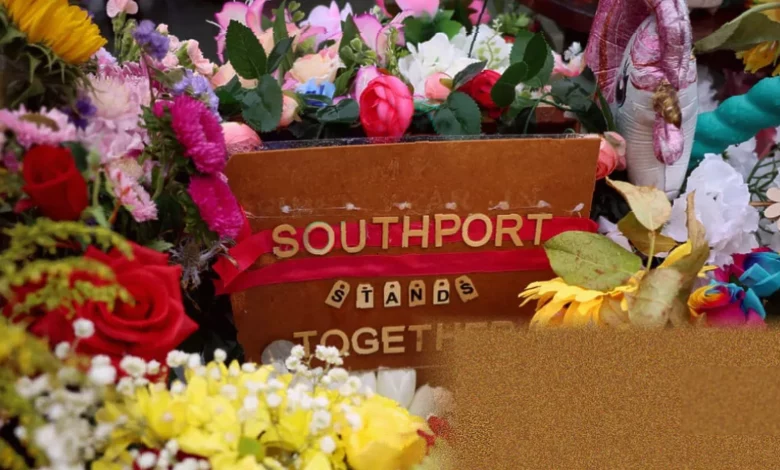
On Monday, a report by Sir Adrian Fulford into the July 2024 attack at The Hart Space dance studio in Southport is expected to deliver severe criticism of multiple agencies, including the Prevent programme. The attacker, Axel Rudakubana, then 17, murdered three young girls—Bebe King, six, Elsie Dot Stancombe, seven, and Alice da Silva Aguiar, nine—and injured ten others in what was described as a pre-meditated attempt at indiscriminate mass murder.
Rudakubana had been referred to Prevent three times before the atrocity. Concerns were first raised in 2019 when, aged 13, he contacted Childline expressing a desire to kill. Subsequent referrals followed incidents involving knives and online research into school shootings and terror attacks. These concerns were dismissed, partly because he did not express a clear jihadist or far-right ideology. At his sentencing, the prosecution noted his actions were not inspired by any political or religious belief.
Why Prevent struggles with the violence-obsessed
In the wake of the attack, counter-terrorism officials promised that individuals without a clear ideology but with a clear obsession with extreme violence, like Rudakubana, would now pass through the Prevent gateway. However, data suggests the system is struggling to adapt.
Britain’s counter-terrorism strategy, CONTEST, has Prevent as its first pillar, aiming to stop people becoming terrorists. Yet an analysis of referrals reveals a profound gap. In the year to March 2025, there were approximately 3,300 Prevent referrals concerning children and teenagers with an intense interest in brutality but no clear ideology—including nearly 300 of primary school age. Of these, only 11% were deemed suitable for the Channel programme, which provides tailored support.
This stands in stark contrast to Channel’s engagement with ideologically-driven cases: it took on 34% of referrals for right-wing extremism and 26% for Islamist extremism. The category of ‘no ideology’ accounted for the largest proportion of referrals where a concern was specified (56%), but had one of the lowest Channel adoption rates at just 7%.
This challenge was highlighted by the UK’s top counter-terror officer, Laurence Taylor, who warned that Prevent was being “overwhelmed” by referrals for those interested in violence without an involved ideology. The data shows a significant and recent surge: referrals for ‘Fascination with extreme violence or mass casualty attacks (where no other ideology)’ rose by 240% in the last quarter of the 2024/25 year, accounting for 469 cases.
The problem appears systemic. Evidence presented to the Southport inquiry exposed failures in communication, with frontline police reportedly unable to access Prevent histories due to separate IT systems. Furthermore, the independent Shawcross review of Prevent had already called for the programme to reassert its core objective and develop a better understanding of extremist ideology, a remit that seems ill-fitted to those with muddled or absent beliefs.
This gap was illustrated again in January 2026, when a 17-year-old “obsessed” with Rudakubana avoided jail after being convicted of planning a copycat attack. He had been referred to Prevent twice, including in May 2025, but had no clear ideology. His case underscores what lawyers describe as an “enduring and evolving” threat from self-initiated individuals with personal, warped views, including those influenced by misogynistic hatred or online communities such as those associated with ‘incel’ extremism.
Victims’ lawyers demand fundamental change
Solicitors representing those harmed in Southport are united in their condemnation. Chris Walker, of Bond Turner, who acts for the families of the three murdered girls, said assurances given to the inquiry about improved guidance had not filtered down to frontline staff. “The system is not fit for purpose and must undergo fundamental changes,” he stated, arguing that those without a clear ideology are monitored less closely despite meticulous planning and “mass murder fantasies”.
Nicola Ryan-Donnelly of Fletchers Solicitors, representing the injured children, called for a “serious shake up” to ensure a lack of ideology does not protect perpetrators over victims. She warned of the increasing threat from violence-obsessed individuals with muddled beliefs.
Nicola Brook of Broudie Jackson Canter, who represents adult survivors Leanne Lucas, John Hayes, and Heidi Liddle, was more direct. She said the state was failing to tackle those who “do not fit the terrorist mould” and that Prevent was the “wrong mechanism” for individuals obsessed with extreme violence. “Not only is the state failing to learn lessons from these harrowing attacks but it also has yet to acknowledge the imperative need to provide another system,” she said.
In response, a Home Office spokesperson said Prevent remained a “vital tool” and that the government would ensure it has the capabilities needed. The second phase of the Southport inquiry is expected to further examine the adequacy of UK multi-agency systems in addressing the risks posed by young people fixated on extreme violence.