
The Tony Blair Institute (TBI) has urged the Government to introduce a new classification of “non-work limiting conditions” that would see mild depression and generalised anxiety deemed compatible with work, making claimants ineligible for cash payments under the health and disability benefits system. The proposal, contained in a report published today, forms the centrepiece of what the think tank founded by former prime minister Sir Tony Blair describes as an “emergency handbrake” on Britain’s ballooning welfare bill.
What the ‘non-work limiting’ label means for claimants
Under the TBI’s plans, conditions such as mild depression and generalised anxiety would be categorised as non-work limiting at every decision point in the application process for the health element of Universal Credit (UC health) and Personal Independence Payment (PIP). Claimants with these conditions would not receive out-of-work benefits or additional cash support through PIP. Instead, the institute proposes that those no longer eligible for long-term incapacity benefits be offered in-kind support, including medical treatment and socioeconomic assistance.
“The system is drawing too many people into long-term dependency for conditions that are often treatable and compatible with work,” said Dr Charlotte Refsum, TBI’s Director of Health Policy and a former GP. Ryan Wain, the senior director of Policy and Politics at TBI, added: “Fundamental welfare reform is now firmly on the Government’s agenda. But we live in a world where up to 1,000 new claimants are entering the system every day. An emergency handbrake would see proliferating conditions such as mild depression and generalised anxiety classed as non-work limiting and would free up resources for better mental health support.”

Exclusive YouGov polling commissioned for the report indicates public backing for the approach. Nearly half of respondents said too many conditions are currently deemed work-limiting, while fewer than one in ten believed too few are included. The TBI stresses that its proposals aim to redirect support rather than simply cut access to benefits.
Financial concerns: a benefits bill set to rival defence spending
The TBI report warns that without swift intervention, Department for Work and Pensions (DWP) expenditure on working-age health and disability benefits could balloon to approximately £73 billion by the close of the decade. Such a figure would rival defence spending and force difficult choices in how the Government allocates resources to national priorities. Spending on health and disability payments for working-age adults is projected to grow by an average of 4.2% annually in real terms over the next three years, potentially reaching £73.4 billion by 2030–31.
Current welfare spending already runs at historic levels. The UK is set to spend £333.7 billion on the social security system in 2025–26, equivalent to 10.6 per cent of GDP and 23.6 per cent of total Government spending. Of that, spending on benefits to support disabled people and those with health conditions is forecast to reach £77.1 billion in 2025–26 — the fastest-rising area of welfare expenditure. The Office for Budget Responsibility forecasts that disability benefits alone will increase from £39.1 billion in 2023–24 to £58.1 billion by 2028–29.
The sharp rise follows a surge in claims since the pandemic. Between pre-pandemic levels and August 2025, the number of working-age people claiming benefits due to ill health or disability increased by more than 40 per cent, from 2.8 million to 4.5 million. Disability benefit claims driven by psychiatric disorders have more than doubled. Research suggests the structure of the benefits system itself has contributed to the increase, with the rise in claims double the increase in self-declared health conditions between 2019/20 and 2023/24. The UK has also experienced a sharper rise in spending on disability and incapacity benefits since Covid-19 compared to similar countries.
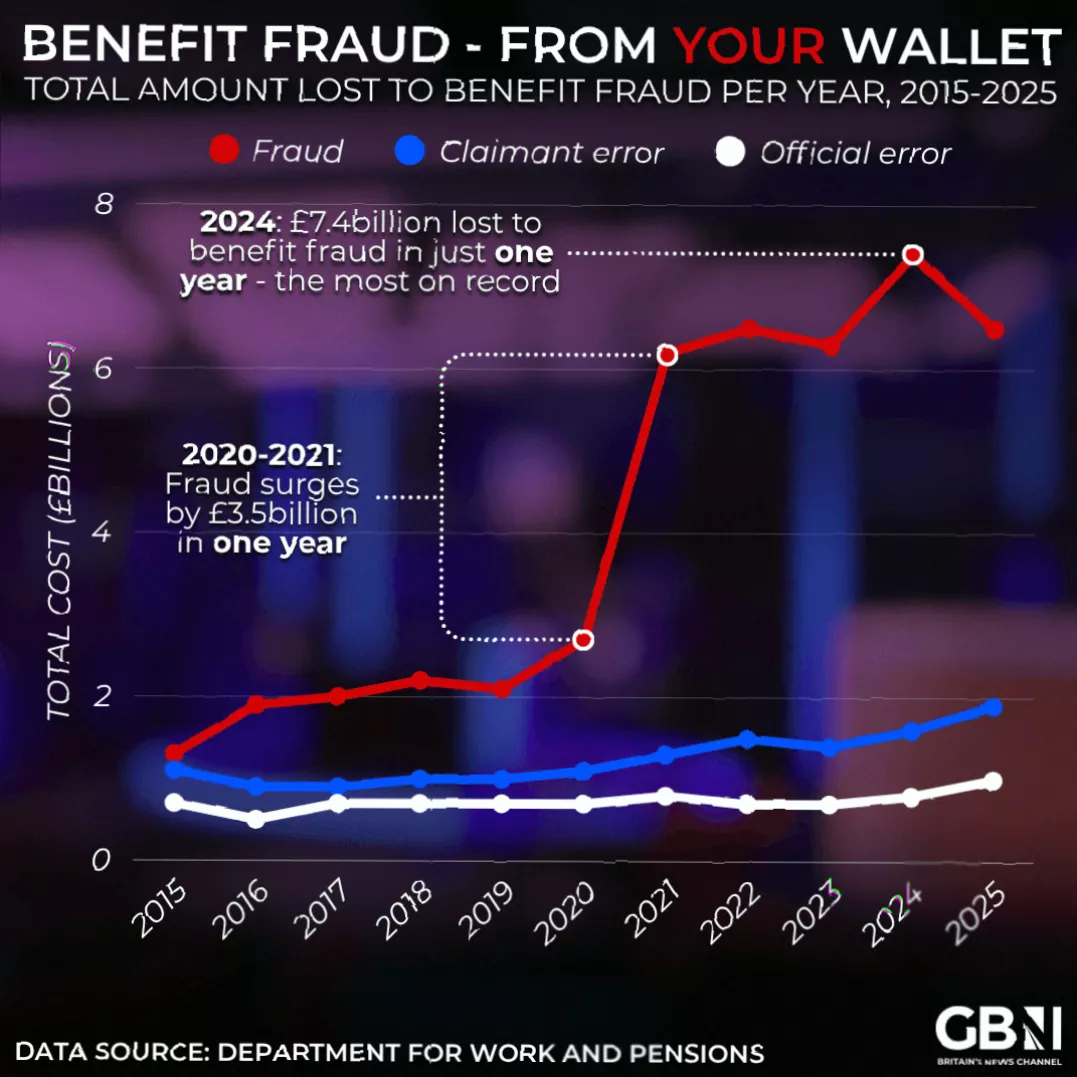
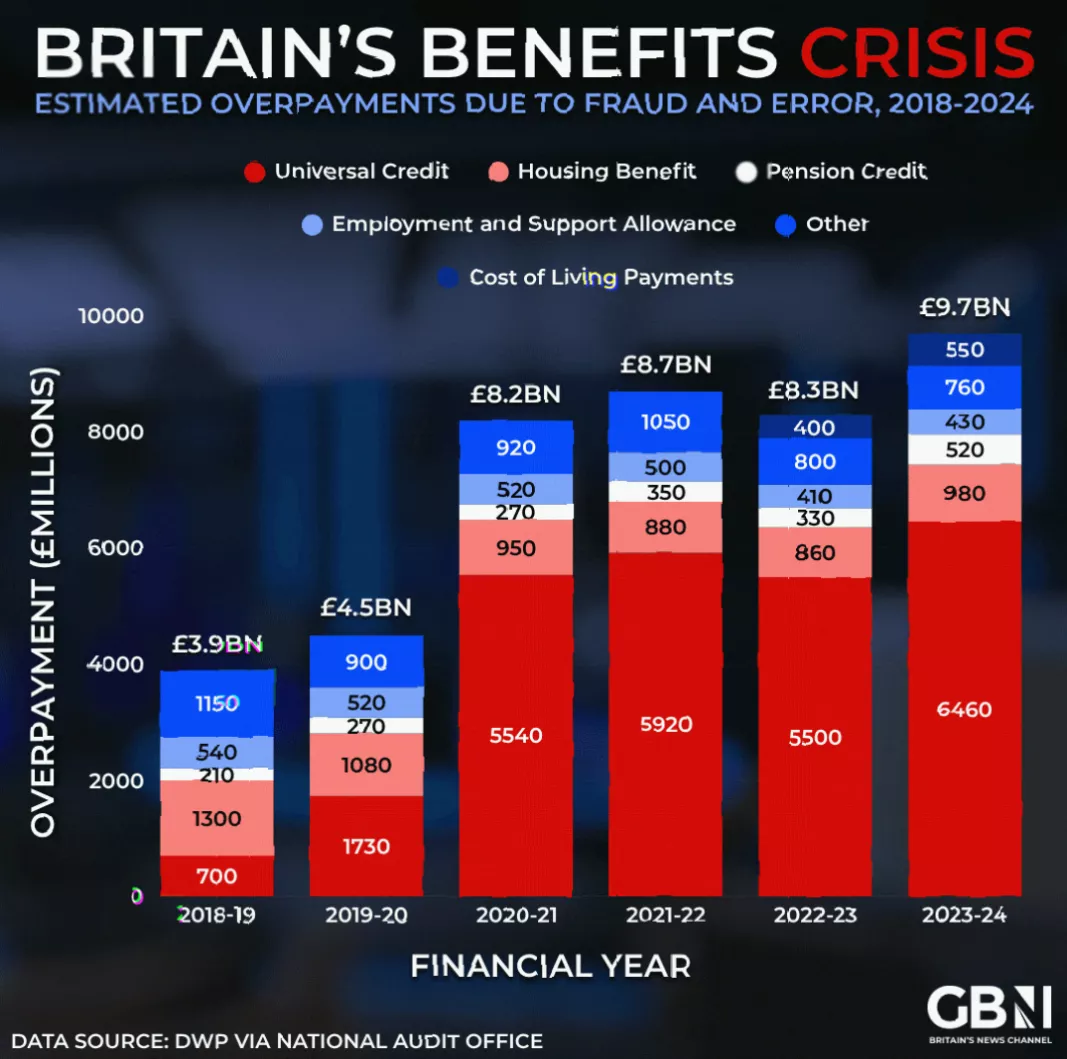
Compounding the cost is a persistent problem with fraud and error. Official statistics show that in the year ending March 2025, total benefit overpayments reached £9.5 billion, with fraud accounting for £6.5 billion. Claimant error rose to £1.9 billion and official errors to £1 billion. The DWP’s accounts have been qualified for 37 successive years due to the level of fraud and error, and the department has set an ambition to reduce overpayment rates to pre-pandemic levels by 2028–29.
Redirecting funds: savings for treatment and employment support
Any savings generated by the proposed classification would be ploughed back into treatment services and employment support programmes, according to the TBI. The institute argues that the measures would act as an immediate brake on welfare expenditure while shifting public spending towards longer-term national priorities. Alongside the new classification, the report calls for a series of other reforms: requiring every claimant to obtain a formal diagnosis before applying for benefits; raising the bar of evidence needed to qualify for long-term incapacity support; and restoring more frequent and rigorous reassessments alongside strengthened decision-making processes throughout the system.
The proposals arrive as the Work and Pensions Secretary pursues an ongoing review of the benefits system. The Labour Government has already faced internal party backlash and a potential rebellion over proposed reforms to PIP and the health element of Universal Credit, which aimed to tighten eligibility criteria and save billions annually. A controversial Universal Credit and PIP Bill was progressed in Parliament that sought to limit access to key welfare payments by increasing requirements for disability and mental health benefits. TBI has positioned its recommendations as a practical contribution to that reform agenda, with Ryan Wain insisting the approach is about targeting support more effectively rather than simply cutting access.