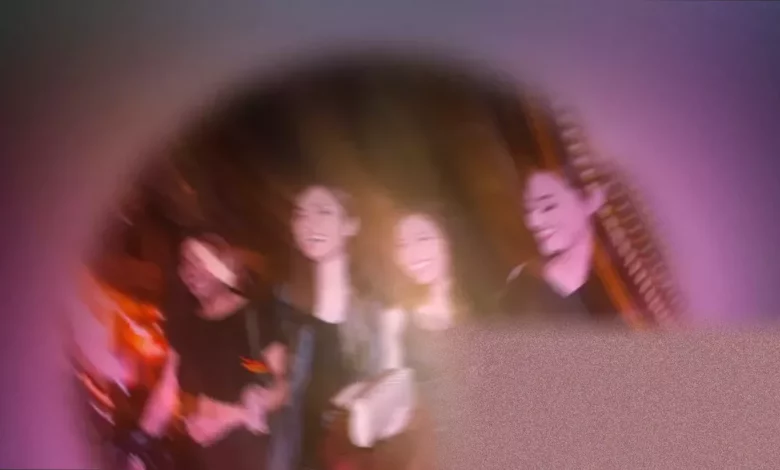
A shadow has fallen across the nights out of young women in Britain’s city centres, propagated by a burgeoning online genre that turns their public moments into private profit. Known as “nightlife” or “walking tour” content, these are covertly filmed videos that focus almost exclusively on women as they socialise, generating billions of views and significant revenue for anonymous creators while leaving the subjects feeling violated and powerless.
A recent BBC investigation uncovered the staggering scale of the phenomenon, identifying more than 65 online channels dedicated to such footage. These channels have collectively been watched more than 3 billion times in the past three years, with individual videos sometimes amassing millions of views. Creators often travel internationally to film, with Manchester and London being prime targets in the UK.
A Personal Discovery of a Public Invasion
For 25-year-old Nancy Naylor Hayes from Wigan, the abstract issue became a chilling personal reality in November 2023. An acquaintance sent her a message with a Facebook link. “I was panicking,” Naylor Hayes recalls. The link led to a montage of women filmed on the streets of Manchester. Minutes in, she saw herself, oblivious to the camera, standing on a pavement calling a taxi. The footage zoomed in on her face and lingered.
“It completely violates all privacy,” she says. The violation was compounded when she found a second, clipped version focusing solely on her face on YouTube, within a video titled “Manchester City UK Party Nightlife” that had 1.5 million views. The account, called City Life, had 105,000 subscribers and a library of similar videos with nearly 20 million total views.
Then came the comments. “Sexual things, things about my body,” Naylor Hayes says haltingly. They ranged from humiliating remarks about her weight to comparisons with an adult content maker. “It’s just not a nice feeling; it’s uncomfortable. It’s a strange thought that many people have seen me without me even realising.”
The Legal Grey Zone Exploited by Creators
Naylor Hayes’s experience highlights a profound gap between personal harm and legal recourse. Professor Clare McGlynn, a law specialist at Durham University, explains the current framework. “It’s not unlawful to video out in public, walking down a busy street,” she says. A “reasonable expectation of privacy” is hard to establish on a public street, and voyeurism laws typically require the recording of a private or intimate act.
While the upskirting offence introduced in 2019 made it illegal to photograph under a person’s clothing without consent, most nightlife content does not cross this threshold. Harassment law also often fails to apply, as it usually requires a “course of conduct” rather than a single video.
This legal limbo was starkly illustrated by a Greater Manchester Police investigation. In November 2024, they arrested a Bradford man on suspicion of voyeurism and harassment linked to reports of women being followed and filmed. However, by January 2026, the force revealed the criminal investigation had “concluded due to limitations within the current legislation.” They are now exploring other routes with Manchester City Council.
A Lucrative Business Model Built on Non-Consent
The drive to create this content is powerfully fuelled by money. Professor Annabelle Gawer, Director of the Centre of Digital Economy at the University of Surrey, analyses the economics. She estimates that a single video like the one featuring Naylor Hayes could earn between $1,500 and $4,500 (£1,130-£3,400) in ad revenue alone over its lifetime. Creators can generate “anything from a few pounds to tens of thousands of pounds per month” from views, ads, and channel memberships, particularly by uploading across multiple platforms.
“The woman filmed without her consent sees none of that,” Professor Gawer notes. She argues the swiftest recourse would be for platforms to demonetise and stop recommending such content. “If platforms stopped putting ads on these videos and stopped pushing them into recommendation feeds, a lot of that behaviour would dry up very quickly.”
Platform Policies and Enforcement Gaps
Social media platforms have policies that seemingly prohibit this content. In a statement, YouTube said it bans hate, harassment, and “unwanted sexualisation of an identifiable individual.” After being contacted for this article, YouTube terminated the City Life channel for violating its terms of service. Facebook referred to rules prohibiting videos that focus on “commonly sexualised body parts” with intent to mock or sexualise, and stated the video reported by Naylor Hayes’s acquaintance was likely removed by its systems. TikTok said it prohibits non-consensual sexual imagery and hateful behaviour like misogyny.
Yet the content remains prolific, suggesting a chasm between policy and consistent enforcement. The National Police Chiefs’ Council acknowledges the impact, stating the videos can leave women feeling “objectified and powerless” and urging those filming to consider their actions.
The Lasting Impact on Women’s Safety and Psyche
The psychological fallout for those featured is severe. Dr Louise Goddard-Crawley, a chartered psychologist, describes it as a “rupture of agency.” She explains, “Trauma is not only about physical violation. It is about an experience that overwhelms our sense of safety and control.”
Other women have spoken out about the distress. Model and influencer Amy Adams, who appeared in two such videos, called the premise “disgusting” and highlighted the torrent of misogynistic comments. Another woman on LinkedIn described the experience as “utterly terrifying,” noting the increased vulnerability if someone was alone or under the influence of alcohol.
The personal safety charity the Suzy Lamplugh Trust warns of broader physical repercussions, stating such content “can contribute to a wider environment in which harassment and abuse are normalised.” Naylor Hayes’s own behaviour has changed; she is now on guard when she goes out. “I don’t stand outside bars unless I know my Uber’s there,” she says.
The Push for New Laws and a Cultural Shift
In Parliament, efforts are underway to close the legal gap. Liberal Democrat MP Wera Hobhouse, who worked on the upskirting bill, is campaigning to criminalise nightlife content. “I see this as an extension of the work I did to make upskirting illegal. In both cases, the law has failed to keep pace with new forms of technology-facilitated harassment and abuse,” she says.
Her private member’s bill seeks to create offences for the non-consensual recording and online distribution of images for profit, with the purpose of obtaining sexual gratification or causing humiliation or distress. A second reading is pending. Separately, Baroness Doocey has proposed an amendment to the Crime and Policing Bill to create a specific offence for secretly filming someone without consent for sexual gratification or humiliation, with profiting from such footage as an aggravating factor.
For Nancy Naylor Hayes, some form of protection cannot come soon enough. She remains stunned that the simple act of calling a taxi could be transformed into a commodity for millions. “It just feels so creepy,” she says, a sentiment echoing for countless women who discover, too late, that their night out was someone else’s content.