Fake invoices foisted on Sotheby’s by a man trying to sell counterfeit ancient statues were exposed as forgeries after forensic scientists discovered they had been produced using printing methods invented in 2001 – more than two decades after the documents were supposedly written, a court has heard.
Andrew Crowley, 46, of Longwell Green, Gloucestershire, presented the auction house with paperwork that purported to date from 1976, typed on paper embossed with an antique dealer’s logo and bearing a nine-pence stamp. But the crude ruse unravelled when experts analysed the printing technology used to create them. The methods had only become available in 2001, meaning the documents were roughly 25 years too modern to be genuine.
The Metropolitan Police’s Art and Antiques Unit – the UK’s only dedicated art crime team – led the investigation. Detective Constable Ray Swan said the inquiry involved cross-border cooperation, with the FBI helping to track down a US typeface designer who confirmed the font used in the invoices was of recent origin.
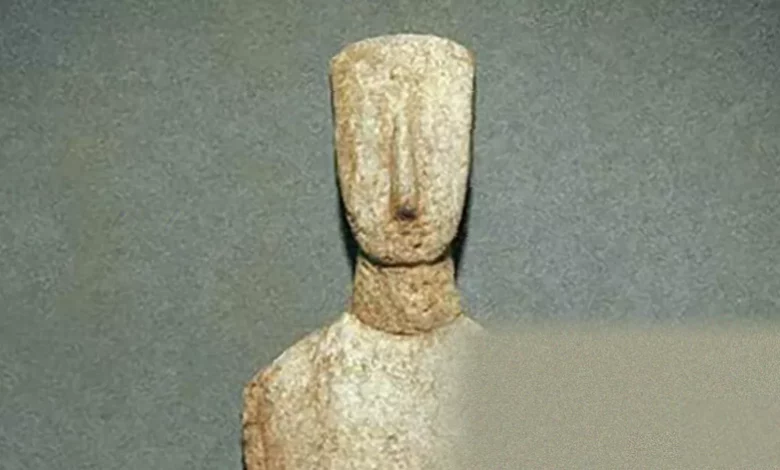
Crowley was arrested at Sotheby’s New Bond Street premises in July 2023 after asking the auctioneers to value three Cycladic figures and one Anatolian “stargazer” statuette – items he claimed to have inherited from his grandfather. The prosecution alleged that if the pieces had been genuine they would have been worth about £680,000 based on previous sales, though Judge Nicholas Rimmer reduced that estimate to £340,000, noting it hinged on multiple hypotheticals.
Sotheby’s experts had already flagged spelling mistakes – including an error in the supplier’s title – and other discrepancies in both the documentation and the sculptures themselves. Judge Rimmer said: “It was a crude attempt because Sotheby’s rumbled, to use the vernacular, or spotted, these documents as bogus fairly early on.”
The judge accepted that Crowley had indeed inherited the statues from his grandfather and did not at any point believe the artefacts themselves were counterfeits. Legitimate Cycladic figures were made in the Cyclades islands in Greece during the Bronze Age, about 3,000 years ago, and each of the statues presented by Crowley was roughly 30cm (12in) tall and weighed about 1kg. The Anatolian “stargazer” type – a Western term for Kiliya-type idols – typically dates back to the Chalcolithic period, around 3000–2200 BCE, and is characterised by a stylised, geometric female form with a head tilted upwards; complete examples are rare.
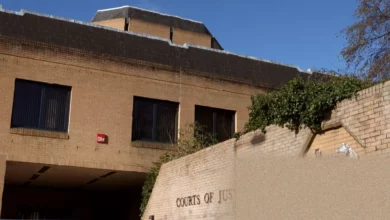
“The offending and dishonesty in this case must turn around the paperwork,” the judge said. Crowley had previously pleaded guilty to dishonestly making a false representation to Sotheby’s between 4 November 2022 and 27 July 2023, intending to make a gain. The Fraud Act 2006, under which he was charged, requires dishonesty and intent to gain regardless of whether any gain or loss actually occurred.
Handing Crowley a two-year suspended prison sentence, the judge also ordered him to complete 200 hours of unpaid work and pay £1,630 in costs over three months.
How modern printing methods gave the forger away
In 1976, the year the invoices claimed to have been produced, printing technology was limited to typewriters, offset printing and early phototypesetting – all analogue processes. By 2001, when the actual printing methods used for the forged documents were invented, inkjet and laser technologies were well established and capable of producing high-quality, detailed output that would have been impossible a quarter-century earlier. Forensic scientists identified this technological anachronism as a key indicator that the paperwork could not be authentic.
The market for Cycladic art has seen significant value increases, leading to widespread looting and a proliferation of forgeries. Provenance – the documented ownership history of an artefact – is considered critical to authenticity. A world record for a Cycladic figure was set in 2010 when a marble reclining female figure attributed to the Schuster Master sold for $16,882,500 in New York. Similarly, a notable “Stargazer” idol, the Guennol Stargazer, sold for $14.4 million at Christie’s in 2017.
Industry and police praise
DC Ray Swan said: “This case also highlights the crucial role played by industry experts in helping to protect the integrity of the London art market. Sotheby’s staff acted responsibly and swiftly in raising their concerns, and their cooperation was instrumental in preventing a significant fraud.” A spokesperson for Sotheby’s praised the Metropolitan Police’s “meticulous and superbly executed investigation that has helped prevent fraudulent material entering the market.”