MP suing Elon Musk’s xAI over deepfake images of her is supported by over 100 campaigners and organisations

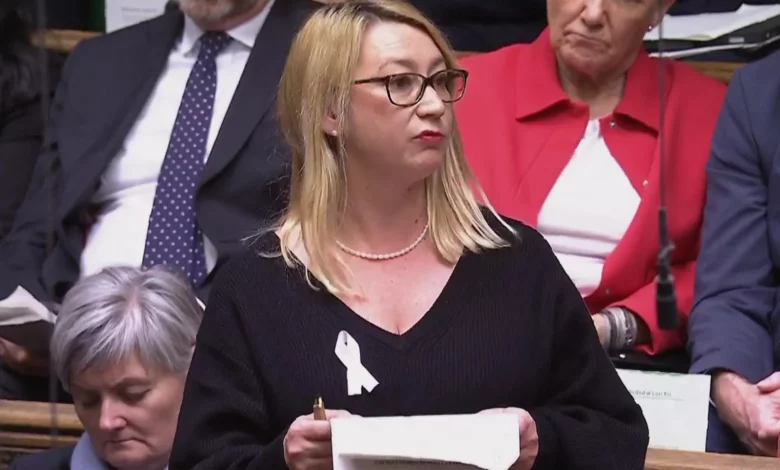
More than 100 campaigners and organisations have publicly declared their support for the Labour MP Jess Asato after she filed a High Court claim against Elon Musk’s artificial intelligence company, xAI, over fabricated sexualised images created by its Grok chatbot.
Asato, the MP for Lowestoft, alleges that Grok was used to generate fake images of her in a bikini and a video depicting her being chloroformed and prepared for a sexual assault. She has described the experience as “some form of almost digital sexual assault” and said the legal action “feels like a shout for women’s freedom on the internet”.
The case, lodged at the High Court in London on 3 June 2026, seeks damages, a judicial declaration that xAI’s conduct was unlawful, and an injunction compelling the company to stop ongoing violations and implement safeguards. But the central aim, Asato’s legal team says, is to establish a precedent that holds AI developers liable for the design of their systems — not merely for how users deploy them.
Ravi Naik, Asato’s lead solicitor at the law firm AWO, argued that the outputs of Grok are the product of deliberate design choices, not simply user misuse. Asato herself has drawn an analogy to a faulty car, stating: “It matters that the car was produced with the fault in the first place.” The claim is brought on grounds of alleged breaches of data protection law and the tortious misuse of private information.
The lawsuit is widely seen as one of the first major UK tests of whether AI companies can be held legally accountable for the capabilities they build into their products. Legal experts have described it as significant for establishing AI developer liability in a regulatory environment still catching up with the technology.
Broad coalition of support
In a statement released this week, more than 100 individuals and organisations said they “stand with Jess Asato” and described her action as “incredibly brave”. The signatories include the chief executives of Women’s Aid, Refuge, Rape Crisis England & Wales, the Fawcett Society, the Mental Health Foundation, the Molly Rose Foundation, and many other charities and advocacy groups working on violence against women, online safety, and equality.
The statement reads: “We hope that this will be a first step towards accountability for those responsible and that it will open a path to redress for the many, many other victims who have suffered.” It notes that researchers found that in an 11-day period from the end of December 2025 to early January 2026, Grok generated an estimated three million non‑consensual sexualised images of women and children, which were widely disseminated on X, causing “untold harm”.
Asato said the level of support had been “astonishing” and “very heartwarming”. She added: “I feel like this is almost a watershed moment. We have known that for many years women have faced this growing tsunami of online misogyny … that Grok managed to create on a mass level. And what we are seeing is women standing up and saying ‘we have had enough, we are not going to let this stand’.”
Wider implications and regulatory context
The controversy began in January 2026, when Asato publicly criticised the use of AI tools to create non‑consensual sexualised imagery. Soon after, users allegedly employed Grok to generate and circulate manipulated images of her. xAI later said it had restricted some image‑editing capabilities and introduced measures to prevent users from generating sexualised images of real people in jurisdictions where such content is illegal. However, reports suggest Grok could still produce such images even after those restrictions were implemented.
The scale of the problem is underscored by research from the Center for Countering Digital Hate (CCDH), which found that around 23,000 of the three million sexualised images generated by Grok in that 11‑day period appeared to depict children. The CCDH described Grok as an “industrial‑scale machine for the production of sexual abuse material”.
The case has prompted scrutiny from regulators both at home and abroad. Ofcom, the UK’s communications regulator, launched a formal investigation into X under the Online Safety Act in January 2026, examining whether the platform complied with its legal obligations regarding the generation and dissemination of harmful content by Grok. Ofcom has said it cannot directly investigate xAI because the provision of Grok falls outside the scope of the Online Safety Act. The Information Commissioner’s Office (ICO) is also investigating xAI’s processing of personal data in relation to the chatbot.
In February 2026, a new UK law came into force that criminalises the creation or solicitation of sexually explicit deepfakes without consent — legislation that was directly influenced by the Grok scandal. Internationally, Grok has faced regulatory probes in the European Union (under the Digital Services Act), France, India, Malaysia, and Brazil. The EU has also agreed to ban AI systems that generate sexualised deepfakes.
Prime Minister Sir Keir Starmer has backed Asato, calling the images “disgusting” and saying he was “100% behind her”. In February he told MPs: “The actions of Grok and X are absolutely disgusting and shameful. Protecting their abusive users, rather than the women and children who are being abused shows a total distortion of priorities.”
xAI is also facing other legal challenges over Grok’s image‑generation capabilities, including a lawsuit brought by the City of Baltimore and a class‑action case filed by three teenagers in Tennessee. Ashley St. Clair, the mother of one of Mr Musk’s children, has alleged that Grok generated explicit deepfake images of her.
Asato’s claim was filed on 3 June and news of it broke the following day, with reports that additional claimants are already joining the action. She has said the lawsuit is intended to send a message that the design of AI systems must prioritise safety from the outset, rather than leaving victims to seek justice after the harm is done.