The South East could see highs of 25C this weekend as a prolonged spell of unsettled weather finally gives way to building high pressure, according to the Met Office. After a working week dominated by rain, showers and even the risk of hail and thunder, conditions are expected to settle markedly by Saturday, bringing a “markedly warmer” feel across southern England.
By the weekend, temperatures in the south are forecast to climb into the low 20s, with the South East potentially reaching 24C or 25C. London could see 24C on Saturday, and highs across the region may reach the mid-20s by Sunday, with some weather maps suggesting 20C to 26C possible. In contrast, northern areas are expected to remain in the high teens, reflecting a persistent north-south split that will define much of the week.
Before the weekend arrives, the working week will see temperatures range between 17C and 18C in the south and 15C to 16C in the north. The Met Office notes that some parts of England and Wales could experience warmer conditions during the week, with temperatures locally reaching 19C to 22C, and East Anglia and the far southeast potentially seeing 23C or 24C. However, these are likely to be brief interludes rather than a sustained warm spell.
Why the north stays cooler and wetter
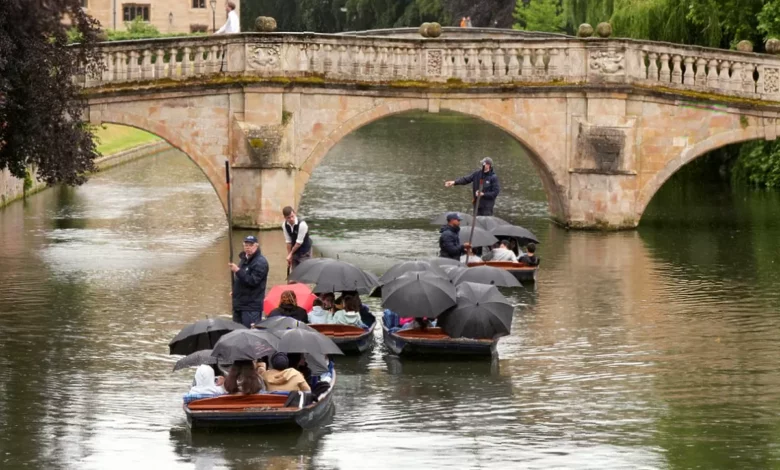
The temperature difference between north and south is driven by a broader weather pattern that sees the northwest bearing the brunt of Atlantic low-pressure systems. The Met Office says the beginning of June has been characterised by an active jet stream positioned further south than usual, bringing frequent rain, showers and brisk winds more typical of autumn or winter. This pattern is expected to persist through the working week, with rain forecast for Monday and Thursday across the UK, and a mix of sunshine and scattered showers on Tuesday and Wednesday. Showers could be heavy at times, with a risk of hail and thunder, particularly in the south and west.
The northwest of the UK is expected to experience the wettest conditions, while the southeast may see drier interludes. In Dumfries and Galloway, for example, light rain is forecast throughout the week with temperatures generally between 6C and 14C. The Met Office’s long-range outlook indicates that higher pressure may take longer to establish in the north compared to the south, meaning that even as the weekend brings settled weather to southern and western areas, the north could still see showers or longer spells of rain.
Broader trends: heatwaves, El Niño and water pressure
The unsettled start to June follows a record-breaking May heatwave, when temperatures reached 35.1C. The Met Office has noted that heatwaves like the one in summer 2018 are now 30 times more likely due to climate change, and by 2050 such events are projected to occur every other year. The three-month summer outlook from June to August indicates an increased chance of warmer-than-average conditions and heatwaves, aligning with a broader trend of hotter summers becoming more common.
Looking further ahead, some weather maps suggest temperatures could climb above 30C in parts of England around June 17-18, with highs of 31C possible. There is also a possibility of temperatures reaching 30C to 32C in late June, with western regions like the West Midlands, Wales and South West England potentially experiencing the hottest conditions. The Met Office’s outlook for June 10-19 warns of changeable conditions early on, but later in the period higher pressure may bring drier conditions, especially in the south.
Adding to the picture, a potentially strong El Niño event is forecast, which could drive up global temperatures and increase the risk of extreme weather. The Met Office notes that while the UK’s weather is influenced by many factors, El Niño can contribute to milder starts and colder ends to winters, and affect global food supplies. This El Niño is occurring on top of long-term warming trends due to climate change, potentially amplifying its effects.
Despite a wet winter, spring 2026 was exceptionally dry in parts of southern and eastern England, leading to falling river levels. The Met Office warns that any developing heatwave could put short-term pressure on water companies due to increased demand.