
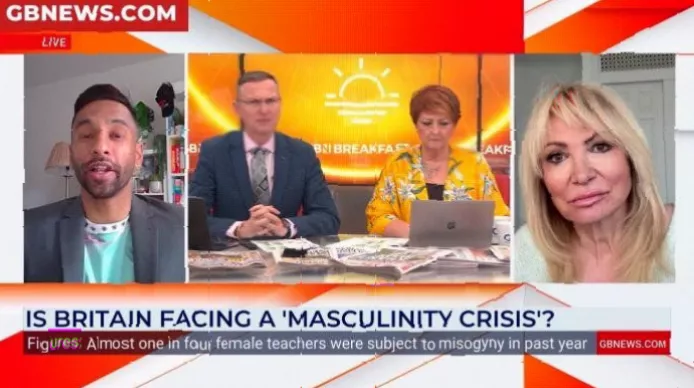
Nearly one in four female educators faced misogyny from pupils during the last academic year, according to a major survey highlighting a deepening behavioural crisis in British schools. The findings, from the NASUWT teachers’ union, reveal a steady and alarming four-year rise in such abuse, with 23.4% of female teachers reporting experiences in the past year, up from 17.4% in 2023.
A “Ticking Time Bomb” in the Classroom
The union’s general secretary, Matt Wrack, described the situation as a “ticking time bomb”, noting that women comprise over 70% of the teaching workforce. “If female teachers are reporting that they cannot contain gender-based aggression in their classrooms… then we have a ticking time bomb on our hands,” he said, warning that these pupils would become future husbands, fathers, and colleagues.
The survey of more than 5,000 teachers paints a picture of an environment where female staff are left feeling “traumatised”, “humiliated”, “demeaned”, “violated” and “disempowered”. The abuse reported is both blatant and insidiously casual.
Teachers recounted being subjected to sexual noises and gestures designed to demean them, and being called a “f****** s***” by students. In one disturbing incident, a pupil created AI-generated naked images of a staff member. Boys were reported making jokes about sexual assault and laughing when confronted.
Beyond overt harassment, female staff described routine patronisation, with pupils addressing them as “love”, telling them to “calm down”, and making remarks such as “must be that time of the month”. Some women reported that male pupils simply refused to listen to them because of their gender, with one teacher struggling with teenage boys being told by a parent to: “Work in a f****** nursery.”
The Online Pipeline to the Playground
The NASUWT and other education leaders directly link this rise in classroom misogyny to harmful online content and the influence of the so-called “manosphere”. Nearly 60% of teachers surveyed believe social media plays a role in the rise of aggression, disrespect towards women, and extremist attitudes.
Influencers like Andrew Tate have been cited as directly shaping male pupils’ attitudes, with some teachers reporting even primary-age boys refusing to speak to female staff due to admiring Tate’s views on male dominance. Daniel Kebede, general secretary of the National Education Union, warned that “addictive social media algorithms are feeding our children harmful content on a daily basis” with “clear negative effects”.
This chimes with wider research indicating over half of pupils aged 11-19 have witnessed comments they would describe as misogynistic. A study found 90% of secondary school teachers believe dedicated teaching materials are needed to address online misogyny’s impact.

The technological threats are also evolving. The research briefing notes that creating or sharing non-consensual sexually explicit ‘deepfake’ images is illegal in the UK, with new legislation being introduced to further criminalise such acts.
Demands for Action and Government Strategy
In response, the NASUWT is demanding mandatory training to help staff address conduct linked to online radicalisation. The union calls for compulsory professional development programmes enabling teachers to recognise, confront, and safely de-escalate behaviour stemming from sexism and hatred.
There is widespread support among teachers for stricter government regulation of tech firms. Rebecca Hitchen from the End Violence Against Women Coalition demanded strong sanctions against technology companies failing to address online misogyny, telling The Guardian that schools were “bearing the brunt” of hatred “fuelled by profit-seeking tech companies”. The NEU has advocated for raising the social media access age to 16.
The government has pointed to its wider strategy on violence against women and girls, announced in December 2025, which aims to halve such violence within a decade. Key education elements include making healthy relationships education mandatory in all secondary schools in England by the end of this Parliament in 2029, with a pilot from September 2026.

An £11 million investment includes a £3 million teacher training fund over two years to equip staff to identify and challenge misogynistic attitudes. Updated relationships, sex and health education guidance will focus on consent, healthy relationships, and challenging myths that normalise hostility towards women. Secondary schools will also include lessons on “incel” culture, AI, deepfakes, and the links between pornography and misogyny.
On the issue of mobile phones, which are seen as a vector for harmful content, the Department for Education has strengthened its guidance. From January 2026, it states that schools should be “mobile phone-free environments by default”, prohibiting access throughout the school day.
The Department for Education stated that “misogynistic views are not innate, they are learned” and confirmed the Government’s commitment to use “every possible tool” in its mission. Officials said resources were being provided to help teachers spot signs of “incel” ideologies and that a consultation on healthy relationships with technology is being launched.