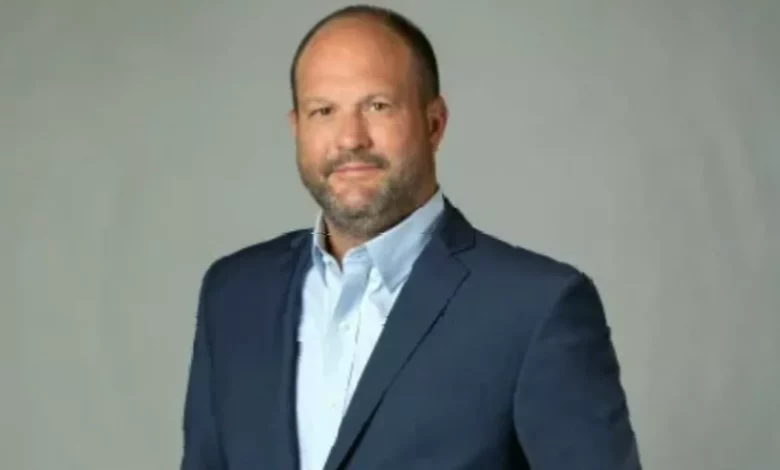
The foundation of Paycom founder and chief executive Chad Richison has awarded a $500,000 programme-underwriting grant to the Oklahoma Educational Television Authority (OETA), the Richison Family Foundation has announced. Richison, who grew up in the rural Oklahoma town of Tuttle (population under 10,000), said the investment aligned with his foundation’s mission of backing sustainable organisations that deliver lasting impact in areas including children’s education, foster care, food supplies, mental health and wellness.
The grant will help sustain OETA’s public media services across the state, including PBS KIDS, the Oklahoma News Report and the statewide Wireless Emergency Alert system. Public broadcasting is an essential resource for communities, Richison said, and the foundation’s support is intended to reinforce OETA as a sustainable organisation with a lasting impact. The funding arrives at a time of considerable financial pressure for the network: federal contributions from the Corporation for Public Broadcasting, which represented about 12 percent of OETA’s budget, have faced persistent uncertainty. In fiscal year 2023 the station reported total revenue of $15.17m, of which $2.88m came from state appropriations and $1.6m from the CPB. State funds have also come under political scrutiny; Governor Kevin Stitt has vetoed appropriations, accusing the network of “indoctrinating” and “overly sexualising” children, though the legislature has at times overridden those vetoes. In May 2025 the U.S. Department of Education terminated the 2020-2025 Ready To Learn grant, which had supported PBS and its stations.
The educational impact of PBS KIDS on children’s learning
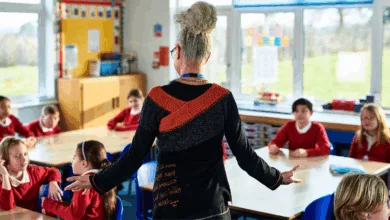
The grant’s most direct educational impact will be felt through PBS KIDS, which OETA delivers across its four-channel network — PBS, World Channel, Create and the dedicated PBS KIDS channel — throughout all 77 Oklahoma counties via four full-power transmitters and 14 translator stations. Nationally, PBS KIDS averages 13 million monthly users and nearly 400 million streams across its digital platforms. The service reaches more children and parents of young children than any other children’s television network, with 60 percent of its audience living in rural communities and 87 percent in homes without internet access — a demographic closely matching the rural Oklahomans the Richison Family Foundation says it wants to serve.
Research commissioned by the Corporation for Public Broadcasting and the PBS Ready To Learn Initiative, with funding from the U.S. Department of Education, has demonstrated measurable learning gains from PBS KIDS content. A 2020 study of the animated series “Molly of Denali,” which follows an Alaska Native girl, found that first-grade students from low-income households became significantly better at using informational text to solve real-world problems after engaging with the show and its digital video games and app for as little as one hour per week. Children who spent more time with the resources showed even greater benefits. The programme’s content is aligned with Common Core Standards and the Head Start Early Learning Outcomes Framework.
Broader analysis backs these findings. An independent review of 45 studies involving nearly 25,000 children aged two to eight concluded that PBS KIDS media and resources enhance early literacy skills — including letter recognition, vocabulary development and phonological awareness — and also produce positive gains in STEM learning. Shows such as “The Cat in the Hat Knows a Lot About That!” have been shown to increase interest in science, while “Work It Out Wombats!” strengthens computational thinking. Beyond academic skills, the programming aims to foster critical life skills including collaboration, problem-solving, empathy and self-regulation.
The importance of underwriting for public broadcasting
The $500,000 grant is structured as programme underwriting, a cornerstone of public broadcasting financing. Viewers will recognise the model from the lines that appear at breaks in programming: “This programme was made possible by …”. Underwriting allows a sponsor to support specific content in association with its name, reinforcing credibility while helping the station fund operations without turning to commercial advertising. OETA’s programming is purchased through funds raised by Friends of OETA, Inc., and corporate support — not from state appropriations.
“This investment from the Richison Family Foundation is both meaningful and essential,” said Shawn Black, executive director of OETA. “We are incredibly grateful for partners like the Richison Family Foundation, who believe in our mission and help make it possible. Their support also highlights the vital role underwriters play in sustaining public television as a trusted, non-commercial resource for all.” The grant demonstrates the foundation’s lasting impact on children’s education and provides a visible, credible endorsement of public media’s role in Oklahoma — a state where the network also maintains the infrastructure for the PBS Warning, Alert, and Response Network (WARN) system, which relays Wireless Emergency Alerts from FEMA via cellular networks, funded by a Department of Commerce grant from the National Telecommunications and Information Administration.
Richison’s philanthropic record extends well beyond this single grant. The founder of Paycom, the cloud-based human capital management software company that went public in 2014, he received the highest CEO compensation package in the S&P 500 in 2020, valued at over $200 million. Forbes estimated his net worth at $1.5 billion as of November 2025, making him one of Oklahoma’s youngest billionaires. He has signed The Giving Pledge, committing to donate the majority of his wealth. His foundation has donated $10 million to the University of Central Oklahoma, $5 million to build the American Cancer Society Chad Richison Hope Lodge in Oklahoma City, approximately $6 million during the COVID-19 pandemic to food banks, schools and homeless support organisations, and a $17 million commitment to his Green Shoe Foundation, which addresses mental health and childhood trauma. Paycom itself regularly supports nonprofit organisations nationwide, including those aiding underserved communities, youth, families, mental health initiatives and the environment. The OETA grant sits within that broader pattern of philanthropy — but its structure as programme underwriting ties it directly to the educational mission of public broadcasting, filling a gap left by uncertain federal and state funding.