Universities across the UK face an unprecedented regulatory crackdown, with the threat of severe sanctions including closure, if they fail to effectively tackle extremist activity on campus. The move comes as official data reveals that Prevent duty referrals from higher education institutions have doubled over the past three years, reaching a record high.
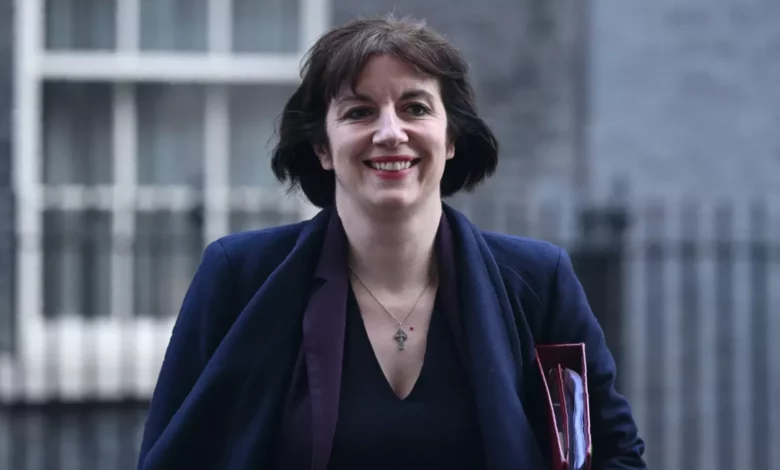
Education Secretary Bridget Phillipson is set to launch a new “social cohesion strategy” this week, a leaked draft of which identifies Islamic extremism as the primary danger to national cohesion. At its core is a significant bolstering of powers for the Office for Students (OfS), the independent higher education regulator, to enforce universities’ existing legal duties.
A Strengthened Regulatory Regime
Under the plans, the OfS will be granted greater authority to intervene where institutions are deemed to have fallen short of their anti-extremism obligations. The potential penalties are severe, ranging from sanctions to, in the most serious cases, forcing a university to close. To support this, a new whistleblowing service will be established, allowing university staff to report concerns directly to the regulator if they feel unable to do so internally.
Vice-chancellors will also be issued with fresh guidance on conducting stricter checks on visiting speakers, aiming to prevent the spread of extremist material or criminal offences on campus. Data shows the number of campus events or speakers approved with conditions due to Prevent-related risks increased from 15 in 2022-23 to 30 in 2023-24.

Furthermore, the strategy proposes the co-creation of a “Campus Cohesion Charter” with students to set clearer expectations for conduct and shared values. Ms Phillipson stated that while universities must remain places of “rigorous debate and opportunity,” they should never be places where students “feel unsafe because of who they are or what they believe.”
International Pressure and the Muslim Brotherhood Question
The government’s focus coincides with significant international concern. Just weeks ago, the United Arab Emirates (UAE) cut state funding for its youth to study in the UK, a move attributed by Emirati officials to fears they may return radicalised by Islamist ideologies on British campuses. While self-funded students can still attend, the withdrawal of state scholarships marks a stark diplomatic signal.
This action is rooted in a fundamental policy divergence. Gulf states including the UAE, Bahrain, and Saudi Arabia have all proscribed the Muslim Brotherhood as a terrorist organisation—a step the UK has not taken. A 2014 UK government inquiry concluded there was insufficient evidence to ban the group, though it found its beliefs were contrary to British values. Critics of the UAE’s position argue it is leveraging Islamophobic discourse to pressure Britain into aligning with its stance.
The new domestic strategy will also see a scaled-up Home Office unit dedicated to blocking extremists from entering Britain, and the government will publish an annual “State of Extremism” report outlining the nature of the threat.

Controversies Within the Strategy
The leaked cohesion strategy has already sparked controversy beyond its campus measures. An earlier draft reportedly described the flying of English, Scottish, and Union flags on lampposts as a potential “tool of hate,” claiming national symbols were deployed last summer to “exclude or intimidate” communities—a reference to campaigns like “Operation Raise the Colours.” This characterization has drawn fierce criticism from some quarters, who labelled the document divisive.
Within the sector, Universities UK has expressed concern that the government’s updated definition of extremism could inadvertently curtail legitimate speech on contentious topics and disproportionately impact Muslim staff and students. This tension highlights the delicate balance between safeguarding duties and upholding free speech, a core principle of academic life.
The document also identifies other specific hatreds, noting concerns that antisemitism has become “normalised in many corners of society,” including universities. Conversely, it proposes creating an “anti-Muslim hostility tsar” to champion efforts against hatred directed at Muslims.
The Scale of the Challenge
The government’s heightened focus is backed by recent data. In the 2023-24 academic year, 265 Prevent cases were escalated by higher education providers to the government’s Channel programme. Of these, 27% were related to Islamist radicalisation, 12% to extreme right-wing radicalisation, and 35% to mixed, unclear or other ideologies.
The leaked strategy draft warns that Britain’s “historic social cohesion” is “under threat” from mass migration and social media, stating that for many, changes have been “too much, too quickly.” While calling for “respect for different cultures,” it insists integration is “a two-way street,” and that “newcomers have a responsibility to engage with and embrace what it means to be British.”
With strengthened powers for the regulator, new guidance for institutions, and a stated aim to draw clearer lines around acceptable activity, the government is embarking on a stringent effort to reshape the campus environment. The success of this approach, and its reception within the academic community deeply protective of its liberties, remains to be seen.