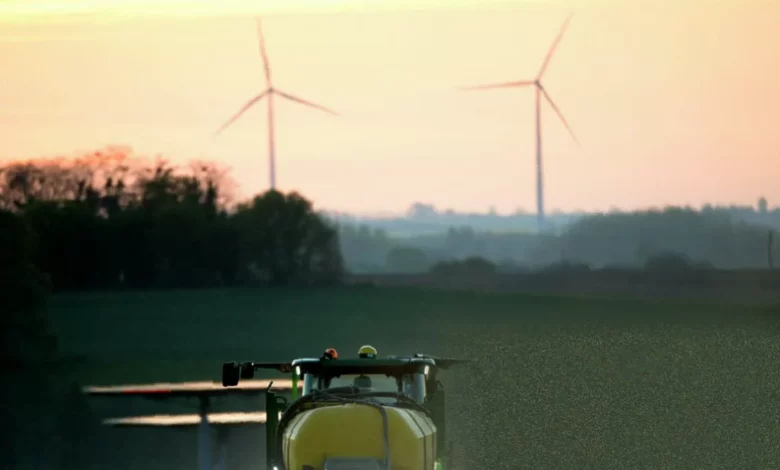
The use of glyphosate on UK crops has increased tenfold in just over three decades, with government data showing a rise from approximately 200 metric tonnes in 1990 to more than 2,200 tonnes in 2024. The area of farmland treated has expanded in parallel, now covering over 2.6 million hectares annually, as the herbicide remains a cornerstone of conventional and increasingly, so-called regenerative agriculture.
From Scottish Glens to Global Practice
The modern story of glyphosate in UK farming has a specific, damp origin. In the 1980s, Scottish farmers grappling with the challenge of evenly drying wheat in wet conditions pioneered the practice of spraying glyphosate on the crop just before harvest. This ‘desiccation’ killed the plant, accelerating the drying process. The practice, leveraging a chemical then seen as revolutionary for its plant-specific action, soon spread to other cold, wet agricultural regions worldwide.
The UK’s Particular Dependency
Today, the UK’s relationship with glyphosate differs from that in the Americas, where genetically modified, herbicide-resistant crops are sprayed liberally during growth. Here, its primary use, according to agricultural ecologist Helen Metcalfe of Rothamsted Research, is as a burndown treatment applied before a crop is planted to clear fields of weeds. This function has become deeply intertwined with the rise of regenerative farming, which aims to improve soil health by minimising ploughing.
“To be able to do regenerative farming well you need to apply glyphosate,” Metcalfe said, explaining that the chemical offers an alternative to tillage, thereby protecting soil structure, preventing erosion, and aiding carbon sequestration. However, this dependency is contentious. The Soil Association highlights a conflict with organic principles, and the approach carries its own risk: the increased and repeated use has led to glyphosate-resistant weed populations, like Italian ryegrass, emerging in the UK—a serious warning for its long-term efficacy.
The pre-harvest desiccation method invented in Scotland, meanwhile, faces new restrictions. Reflecting fears about chemical accumulation in food, the European Commission explicitly banned the use of glyphosate for this purpose when it re-approved the herbicide for a further 10 years in November 2023.
A Contested Safety Record
The chemical’s safety profile is fiercely debated. In 2015, the World Health Organization’s International Agency for Research on Cancer (IARC) classified glyphosate as “probably carcinogenic to humans,” a finding based on evidence of carcinogenicity in animals and genotoxicity. This stands in contrast to assessments by the US Environmental Protection Agency (EPA) and the European Food Safety Authority (EFSA), which have concluded it is not likely to be carcinogenic when used as directed; the EPA’s review considered a more extensive dataset than IARC’s.
Beyond cancer, other health links are alleged. The French government has officially acknowledged a connection between Parkinson’s disease and glyphosate exposure, compensating affected farmers. Scientific studies point to potential endocrine and nervous system effects. Wayne Carter, an associate professor at the University of Nottingham, notes the difficulty in determining the impact of everyday exposure but stresses that “the more you’re exposed, the more concern there is.”
These concerns have sparked significant legal action. In the United States, Bayer, which acquired the original manufacturer Monsanto, has agreed to a proposed $7.25bn settlement to resolve thousands of lawsuits alleging its glyphosate-based product Roundup caused cancer.
Environmental and Regulatory Crossroads
Environmental damage is a further charge. Campaigners argue glyphosate pollutes waterways, harms wildlife, and can disrupt soil microbiology and fertility. The campaign group Pesticide Action Network UK (PAN UK), which analysed the usage data, states the UK’s “glyphosate addiction has spiralled out of control.” The group is calling for the government to commit to a phase-out and ban, supporting the adoption of alternatives.
Such alternatives, from mechanical weeding to crop diversification, are deemed feasible. Their use is already policy in several UK areas, including Lewes and the London Borough of Hammersmith & Fulham, which have banned glyphosate in public spaces over health concerns. PAN UK research indicates strong public support for pesticide-free public spaces, though many councils still cite cost as a barrier to change.
The UK government now faces a key decision, with glyphosate’s licence due for renewal in December, potentially until 2041. A government spokesperson stated that pesticides are only approved if evidence shows they won’t harm health or have unacceptable environmental effects. For farmers like Martin Lines of the Nature Friendly Farming Network, the soaring usage data is a “wake-up call” for the supply chain and government to provide practical support for reducing reliance.