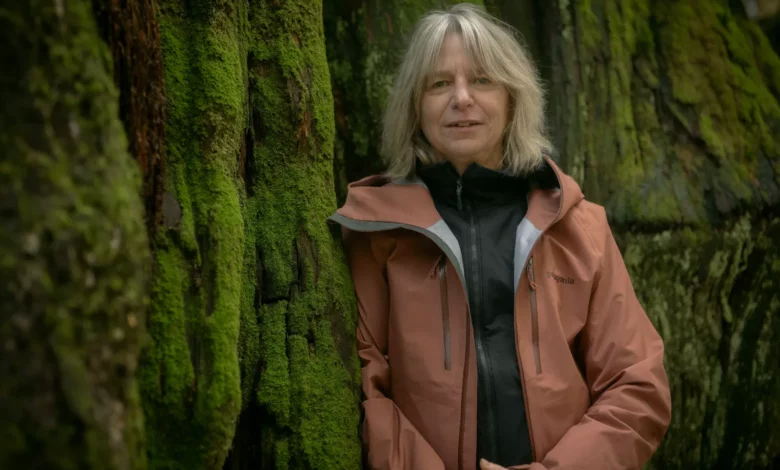
Canadian ecologist Suzanne Simard has radically reshaped our understanding of forests, revealing them to be highly connected, cooperative networks rather than arenas of relentless competition. Her work, culminating in the 2021 bestseller Finding the Mother Tree, has overturned the Darwinian view that trees are locked in an endless struggle for light, water and nutrients, instead showing that they share carbon, nutrients and information through vast underground fungal networks.
The Wood Wide Web
Simard’s seminal discovery began with her PhD research in the 1990s, when she tracked the movement of carbon between trees using radioactive isotopes in the Douglas fir forests of British Columbia. Publishing the results in Nature in 1997, she demonstrated that trees are interconnected by mycorrhizal fungi — a system the journal’s editors christened the “Wood Wide Web”. At the heart of these networks are large, older “mother trees” that act as central hubs, channelling resources to younger, neighbouring trees and even recognising and preferentially supporting their own kin seedlings. This cooperation ensures the survival and resilience of the entire forest.
Her 2016 TED talk, “How trees talk to each other”, attracted millions of views, and her research has since become a touchstone for a new generation of ecologists and conservationists. Yet the concept has also drawn criticism, with some scientists accusing her of anthropomorphising trees. One memorable jibe called for “less hype. More hyphae.” Simard acknowledges that the pushback was harsh. “It was really hard and affected my person, my soul,” she says. She attributes the hostility partly to a reductionist culture in Western science that trusts only small-scale, isolated experiments. Some early skepticism was also rooted in her being a woman in a male-dominated field, though her work has since gained wide acceptance.
Pushback and Proof
Simard’s findings stand at odds with both traditional forest science and the forestry industry. She argues that cutting down the oldest trees and converting forests into monocultures destroys the intelligence and resilience that keep the entire system alive. Conventional practices such as clear-cutting, she notes, wipe out about 60 per cent of the carbon stored in the forest-floor soil — a layer built up over 10,000 years — and release that carbon into the atmosphere. Her research with the Mother Tree Project, launched in 2015, is designed to test alternative approaches to forest management on a scale that few others have attempted.
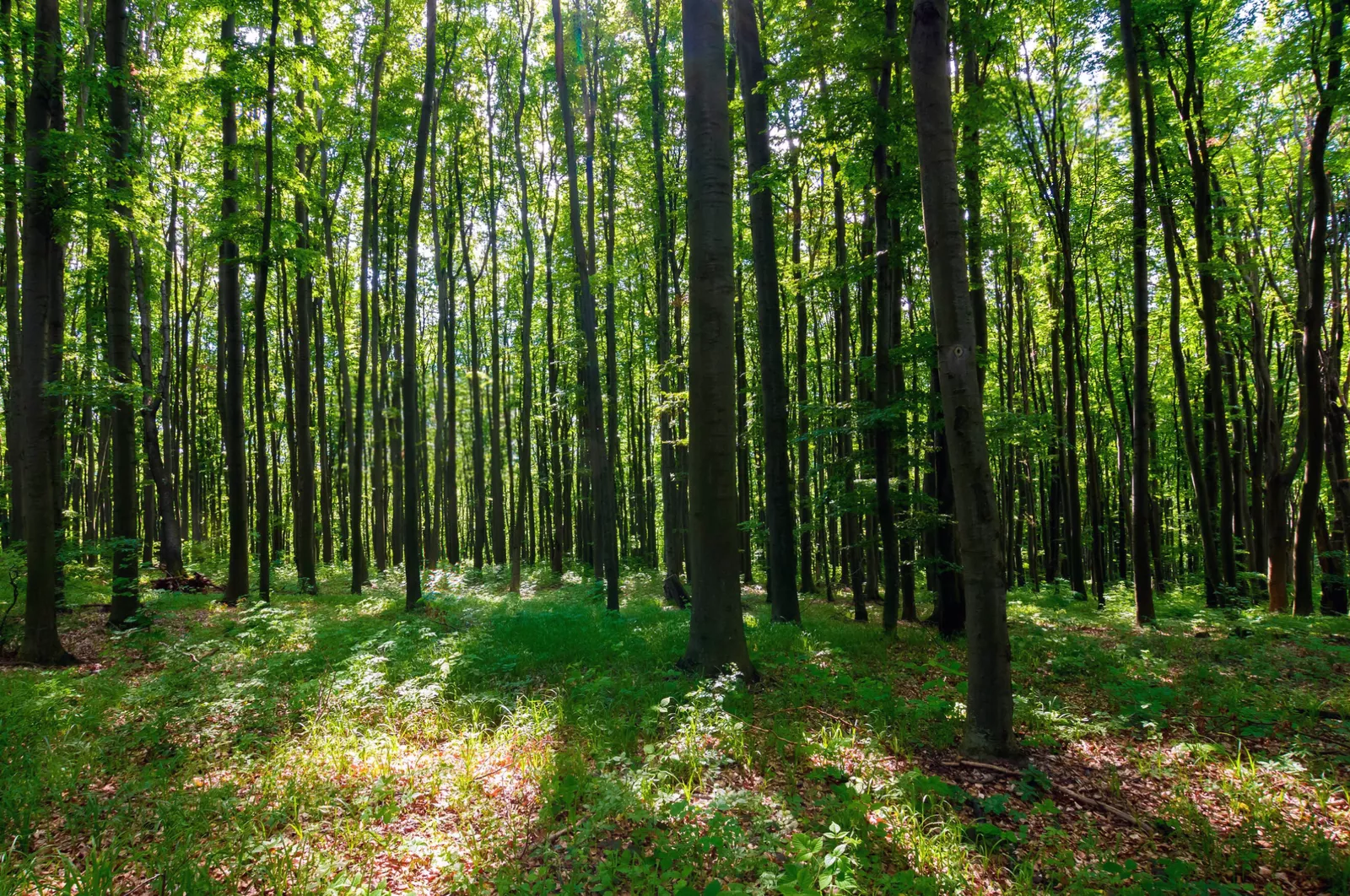
The project encompasses nine forests in British Columbia covering an area the size of Denmark, and is designed to run for 500 years. Its aim is to identify regeneration methods that will maintain forest diversity, productivity and resilience in the face of climate change, studying the effects of different harvesting and retention strategies after disturbances such as clear-cutting, insect outbreaks, wildfires and drought. Simard’s science is co-produced with Indigenous communities, who she says have shaped Canada’s forests since the last ice age. “Indigenous people enhance the forest,” she explains. “They enhance the salmon populations. They enhance the clam beds and the root gardens.” She advocates for the rematriation of land to Indigenous peoples, enabling them to care for it based on their ancestral knowledge, and contrasts this with the exploitative model of corporate forestry.
A 500-Year Plan
Four of the nine Mother Tree forests have been hit by wildfires; one was lost entirely. The backdrop to Simard’s work is an accelerating climate crisis — new research suggests the Atlantic Meridional Overturning Circulation (AMOC) is significantly more likely to collapse than previously thought, with unfathomable implications for UK weather, farming and food security. Simard acknowledges that “we’re in the phase of a catastrophic climate world”, but insists that “if we manage our ecosystems well, we can reverse that trend and make it a more stabilised system”.
Her latest book, When the Forest Breathes — due for publication on March 31, 2026 — builds on her earlier work to chart a practical path forward. It moves from vast landscape experiments and tinderbox mega-fires to Indigenous ceremonies and forestry boardroom culture, interwoven with the rhythms of family, love and loss. A key finding from the Mother Tree Project, she says, is that while clear-cutting devastates soil carbon, under careful stewardship the carbon begins to rebuild much faster than expected. “The more-than-human world is very busy,” she says. The results are “incredibly hopeful and exciting”.
When she returns home, Simard hopes to leverage her status as a national treasure in Canada to meet David Eby, the premier of British Columbia, in the forest. There, she intends to ask him a simple question: what kind of ancestor does he intend to be?