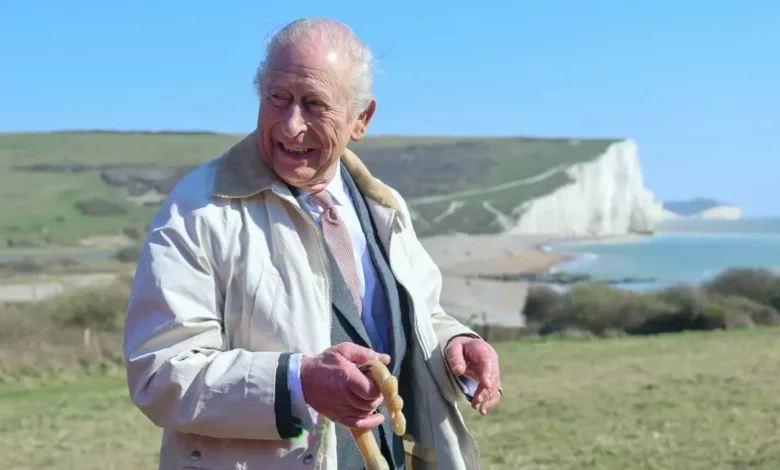
In a symbolic gesture blending personal history with a national conservation legacy, King Charles III returned to a stretch of coastline he once knew only from the deck of a naval ship to dedicate it to the nation for generations to come.
On Thursday, the King officially opened the Seven Sisters National Nature Reserve and inaugurated a major section of the world’s longest continuous coastal walking route, the King Charles III England Coast Path. Walking a two-kilometre section of the new path on the Sussex coast, he unveiled commemorative plaques and met with the community groups and charities behind the projects.
The event marked the formal declaration of the iconic Seven Sisters cliffs as England’s newest National Nature Reserve (NNR). Spanning 1,500 hectares (3,700 acres), the reserve is the first of its kind in the UK to be specifically inspired by groundwater protection. It safeguards a significant chalk dome aquifer, a vital source of drinking water for local towns and freshwater for wildlife, beneath globally rare habitats of chalk grassland, heath, and floodplain meadows.
A Landscape Forged in History and Imagination
The chalk cliffs, formed from the compressed remains of ancient sea creatures, have long transcended their geological origins to become a cultural icon. They provided the backdrop for poet Rudyard Kipling’s “Sussex” and have featured in films including Atonement, Harry Potter and the Goblet of Fire, Robin Hood: Prince of Thieves, and the upcoming Wicked. Their protection is also rooted in historical campaigning; groups like the Society of Sussex Downsmen, supported by Kipling himself, successfully fought off development plans in the 1920s.
Today, the reserve is a haven for biodiversity, home to species like the chalkhill blue butterfly, yellow hammer, skylark, and the delicate bee orchid. Its creation is the 13th in the King’s Series of National Nature Reserves, an initiative aiming to establish or expand 25 NNRs across England by 2028, putting the Seven Sisters at the halfway point of this ambitious project.
According to the project partners, including Natural England, the South Downs National Park Authority, and the Sussex Wildlife Trust, future plans involve working with landowners to expand the reserve further through regenerative, nature-friendly farming.
A Path Two Decades in the Making
The King’s walk also celebrated the completion of the monumental King Charles III England Coast Path. Legislated for in 2009 and nearly two decades in the making, the path now stretches approximately 2,700 miles around England’s entire open coast, creating about 1,000 miles of new legal public access.
The project, described as a world-first, has involved extensive work to negotiate rights of way, manage sensitive habitats, and improve accessibility. Improvements include removing stiles, resurfacing paths, and building boardwalks and bridges. The route showcases a diverse coastline of salt marshes, beaches, dunes, and cliffs, with the section traversing the Seven Sisters chalk downland now forming a core part of the new national nature reserve.
The economic potential is significant. Models like the South West Coast Path, which generates millions in visitor spending and supports thousands of jobs, indicate the new national trail could substantially boost tourism and lengthen the season for coastal communities. The inauguration was also framed as a celebration of the dedicated trails officers who brought the project to life.
During his visit, the King engaged warmly with the public, surprising hikers and joking with cyclists on e-bikes that they were “cheating.” He reflected on his naval past, noting he had previously only viewed the dramatic cliffs from the sea.
Broader Ambitions for Sussex’s Environment
The dual inauguration sits within a wider framework of environmental restoration for the region. The Sussex Bay initiative aims to restore 100 miles of coastline, seeking to raise £50 million by 2050 for marine and freshwater projects to create a healthier “blue ecosystem.”
On land, projects like Halnaker Hill Farm in the South Downs National Park are putting large-scale conservation into practice. As one of the UK’s largest Biodiversity Net Gain schemes, it is restoring over 300 acres through regenerative farming, tree planting, and new hedgerows.
This work aligns with strong public concern in Sussex about the state of nature. Surveys indicate a significant majority of residents are worried about the future of the local environment, citing specific anxieties about housing development impacts on flooding and habitats, pollution, and a desire for cleaner air and water, reduced flood risk, and enhanced carbon storage through protected natural corridors.