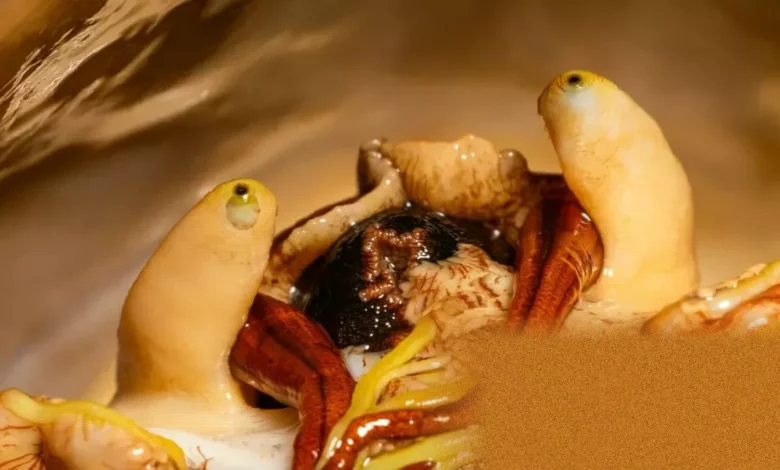
Along the Californian coast, a quiet but urgent effort is underway to rescue a creature that once defined the region’s marine ecology and human culture from what seemed certain extinction. The white abalone, a large sea snail celebrated in song and supper for over a century, now exists only in fragments of its former population, its survival hinging on the work of a dedicated team at a laboratory in Bodega Bay.
From Plenty to Peril
Historically, white abalone were so abundant they were found stacked upon each other on the seafloor. Their iridescent shells have been discovered as far east as the Mississippi River, testament to their value in trade, while for millennia, indigenous tribes of California used them for food, tools, jewellery, and currency. Their slow movement and prized meat, however, made them easy and tempting targets. The 1970s saw a feeding frenzy, with 280 tons harvested in a single decade; over 95% of the total commercial catch occurred between 1969 and 1977.
The collapse was catastrophic. By 1997, all abalone fisheries were closed, but for the white abalone, it was too late. A survey in the early 1990s found only three individuals where thousands once lived. Overall, the species has suffered a 99% decrease since the 1970s, with less than 1% of the historical population remaining by 2001. In that year, it earned the grim distinction of becoming the first marine invertebrate to be listed as endangered under the US Endangered Species Act.
The root of its inability to recover naturally lies in its reproductive biology. White abalone are “broadcast spawners,” releasing eggs and sperm into the water column. With remaining wild individuals now scattered and found in deeper waters of 30-60 metres, they are simply too far apart for successful fertilisation. Left alone, biologists concluded, they were doomed to vanish within a decade.
The Science of Second Chances
This is where the White Abalone Culture Lab at the UC Davis Bodega Marine Laboratory enters the story. It leads a 25-year captive breeding and restoration programme, part of a broader consortium involving NOAA and the California Department of Fish and Wildlife. The goal is starkly simple: produce enough abalone to re-establish wild populations.
On a recent spawning day, the lab’s director, Dr Alyssa Frederick, oversaw a meticulous process. Biologists assessed the health of 110 adult abalone—some as large as coconuts—before placing them into buckets of a hydrogen peroxide “love potion” that stimulates the release of eggs and sperm. To set the mood, the team sometimes switches off the lights or even plays music, a practice Dr Frederick admits is “totally unscientific” but harmless.
The science, however, is rigorous. Researchers employ techniques like ultrasound to monitor reproductive health non-invasively. Since the Bodega Bay lab opened in 2011, designed to avoid the withering syndrome that thwarted earlier efforts, it has released over 20,000 animals—a tenfold increase for the species. To date, more than four thousand captive-born white abalone have been returned to the Pacific in a process known as “outplanting.” The potential is significant: a single successful spawning event can yield over 12 million fertilised eggs.
A Fragile Recovery
Despite this progress, the path to recovery is fraught with interconnected threats. The abalone’s vital habitat, kelp forests, has been devastated along the northern California coast, with one 2021 study noting a 95% loss. This is largely due to warming waters and an explosion of purple sea urchins, whose major predator, the sunflower sea star, has been decimated by sea star wasting disease.
Meanwhile, the ever-present spectre of withering syndrome, a fatal bacterial disease exacerbated by warmer water, requires constant management in captivity through cool water temperatures and antibiotic treatments. All seven West Coast abalone species in the US are now listed as critically endangered or endangered on the IUCN Red List, with the black abalone also holding US endangered status.
Perhaps the most human of the threats is financial volatility. Last April, the programme faced a crisis when proposed federal budget cuts to NOAA threatened its three-year grant. “If you want to save a species, you can no longer rely fully on federal funding,” Dr Frederick stated. “That’s just poor risk management.” While anonymous donors provided a stopgap and federal funding for 2026 has since come through, securing long-term support remains a critical challenge.
A Symbol of Hope
For Dr Frederick and her team, the work is about more than saving a single species. White abalone are “ecosystem architects”; their grazing shapes kelp forests, promoting biodiversity. Their return would signal healing for a broader marine environment. “So many people studying the ocean or studying endangered species have a really hard job. They have to watch the ocean degrade or they’re watching a species go extinct,” she reflects. “In this situation, we get to actually restore the white abalone. It’s kind of amazing. That never happens.”
The ultimate aim is to rebuild populations to a self-sustaining level, potentially leading to a downlisting from endangered status. It is a painstaking, generational task for a creature with a 35-40 year lifespan. But in the industrial rooms of Bodega Bay, amidst the troughs of bubbling seawater and the careful hands of scientists, there is a tangible, if derpy, symbol of hope—one that is slowly, tentatively, beginning to look back.