Google Search now requires user consent to function on this website. The search feature, powered by Google Custom Search, will not load unless visitors actively grant permission. A prompt appears asking users to click ‘Allow and Continue’ before they can search for articles, news and information. The notice explains that the service may use cookies or similar technologies, and directs users to the privacy policy for further details.
How the consent mechanism works
The consent mechanism is triggered the moment a visitor attempts to use the search box. No search results can be displayed until the user has clicked the ‘Allow and Continue’ button. This design ensures that no personal data or browsing activity is collected via the custom search tool before explicit permission is given. The prompt itself is the sole gateway to the search function; there is no alternative way to bypass it. The mechanism reflects a broader shift in data protection practice, requiring affirmative action from the user rather than relying on pre-ticked boxes or implied consent.
What the privacy policy covers
The privacy policy linked from the consent prompt provides a fuller explanation of how data is handled once permission is granted. It describes the types of information that Google Custom Search may collect through cookies and similar tracking technologies, including search queries and interactions with the search results page. The policy also explains how users can manage or withdraw their consent at any time. For readers who decline the prompt, the search function remains disabled, meaning they must rely on other navigation tools such as category menus or external search engines to find content on the site.
Why consent is necessary for search functionality
Without user consent, the Google Custom Search service cannot operate. The technical architecture of the search tool requires that a third‑party script from Google be loaded each time a query is submitted. That script may set cookies and initiate data flows between the user’s browser and Google’s servers. Under current data protection law, such processing of personal data – including IP addresses and device identifiers – is not permitted without a lawful basis. Consent is the basis chosen here. This means that every individual who wishes to use the search feature must make a deliberate choice. The consequence of not consenting is straightforward: the search box remains inactive, and no results are returned. The site’s editors have concluded that this approach provides the clearest and most transparent path for users, even though it may reduce the number of people who use the search function.
May Day and the early May bank holiday weekend
For readers who do grant consent and use the search tool, the site covers a wide range of content, including the annual May Day celebrations and the early May bank holiday weekend. This year the bank holiday weekend runs from Saturday 2 May to Monday 4 May 2026. May Day itself, on 1 May, marks the beginning of summer and has ancient origins linked to pagan festivals celebrating spring, fertility and rebirth. The date falls roughly halfway between the spring equinox and the summer solstice. Roman traditions, particularly the festival of Floralia in honour of the goddess Flora, also influenced the celebrations. In Celtic Britain the eve of May Day was known as Beltane, a time for bonfires believed to purify and increase fertility.
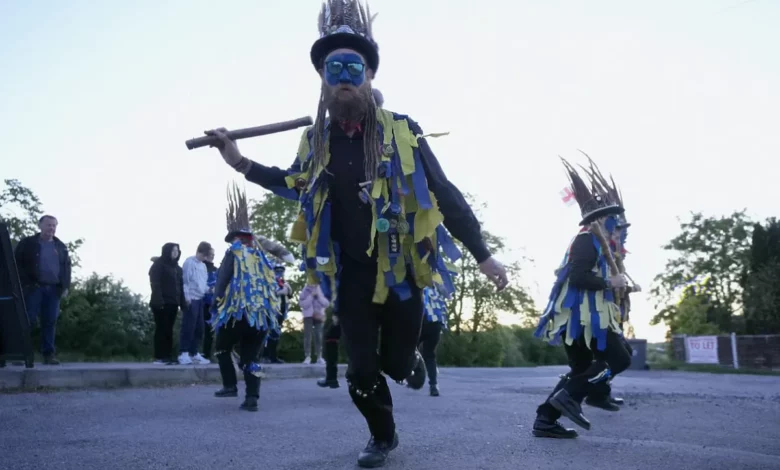
Traditional customs include maypole dancing, which was recorded in mid‑14th century Wales and later became a popular children’s activity after its introduction into the school curriculum in the 19th century. The crowning of a May Queen, often accompanied by a male figure dressed in greenery, symbolises the renewal of nature. Morris dancing, a traditional English folk dance, is frequently performed on May Day; the ‘Dancing the Sun Up’ tradition, in which Morris dancers perform at sunrise, began in Oxford in 1923 and has since spread globally. Other figures such as the Jack‑in‑the‑Green, seen at the head of processions, are thought to be relics of ancient tree worship. Regional variations exist across the UK: in England, traditions also include the Hobby Horse or ‘Oss’ in towns like Dunster, Minehead and Padstow, and singing from Magdalen College Tower in Oxford on May Day morning. In Wales the festival is known as Calan Mai or Calan Haf (‘first of summer’), involving bonfires on May Eve, decorating houses with hawthorn and flowers, summer dancing and May carols. Scottish celebrations include the Beltane Fire Festival in Edinburgh, which combines fire, drumming and pagan performance.
May Day in the UK also carries a second meaning as International Workers’ Day, rooted in the labour movement’s efforts to improve working conditions. The May Day bank holiday was established on the first Monday of May by Prime Minister James Callaghan in 1978, to coincide with International Workers’ Day. In 2026 the London May Day march and rally on Monday 4 May will focus on the theme ‘Workers Make History’, commemorating the 100th anniversary of the 1926 General Strike. Marches and rallies often highlight issues such as workers’ rights, opposition to the far‑right, poverty, racism, inequality and the climate crisis. Some participants call for a nation that ‘puts workers over billionaires’ and advocate for ‘No School. No Work. No Shopping.’ Historically, May Day demonstrations have sometimes escalated to violence, riots and looting; in 2000 more than 90 people were arrested and nine police officers were injured during protests in London. Trade unions are central to organising the events, bringing together diverse communities to advocate for social and economic justice.
Bank holiday weekend events
A wide range of events is planned for the bank holiday weekend. In London the traditional march will take place from Clerkenwell Green to Trafalgar Square on Monday 4 May, with a rally featuring speakers. Mayfest at Brixton Windmill on the same day (1pm–5pm) will offer live music, Morris dancing, craft activities, a Jack in the Green parade, maypole dancing, food and workshops. The Canalway Cavalcade in Little威尼斯 (2–4 May) includes canal boats, live music, children’s activities and an illuminated boat parade. The Korean Food Festival at Canopy Market in King’s Cross (1–4 May) features Korean vendors, street food, music and performances. Grand Designs Live at Excel London (1–4 May) showcases home and garden design inspiration. ZSL London Zoo is hosting a family‑friendly street party as part of its 200th anniversary celebrations (2–4 May).
Elsewhere across the UK, Hever Castle will hold a May Day weekend (2–4 May) with traditional celebrations including maypole dancing and family activities. Little Woodham Living History Village in Hampshire will hold a May Day celebration on Monday 4 May with a procession, maypole and Morris dancing, storytelling and traditional crafts. Many other towns and villages will host traditional events, including maypole dancing and Morris dancing. Notable quirky customs include the Flower Boat Ritual in Cornwall, where a model boat decorated with flowers is set afloat; the Irish tradition of washing the face in dew to maintain youthfulness; decorating a bush with ribbons, blossom and shells; and festivals such as the Clun Green Man Festival, Hastings Jack In The Green, and the Helston Flora and Furry Dance. The tradition of making May garlands by hand, symbolising youth and renewal, continues in places that celebrate the season.
Weather forecast for the bank holiday weekend
The weather over the weekend is expected to be mixed. Friday 1 May could be very warm in parts of East and South East England, with temperatures potentially reaching 27°C – making it the warmest day of 2026 so far and hotter than Honolulu. However, central parts of the UK including Scotland, the Pennines and the Midlands may experience heavy rain. Saturday 2 May is generally considered the best day of the weekend: sunny in the morning, becoming cloudy with sunshine intervals from midday, with highs of around 22°C in London. The chance of rain increases from 5pm onwards. Eastern and northern England, and parts of east Wales, are expected to remain dry and sunny, while Scotland and Northern Ireland may see more showers. Sunday 3 May is forecast to be a ‘soggy’ day with more overcast conditions; a 60% chance of rain throughout the day in London, with highs of 18°C. Persistent rain is expected to push northwards across much of England and Wales, with showers in the south. Monday 4 May, the bank holiday itself, is likely to be overcast in London with temperatures around 18°C. The likelihood of rain is lower than on Sunday, with a 40% chance between 2pm and 7pm. For many places it is expected to be a ‘reasonable day’ with drier weather and sunny spells in central parts of the UK. Scotland and Northern Ireland might experience colder conditions with showers, potentially including hail and snow over hills. Overall, temperatures are expected to cool down from the warmth of Friday, becoming closer to average for the time of year by Monday.
Readers who choose to grant consent and use the Google Custom Search tool will be able to find articles, photo galleries and event listings covering all these aspects of the May Day weekend. The consent requirement remains in place for every search, ensuring that each query is made only with the user’s explicit permission.