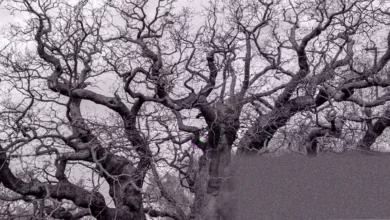
Three decades after one of Britain’s most turbulent environmental protests saw activists dangling from trees and digging into tunnels, the contested tarmac of the Newbury bypass now curves silently on its elevated course. Below it, the scene is one of deliberate calm: The Chase, a National Trust nature reserve, where the hum of traffic blends into a chorus of birdsong and grazing cattle. The stark contrast between the two landscapes – one a monument to contested progress, the other a carefully managed sanctuary – tells a story of time, legacy, and an evolving relationship with the land.
The bypass itself, which opened in 1998, was the epicentre of the UK’s 1990s “eco-wars,” a series of direct-action campaigns against road-building that captured national attention. For those who campaigned, the physical and emotional scars of that period – the felled trees, the confrontations – are woven into the place’s identity. The reserve was “clipped” by the construction, a permanent alteration to its boundaries remembered by those who once flicked cable ties into chainsaws to disrupt the work.
A Working Landscape
Today, the focus within The Chase is on meticulous repair and conservation. The land, once common ground used for a sheepwash and blanket mill that gave Woolton Hill its name, was enclosed for hunting in 1819 before being acquired by the National Trust in 1944. Its management now employs a method as old as farming itself, but with a new purpose: conservation grazing.
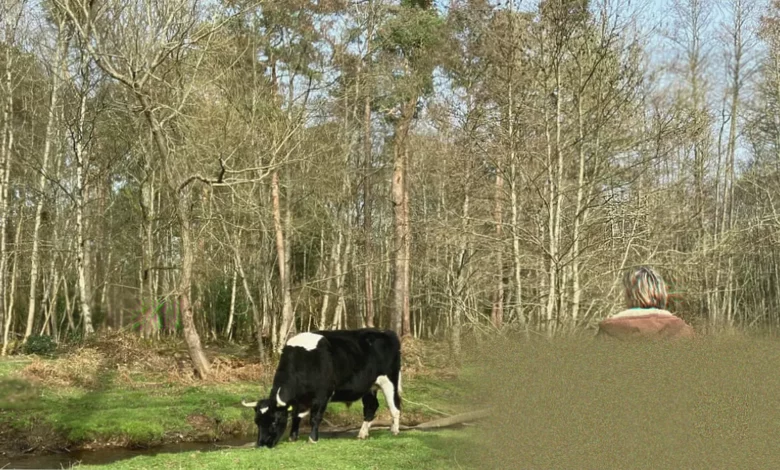
Here, a small herd of hardy black, red and white Shetland cattle with distinctive upswept horns are essential workforce. Their role is ecological engineering. As they graze, they keep coarse scrub and vigorous grasses in check, allowing more delicate wildflowers, like wild daffodils and golden saxifrages, to thrive. Their hooves gently “poach” or break up the ground, creating small pockets for seeds to settle and germinate. As they move, seeds caught in their coats and fur are distributed across the reserve. This activity, sanctioned by the National Trust which uses such techniques across its estates, encourages greater biodiversity, creating a mosaic of habitats that benefits everything from insects to birds.
For volunteers like Sarah, a “cow watcher,” this means daily checks on the herd’s wellbeing, tracking them via a GPS collar. It’s a role that fosters intimacy with the landscape’s rhythms, a far cry from the conflict of the past. The personal history shared with the author, Nicola Chester, encompasses this full spectrum: from the devastation of storms and sewage spills that once killed invertebrates, fish, lampreys and native crayfish, to the profound joys of family “welly walks,” watching woodpecker chicks fledge, and following the flight of silver-washed fritillary butterflies.
Boots and Brain Fog
The lasting legacy of the protests may be a heightened public consciousness about landscape preservation, but the daily rhythm of the reserve continues in practical, mud-spattered terms. This was perfectly illustrated at the end of a recent circuit checking the cattle. A plan to meet at a garden centre cafe was almost derailed by a moment of forgetfulness, leading to a mistaken diversion to a pub. The eventual reunion was marked by a trail of evidence: zigzag caterpillars of peaty-black mud from Sarah’s boots tracking across the cafe’s polished floor, promptly joined by the author’s own, adorned with a little ‘jus’ of cow muck. It was a humble, human end to a day spent in a place that holds layers of national history and very personal memory, all held together by the quiet, grazing work of six Shetland cows.