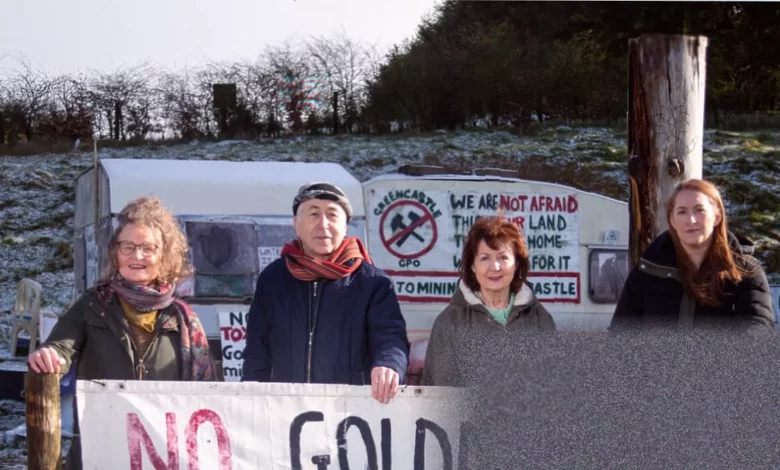
When Fidelma O’Kane retired from social work, she envisioned a quiet life in the Tyrone hills, filled with books and travel. Instead, a neighbour’s casual remark about prospecting in the Sperrin Mountains set her on a new, all-consuming path. “Goldmining. That’s bad news,” was her husband Cormac McAleer’s immediate reaction. A decade on, the retired couple are the public faces of a fierce local battle against a multi-billion pound gold mine proposed for their doorstep, a fight that has come to define their retirement and split their community.
A Decade of Division
That initial alarm sparked years of research and campaigning. O’Kane, now secretary of the Save Our Sperrins campaign group, can detail wastewater consents and transboundary treaties as readily as any expert. “From when we get up in the morning to when we go to bed at night, we are focused on this,” she says. The campaign, which marked its tenth anniversary in July 2025, has involved public meetings, crowdfunded legal challenges, and creative protests—from a scale model of the proposed waste facility to a caravan encampment declared the “Greencastle People’s Office.” For opponents like Marella Fyffe, the 67-year-old chair of Save Our Sperrins who gave up yoga teaching to campaign full-time, it is a fundamental clash of values: community and home against “money, growth, extractivism, capitalism.”
Yet the dispute has frayed the fabric of the tight-knit rural townlands. Former friends avoid each other; conversations at the school gates or GAA club steer clear of the topic to maintain peace. Gerry Kelly, a 56-year-old local mechanic who chairs a pro-mine group called The Silent Majority, insists most people support the project but are afraid to speak out publicly due to backlash. “The highly motivated people here are the protesters,” he argues, claiming the mine is just a modern extension of the area’s long history of quarrying and land use. Opponents, like Irish language officer Sinéad Ní Mhearnóg, counter that naming yourself a majority doesn’t make it so, pointing to over 50,000 letters of objection submitted to planners.
The Stakes: Environmental Risk vs. Economic Reward
At the heart of the conflict is the immense value buried beneath the Sperrins and the potential cost of extracting it. The Curraghinalt deposit, discovered in 1983, is one of the world’s richest unexploited gold seams, geologically part of the vast Dalradian rock supergroup stretching into Scotland. The known reserves are worth at least £21bn, with Dalradian estimating the total mineral value at around £26bn. The ore is exceptionally high-grade, carrying up to 300g of gold per tonne in places, compared to the 0.5g per tonne considered viable elsewhere. At current prices, annual extraction could be worth nearly £500m.
The US-owned Dalradian Gold, which acquired the mineral rights in 2009, has already spent over £250m on the project. It promises an underground mine that will “set new standards,” aiming to be Europe’s first carbon-neutral mine through the use of electric vehicles and carbon offsetting, a status it claims to have certified annually since 2019. The company projects 1,000 jobs—350 direct, with an average salary of £45,000—a £1bn supply chain, and £3bn in tax revenue. A percentage of revenues would also be paid to the Crown Estate, which owns sub-surface gold rights in Northern Ireland.
Opponents, however, see an unacceptable environmental threat. Their concerns focus on water pollution, particularly to the Owenkillew and Owenreagh rivers, which are habitats for the endangered freshwater pearl mussel. O’Kane previously won a judicial review quashing a Northern Ireland Environment Agency (NIEA) consent to flush water containing heavy metals into the Owenkillew. While a 2013 study by consultants Pentland Macdonald Ltd and the NIEA suggested the local rock was not acid-forming, fears persist over cyanide use—though Dalradian says only 10% of ore will contact it—and the potential for toxic dust to cross the border into the Republic of Ireland, a transboundary issue that has complicated the planning process.
The Final Hurdle: A Long-Awaited Public Inquiry
After nine years, multiple adjournments, and a suspension in January 2025 over failures in cross-border consultation with the Irish government, the decisive phase is now imminent. A public inquiry, overseen by the Planning Appeals Commission, is scheduled to resume on 13 April 2026 and sit until early June in Omagh.
For campaigners, it is the culmination of years of garage sales and coffee mornings to fund experts, including a geophysicist from Utah, to give evidence. Spare bedrooms are being prepared to host supporters. The commissioners will ultimately make recommendations to the Stormont ministers for infrastructure and for agriculture, environment and rural affairs, who hold the final decision.
Dalradian states it is looking forward to an “independent evidence-based assessment.” Opponents are preparing for every outcome. “We would have to see if there were any points on which we could seek a judicial review,” says Fidelma O’Kane. But if the machinery finally arrives, she is resolute: “We literally will have to lie on the ground and put our bodies in front of the machines.”