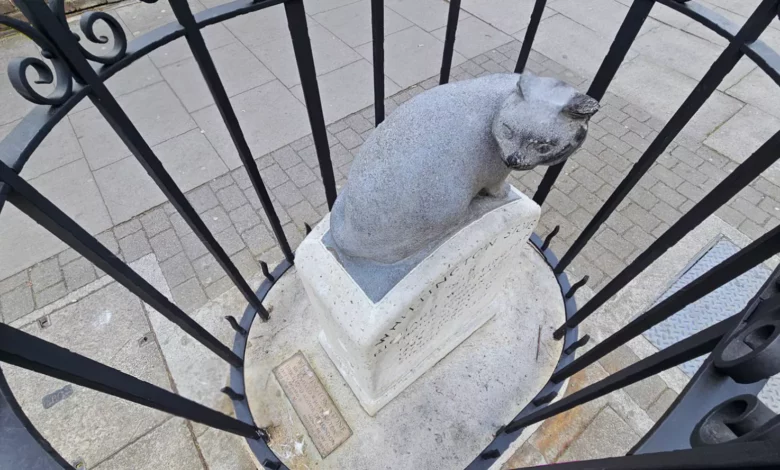
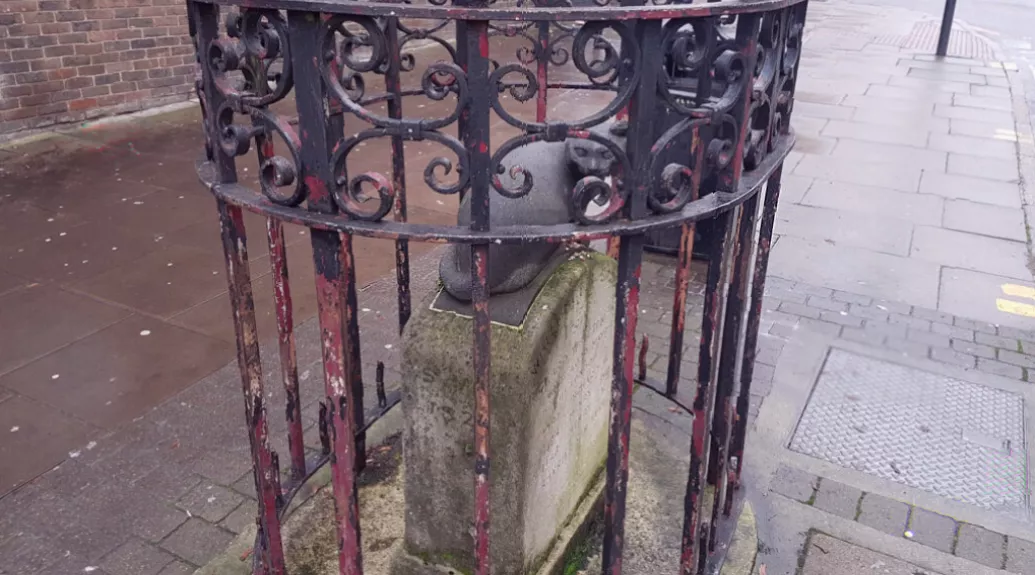
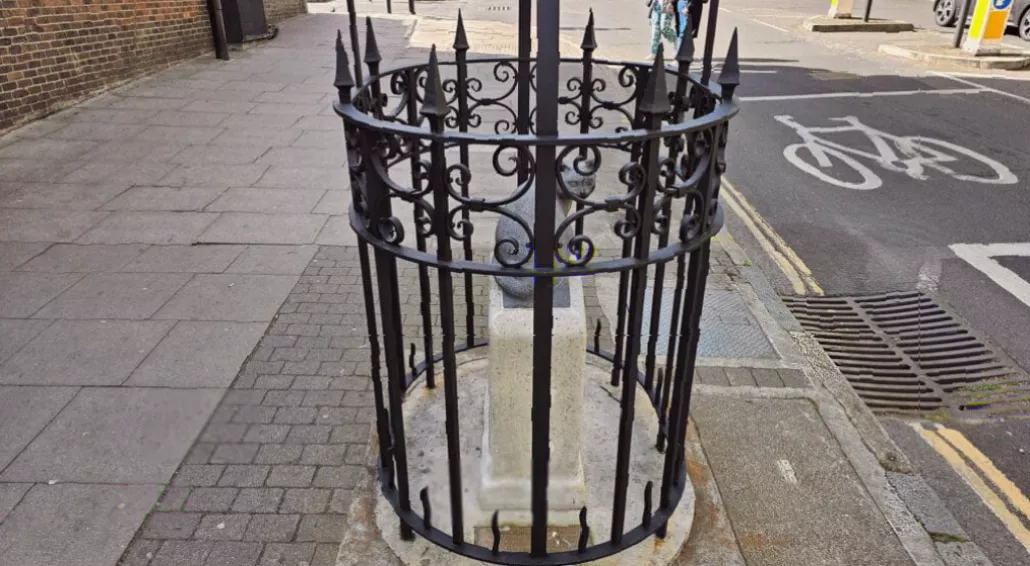
The Dick Whittington pantomime stone has been cleaned. After years of accumulating grime from traffic on Highgate Hill, the Grade II listed monument has been restored in a project unveiled in April 2026.
The restoration was a collaboration between the Heritage of London Trust and Islington Council, with financial backing from the Englefield Charitable Trust. Specialist heritage contractor SSH Conservation carried out the work, which involved cleaning both the stone and the cat sculpture, recutting and repainting the incised lettering to make it legible again, and refurbishing and repainting the surrounding iron railings. The original surface finish of the cat statue has also been enhanced. Some 150 young people took part through the “Proud Places” programme, attending creative workshops and meeting the conservators. An interpretation panel has been installed on the nearby wall to give visitors more context.
The stone’s confusing and debated history
The Whittington Stone commemorates a figure who exists in two distinct versions. The real Sir Richard Whittington (c. 1354–1423) was a prosperous merchant who served as Lord Mayor of London four times — not three, as the pantomime often claims. He was known for his generosity, funding the rebuilding of Newgate Prison and establishing the first library at Guildhall. He came from a well-to-do family, not the poverty of the legend.
The pantomime character “Dick Whittington” grew from earlier plays and tells the story of a poor orphan who goes to London to seek his fortune. The stone is held to mark the spot where he heard the bells of St Mary-le-Bow calling him back to the city. The audibility of church bells across a distance of about 4.5 miles is considered unlikely, but the legend persists.
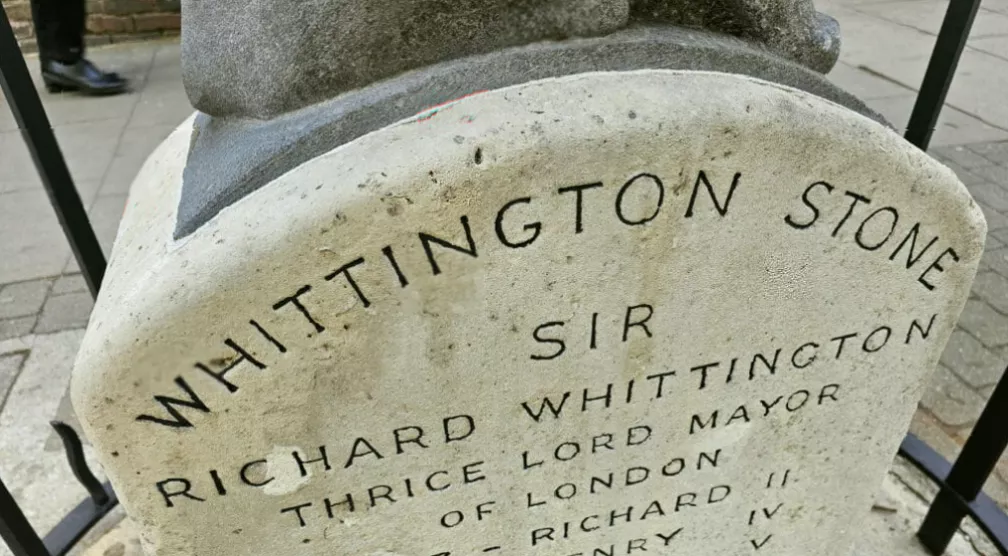
The current stone is not the original. It was erected in 1821, replacing an earlier stone from 1795, which itself succeeded a wayfaring marker that had stood there since at least the 17th century. The inscription on the north-east side details Whittington’s career; the south-west inscription has largely eroded. The cat sculpture on top — a beloved feature often stroked for good luck by visitors, including patients from the nearby Whittington Hospital — is a relatively recent addition, installed in May 1964. It was made from black polished Kellymount limestone by art student Jonathan Kenworthy, commissioned by local actor Donald Bissett. There is no historical evidence that the real Richard Whittington owned a cat, suggesting the animal was a later embellishment to the story.
In 2021, concerns were raised about the “bedraggled and forgotten” state of the cat and its railings, prompting calls for restoration. Kenworthy himself had offered to replace the sculpture free of charge, describing it as being in a “mess,” but the decision was taken to restore the existing listed monument instead.
Location and unveiling
The stone sits on the south-west side of Highgate Hill in Archway, Islington, about 15 metres south of the junction with Magdala Avenue. It is a short walk from Archway tube station, signposted towards the hospital. The monument has been Grade II listed since 1972. The restored stone was officially unveiled at the start of the annual Dick Whittington walk, an event where London’s mayors retrace the legendary journey into the City.