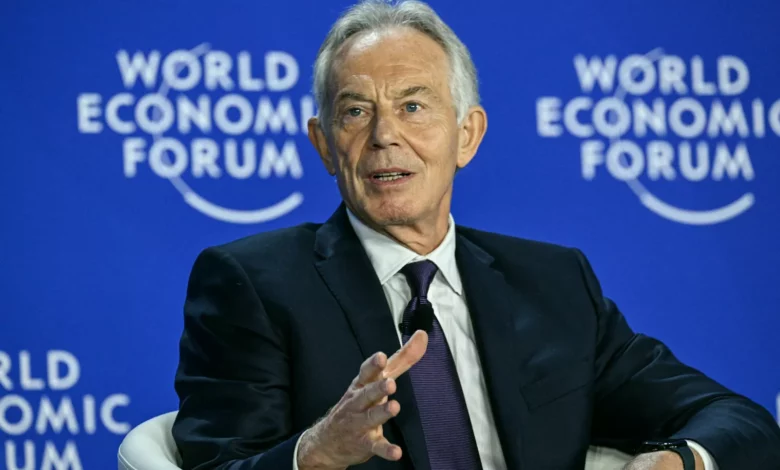
Sir Tony Blair has warned that Labour is “playing with fire” and risks doing long-term damage to both the party and the country unless the government undergoes a fundamental reset, arguing in a major 5,600-word essay that Britain is in a “mess” because the party has failed to put policy first and politics last.
In his starkest intervention since leaving office, Labour’s most successful former leader and prime minister urged the party to return to its “radical centre” – the space where, he said, you begin by asking “what is the right answer?” and only then engage in the political task of persuading people. Britain is in its current predicament, he argued, precisely because it has done the opposite in recent years.
Labour’s ‘radical centre’ call
Blair’s essay offers a damning indictment of nearly two years of a Keir Starmer government, stating there is no “worked-out, coherent plan for the country in a fast-changing world” and that Labour is in the “wrong political position from which to devise one and win a second term.” He described the government as governing from an essentially traditional Labour “soft left” position, parked firmly in the party’s comfort zone. As an example he pointed to the last Budget, where it appeared the government was increasing tax to pay for additional welfare spending when the public already thinks welfare bills are too high.
In a scathing critique of specific policies, Blair noted that measures such as new workers’ rights laws, the net-zero acceleration and phasing out of the British oil and gas industry, the uplift in the minimum wage beyond inflation, and the non-dom changes have given “headwinds, not tailwinds, to British business, despite the macroeconomic gains for which the chancellor is rightly praised.” He warned that the idea that losing seats to the right means the country wants Labour to move left is a “perennial delusion” and “dangerous” in government.
Blair emphasised that governments that succeed do not start with a personality contest or a political question such as how to “save the country” from Nigel Farage’s Reform UK. “They start with an idea, a project, a governing purpose, an analysis of what is wrong and a plan to put it right,” he wrote, calling on Labour to occupy the “best political space” of the radical centre. He argued that winning a second term requires a clear plan to put things right if the party is to save the country from Reform.
Leadership change ‘irrelevant’ without policy debate
The warning comes as Sir Keir Starmer’s government awaits the outcome of the Makerfield by-election, which is viewed as a potential pathway back to Parliament for Greater Manchester mayor Andy Burnham, who is just ahead of Reform UK in the polls. Burnham has publicly stated that Labour needs to change and has positioned himself as offering a “different kind of government.” However, there are reports that the Labour National Executive Committee (NEC) previously blocked him from standing in the Gorton and Denton by-election, a decision former deputy prime minister Angela Rayner called a “mistake.” Rayner herself has stated she “never” wants to be leader, despite speculation about her ambitions, and is seen as capable of bridging factions within the soft left.
Former health secretary Wes Streeting has also confirmed his intention to run in a future Labour leadership contest, with his allies claiming on Tuesday that he has the 81 backers needed to contest the leadership. Blair has expressed reservations about Streeting’s ideas on tax and spending, describing them as having been rejected by serious governments.
But Blair was unequivocal that swapping Sir Keir for any of these figures would not solve the problem in itself. “Whether there is a leadership change or not is irrelevant if it doesn’t start with a policy debate,” he wrote. “Trying to force the prime minister out before we know what policy direction we’re bringing in is not a serious way of conducting ourselves.” He noted that he himself was forced out by supporters of Gordon Brown in 2007, with Labour going on to lose the next election in 2010, but warned the party is now trying to govern from its own comfort zone on the soft left rather than from a position of strategic strength.
Brexit and the new world order
On Europe, Blair – who played a major role in the Remain campaign opposing Brexit – argued that simply reversing Brexit “isn’t the answer” because the country is in a far worse economic situation now than it was in 2016. He said the UK is “too weak” to reset its relationship with the EU and cannot even discuss rejoining until it regains its lost strength. “If we want to go back into some sort of structured relationship with Europe, we can only do so from a position of economic strength. We must be at the farthest end of European competitiveness. At present, we’re not,” he stated. Recent reports indicate the EU has rebuffed a UK government push to access its single market for goods, citing concerns about regulatory alignment and a level playing field, with the UK unwilling to accept freedom of movement.
Blair’s essay devotes considerable space to the transformative impact of the AI and technology revolution, which he said is fundamentally reshaping economies and geopolitical relations. He warned that world leaders, living in a 24/7 pressure cooker, have barely time to recognise the turning, let alone study it. “These changes need long-term strategic thinking, which is alien to the way most modern democracies function,” he wrote. He called for a “new policy agenda” to halt Britain’s slide and argued that governments need to reimagine themselves to harness AI for better decision-making, service delivery, and strategic influence. The Tony Blair Institute for Global Change has extensively promoted AI’s potential in public services, though some analyses have questioned whether such promises echo previous unfulfilled technological transformation agendas in government.
On Britain’s position in the new world order, Blair said the country was “caught between the isolationist tendency of parts of the right, and the misguided progressivism of parts of the left, which combined are in danger of leaving Britain marooned on an island of irrelevance.” He claimed to understand “the anxiety in Europe” when US president Donald Trump casts doubt on the value of Nato or the transatlantic alliance, but regarded it as “less of a ‘rupture’ than a ‘reckoning’. This side of the water we’re being told some home truths that, if we are wise, we will wake up to.” He added that Europe needs to build economic competitively and military capability, and that at present it is not succeeding in either as it should, and called for a “strong alliance” with the Middle East in the evolving world order.