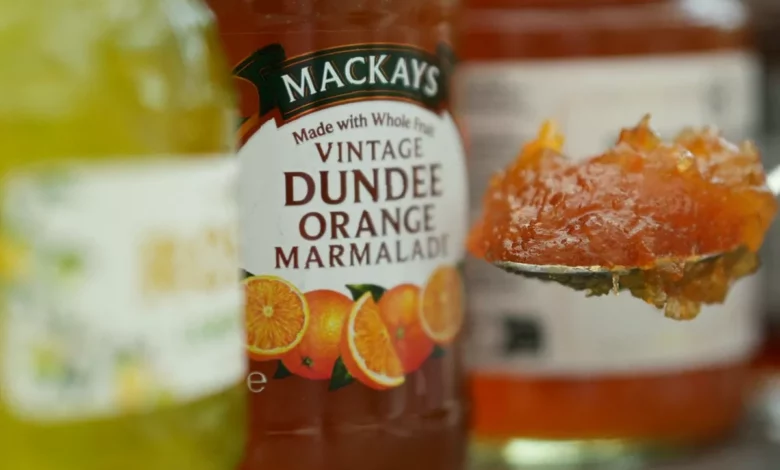
A debate over marmalade’s definition is brewing in the UK, with politicians, press and Paddington Bear devotees stirred by fears that a beloved British institution is under threat from post-Brexit trade alignment.
A Staple Steeped in History and Culture
The passion surrounding the spread is rooted in its deep cultural significance. Marmalade became a breakfast staple in 19th-century Britain, its commercialisation famously linked to Dundee and firms like James Keiller & Son. Its status was further cemented as the favourite food of the fictional Paddington Bear, an association delightfully reinforced when the late Queen Elizabeth II appeared with the bear in a Platinum Jubilee video in 2022.
This history explains the fierce defence of its traditional definition: a preserve made from citrus fruit, including peel. The word itself has a more globetrotting past, originating from the Portuguese “marmelada” for quince paste. By the 17th century, British cooks had found the ideal fruit in the bitter, pectin-rich Seville orange, creating the distinctive preserve known today.
The EU Rule Change: From “Euromyth” to Regulatory Reality
Recent media reports, branded “marmalade madness” by critics, suggested UK marmalade would have to be relabelled “citrus marmalade” under a new food deal. Like many “euromyths”, the story contains a kernel of truth wrapped in sensationalism.
The reality centres on a significant shift in European Union regulations. Historically, EU rules stipulated that only citrus fruit preserves could be called marmalade, a definition secured by British lobbying in the 1970s. All other fruit preserves were labelled jam, despite the fact that in many European languages, like German, “Marmelade” is the general word for jam.
Following Britain’s exit, the EU relaxed this rule. It now allows member states to use the term “marmalade” for non-citrus fruit spreads, provided the specific fruit is identified (e.g., “strawberry marmalade”). For citrus-based products, the EU suggests using “citrus marmalade”, but its directive explicitly allows the word “citrus” to be replaced by the name of the actual fruit used, such as “orange”.
The conundrum arises because Prime Minister Keir Starmer’s government plans to align UK food standards with EU rules—a “Brexit reset” using secondary legislation to ease trade barriers. Critics argue this makes the UK a “rule taker”. Consequently, the UK’s domestic labelling rules are set for what the government calls “a small change” to mirror the EU’s more permissive stance.
Government Response and Political Marmalade
The government has moved to quell the uproar. Food Security Minister Angela Eagle told Parliament that the “real-world impact would be minimal and consumers are unlikely to notice any difference.” A government spokesperson clarified that British marmalade is not changing and there is no requirement for retailers to relabel orange marmalade as “citrus marmalade”. They noted that jars labelled “orange marmalade” or “Seville orange marmalade” are already compliant, as the EU directive accepts the specific fruit name.
This reassurance did not prevent a spirited Adjournment Debate in the House of Commons on Wednesday, initiated by Liberal Democrat MP Tessa Munt. She urged the government to protect the integrity of this “distinctly British product”, insisting that “only citrus fruits can precede the word marmalade on labels.” She derided “strawberry marmalade” seen in shops as “rubbish”.
Opposition Conservatives framed the issue as a surrender of sovereignty. Foreign affairs spokeswoman Priti Patel accused the government of “attacking the great British marmalade”, suggesting the Prime Minister was “desperate to fit in with his EU pals and unpick Brexit.” Democratic Unionist Party MP Jim Shannon lamented “EU labeling interfering with our produce.”
The government maintains the alignment simply supports trade by cutting red tape, pointing out that many British manufacturers already meet such international standards voluntarily for export. The debate, however, has proven a potent symbol of the ongoing political and cultural adjustments defining the UK’s post-Brexit relationship with Europe.