The UK military is integrating artificial intelligence and autonomous systems across all branches, with the Ministry of Defence unveiling a sweeping technological overhaul as part of the long-awaited Defence Investment Plan (DIP). The plan, which commits over £5 billion over four years to drones, uncrewed vessels and autonomous fighter jets – one of the largest such investment programmes in British history – is designed to deliver the vision set out in last year’s Strategic Defence Review and keep the country at the forefront of defence innovation. It forms part of a broader planned injection of up to £300 billion in military funding, with the government having already doubled its investment in autonomous platforms from £2 billion to £4 billion over the current parliament.
Hybrid Navy: A New Era for the Royal Navy
The most significant transformation outlined in the DIP concerns the Royal Navy, which is reconfiguring itself as a “Hybrid Navy” – a concept that merges crewed warships and aircraft with a growing fleet of uncrewed vessels guided by artificial intelligence. At the heart of this shift is the Common Combat Vessel (CCV), a new class of warship that will replace the current fleet of six Type 45 destroyers, with delivery expected from the early 2030s. Unlike its predecessors, the CCV will act as a control hub for uncrewed systems, extending the Navy’s reach, resilience and firepower without a proportional increase in crew or cost. The CCV replaces earlier plans for a Type 83 destroyer, which had received only minimal funding, and reflects a deliberate move away from concentrating capability in a small number of large, expensive ships towards a more distributed and adaptable fleet.
Alongside the CCV, the MoD has detailed four new classes of uncrewed platforms that will operate as part of the Hybrid Fleet. The Type 91 is an uncrewed missile platform designed to increase the fleet’s firepower. The Type 92 is an uncrewed sense platform tasked with hunting enemy submarines across the North Atlantic, working alongside the Navy’s new frigates. The Type 93 is an extra-large uncrewed underwater vessel that will operate alongside crewed hunter-killer submarines to seek and destroy enemy submarines. The Type 94 is an uncrewed sense platform that scans the skies for threats to the hybrid navy or the homeland. In the 2030s, the MoD says it will expand the numbers of these platforms and bring at least six Common Combat Vessels into service as the brain of a networked Maritime Air Defence system.
Further naval innovation comes through Project PANTHEON, which aims to develop a Hybrid Carrier Air Wing, including trials of jet-powered drones that will work alongside the Navy’s F-35B force. Royal Marine Commandos will also benefit from further investment in their transformation, equipped with new high-speed boats and the latest drone and autonomous technology.
Army and RAF Modernisation
The British Army is increasing its lethality through a major investment in inexpensive expendable autonomous systems and loitering munitions. A £50 million boost over the next 12 months will go to the Army’s RAPSTONE programme – Task Force Rapstone, an initiative to accelerate the fielding of new capabilities, focusing on drones, counter-drone measures, electronic warfare and command-and-control tools – funding additional first-person view and interceptor drones. A new programme will rapidly develop and produce uncrewed ground vehicles (UGVs) and their associated mission systems through UK industry; ARX Robotics is already manufacturing Gereon UGVs for the Army’s Recce-Strike experimentation.
Under Project NYX, up to 24 autonomous armed drones will be operational by 2030, flying alongside the Army’s recently upgraded Apache helicopters. These “loyal wingman” drones, developed through a £10 million programme, will carry out reconnaissance, precision strikes and electronic warfare. Project Corvus, a £130 million programme, will deliver up to 24 surveillance drones to replace the Watchkeeper system, carrying out intelligence, surveillance, target acquisition and reconnaissance.
The Royal Air Force is transforming through a new, national Collaborative Combat Air programme, part of the broader Future Combat Air System (FCAS) initiative that aims to replace the Eurofighter Typhoon. This will develop new autonomous fighter jets that will fly alongside crewed jets to defend the UK’s skies, with a demonstrator flying by at least 2030. Additionally, the Storm Shroud system – a new uncrewed electronic warfare drone – will enter service this year. The DIP’s emphasis on drones and autonomous systems is partly driven by lessons learned from the war in Ukraine, where these technologies have reshaped modern warfare.
Funding and Political Fallout
The DIP’s launch has been overshadowed by deep political divisions over defence spending. Prime Minister Keir Starmer, who has agreed to stand down next month to allow Andy Burnham to replace him, had committed to publishing the plan before the NATO summit in Turkey next week, arguing it was an existing policy commitment rather than a new announcement. The plan was originally due last autumn but was repeatedly delayed, triggering the resignation of Defence Secretary John Healey on 11 June. Healey argued that the DIP “falls well short of what is required” and that the Treasury was unwilling to commit necessary resources, warning it would reduce military readiness and increase risk. He had pushed for defence spending to rise to 3% of GDP by 2030, but the DIP reportedly only lifts it to 2.68% by the end of the decade. Armed Forces Minister Al Carns resigned alongside Healey, stating “We need a new way of governing and we need it now.”
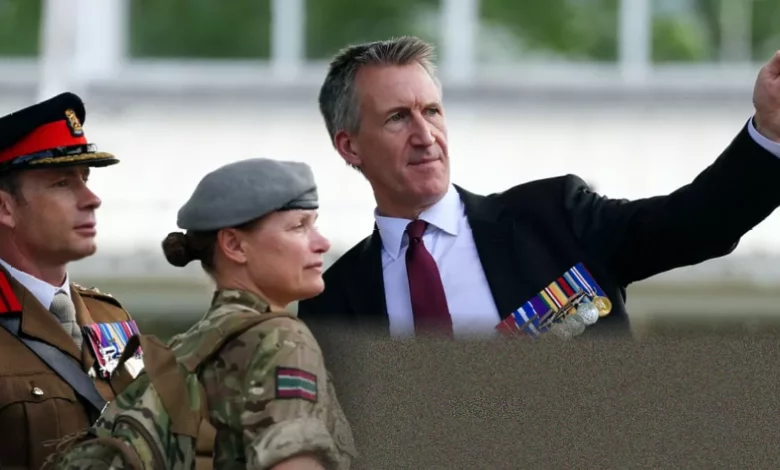
Dan Jarvis, a former Army officer, was appointed as the new Defence Secretary and has managed to squeeze a little more funding from the Treasury. He will present the DIP in a statement to MPs later today. Jarvis has said the plan will “make real those ambitions” for Army modernisation, including investment in uncrewed ground vehicles. Opposition parties have been scathing. James Cartlidge, the shadow defence secretary, said: “This is too little, too late. Too little because it is barely more money than John Healey and Al Carns resigned over when they said Britain would be ‘less safe’. And too late because the plan is now almost a year overdue and only being rushed through because Keir Starmer is desperate for a legacy.” Ed Davey, the Liberal Democrat leader, described the plan as “late and underfunded” and “unforgivable”, adding: “It is a political choice that makes us all less safe, puts jobs at risk and threatens businesses across the country in supply chains. The government have dangerously short-changed our armed forces when they need urgent investment after years of Conservative negligence.” He called for defence bonds to increase investment. NATO leaders have agreed on a target of spending 3.5% of GDP on defence by 2035, a benchmark Healey had argued Britain should be working towards.
Separately, the DIP is expected to sustain jobs and skills across UK shipyards and support British industry, though critics argue the funding levels remain insufficient given the scale of the threats identified.
Unite Leadership Challenge
In a development that has drawn attention within the labour movement, Sharon Graham, the leader of Unite – the UK’s second biggest union – is to face a challenge from Simon Dubbins over claims the union is not doing enough to counter the rise of Reform UK. Graham has faced criticism for her anti-Ed Miliband stance and support for more North Sea drilling, which some believe plays into the hands of Reform UK and Nigel Farage. It has been alleged that Unite officials held secret talks with Reform UK advisors regarding the Birmingham bin strike, a move described by some within the union as “desperate and politically reckless” and amounting to betraying workers and undermining the strike. Dubbins, who is challenging for the leadership, believes Unite has a responsibility to “heal divisions, win workers back from the false promises of Farage, and ultimately stop a Reform government.”
Today’s Agenda
The day’s political and parliamentary schedule is dominated by the defence plan. At 9am, Deputy Labour Leader Lucy Powell speaks at a New Statesman conference, with other speakers including EU relations minister Nick Thomas-Symonds at 10.45am, Attorney General Lord Hermer at 2pm and Reform UK deputy leader Richard Tice at 4.30pm. At 10am, Sir Brian Langstaff, chair of the infected blood inquiry, gives evidence to the public administration committee. At 10.30am, Keir Starmer gives a speech on the defence investment plan at a location outside London. At 11.30am, Deputy Prime Minister and Justice Secretary David Lammy takes questions in the Commons. After 12.30pm, Defence Secretary Dan Jarvis makes a statement to MPs about the DIP. At 2.30pm, Culture Secretary Lisa Nandy and Technology Secretary Liz Kendall give evidence to the Lords communication committee on AI and copyright.