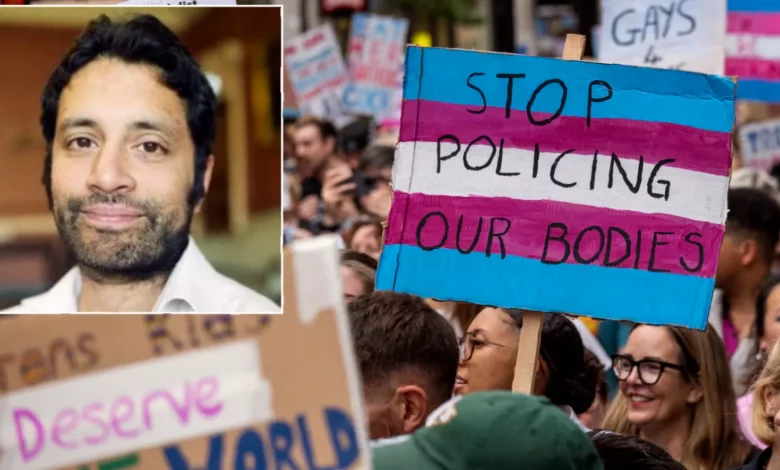
Arif Ahmed, the director of freedom of speech and academic freedom at the Office for Students, is facing calls to resign after a High Court judge ruled that an investigation he helped lead into the University of Sussex was tainted by bias and unlawful predetermination.
The vice-chancellor of the University of Sussex, Sasha Roseneil, said it was “hard to see how the director of free speech role can continue with him in it,” adding that the result of the investigation appeared to have been determined from the very beginning. Roseneil described the judgment as an “excoriating” and “devastating indictment” of the regulator’s conduct.
The investigation, which began after Professor Kathleen Stock resigned from her philosophy post at Sussex in October 2021, had imposed a £585,000 fine on the university for alleged failures to uphold free speech. But in a ruling this week, Mrs Justice Lieven quashed that penalty, finding that the Office for Students had acted with a “closed mind”, unlawfully predetermined the outcome, exceeded its legal powers, and misunderstood freedom of speech law.
The emails that cast doubt on impartiality
A central focus of the judge’s criticism was a series of emails Mr Ahmed exchanged with Professor Stock before he took up his role at the regulator. The correspondence, which began in October 2020, revealed what the judge described as “unequivocal support” for the philosopher, who had been hounded out of Sussex by trans activists.
In one message, Mr Ahmed wrote to Professor Stock: “Pleased to see that Sussex has ‘zero tolerance’ for all forms of harassment and bullying, unless of course it is of people like you.” In a later exchange, he invited her to speak at Cambridge University on trans issues, warning that students were “especially ill-equipped to resist peer pressure to have the right thoughts on these matters” and that, without a counterweight, they would end up in the “Khmer Rouge themselves”.
The judge noted that the Office for Students had initially decided Mr Ahmed should not be involved in the investigation due to a potential conflict of interest, making it “somewhat surprising” that he was later appointed to effectively lead the investigation team. However, she stopped short of finding that his involvement had fatally undermined the decision, pointing out that he joined the process after the provisional decision had already been issued and that his role in the final outcome was not sufficiently central. She added that if Mr Ahmed had been the sole decision-maker, she would “in all probability have found that he had predetermined the decision by reason of having a closed mind”.
Judge’s findings on the regulator’s conduct
Beyond the question of Mr Ahmed’s role, Mrs Justice Lieven delivered a sweeping rebuke of the Office for Students as a whole. She found that the regulator had approached the investigation with a “closed mind” and unlawfully predetermined its decision, effectively using Sussex as a test case to drive behaviour across the wider higher education sector. The OfS had refused to consider changes made by the university, failed to interview key individuals, and disregarded exculpatory evidence. It had also refused to hold in-person meetings with Sussex and misapplied concepts of freedom of speech and academic freedom.
The judge cited a letter written by the regulator’s then-chief executive, Susan Lapworth, to the Education Secretary, in which Lapworth said the OfS had “robustly defended academic freedom and freedom of speech”. But the judge found that Lapworth’s stance from the outset had been to use Sussex as a tool to influence other universities and that her “fixed intent” had been to find the establishment in breach of its conditions.
Regulator’s response and leadership turmoil
Despite the findings, the Office for Students has stood by Mr Ahmed. Josh Fleming, the interim chief executive, said Mr Ahmed retained the “full confidence” of the regulator as he continued to promote freedom of speech at English universities. The OfS has not yet decided whether to appeal the verdict.
Edward Peck, the chair of the Office for Students, described the ruling as “disappointing” but acknowledged mistakes had been made, including a failure to hold in-person meetings with Sussex and weaknesses in how some evidence was recorded and presented to the court. He denied that the ruling posed an existential threat to the regulator and called for a “reset” relationship with the University of Sussex and the wider sector.
The Office for Students, which was created in January 2018, has experienced significant leadership turbulence in its eight-year history, having gone through three chairs and three chief executives, including an interim. Susan Lapworth, its most recent permanent chief executive, departed at Easter 2026 despite her term being due to end in August.