The Scottish Conservatives have issued a direct appeal to voters across the country, urging them to unite behind the party as the only force capable of standing up to the SNP and defending Scotland’s place in the union. Speaking on the campaign trail, leader Russell Findlay declared that the upcoming Holyrood election is a critical moment for pro-Union voters to coalesce around a single party, warning that division on the unionist side risks handing the SNP a mandate for a second independence referendum as early as 2028.
The threat of another referendum
The party has made preventing an SNP majority its central campaign objective, arguing that a victory for John Swinney’s party on 7 May would be interpreted as a green light for constitutional upheaval. Findlay has repeatedly pointed to the SNP leader’s stated intention to treat an overall majority as a mandate for another independence vote, describing the prospect as “constitutional chaos.” The Scottish Conservatives frame their own record in the 2016 and 2021 elections — when they successfully denied the SNP an outright majority — as evidence that unionist voters can block such a route by backing the party on the regional list ballot.
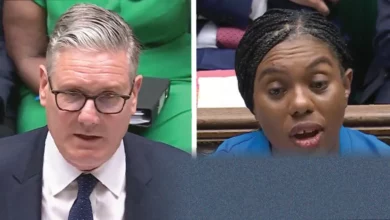
UK Conservative leader Kemi Badenoch, who has campaigned alongside Findlay, has reinforced this message by warning of a “twin threat” to the union from both the SNP and Reform UK. She described the SNP as a “hard left separatist party” and characterised its economic policies as “Soviet” and “Communist.” The Scottish Conservatives have also taken aim at Reform UK Scotland leader Malcolm Offord, with Findlay labelling his party a “fake unionist party” that cannot be trusted to stand up to the SNP. Labour and the Liberal Democrats have been accused of being “pathetically weak or in denial” about the independence threat, and of being naive or complacent when it comes to Swinney’s referendum ambitions.
Standing for aspiration, not envy
Beyond the constitutional argument, the Scottish Conservatives are positioning themselves as the “party of aspiration,” a phrase Findlay has used repeatedly to contrast his party’s vision with what he calls the SNP and Scottish Greens’ “politics of envy.” That rhetoric was sharpened after Offord detailed his personal wealth during a television debate — comments Findlay described as “questionable” given the cost-of-living pressures many households face. The Conservatives argue that the SNP has been preoccupied with “fringe causes” while neglecting the “bread-and-butter issues” that matter to the majority of Scots.
The party’s manifesto places economic growth as its top objective for the next parliamentary session, with a specific set of tax pledges. These include raising the income tax threshold in line with inflation, allowing pensioners to reclaim the first £500 of tax paid on their pension income (with that amount triple-locked), lowering the basic rate of income tax to 19p in the pound for low- and middle-income households, and a commitment not to raise taxes or introduce new ones. The Scottish Conservatives claim their package of measures would cut household bills by up to £2,483 per year. They criticise the SNP’s record on tax, arguing that household disposable income has fallen under SNP leadership and that a “high-tax agenda” is holding back Scotland’s economy.
The peach-coloured secret weapon
Central to the party’s electoral strategy is a specific instruction to voters: use the peach-coloured ballot paper. Under the Scottish Parliament’s additional member system, voters receive two ballots — one for a constituency MSP (usually white or a different colour) and one for the regional list. The peach paper is the list vote, and the Scottish Conservatives have been promoting it as a “secret weapon” for pro-Union voters. Former leader Ruth Davidson has endorsed the tactic, calling the peach ballot a “voters’ secret weapon” that can prevent an SNP majority even if unionist voters back different constituency candidates.
Findlay made the appeal explicit in his campaign remarks: “We are the only party that will stand up to the SNP, stand up proudly for Scotland’s place in the union, and it’s critical that voters across Scotland unite behind the Scottish Conservative Party, using their peach-coloured ballot paper on May 7.”
Recent polling has suggested the Scottish Conservatives could see their seat count drop from 31 in 2021 to as low as 12, with the SNP also projected to lose seats. Findlay has described those projections as “motivating” rather than discouraging, insisting the party’s message is gaining traction. The election is scheduled for Thursday, 7 May 2026.