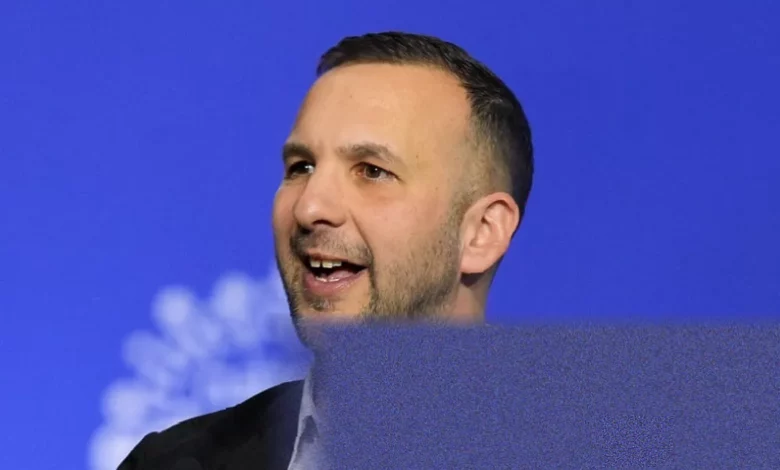
The Green Party would scrap Ofsted entirely, with its leader denouncing the schools inspectorate as a “toxic, failed institution” that is harming teachers and children. Zack Polanski made the pledge in a speech to the National Education Union’s annual conference, positioning his party as a radical alternative to a Labour government he accused of entrenching Conservative failures.
A Collaborative Model to Replace Ofsted
Polanski told the conference in Brighton that the government’s reforms were “tinkering around the edges” and declared it was time to “end the Ofsted era entirely.” In its place, the Greens propose moving to a “genuinely collaborative model” for school accountability. This system would connect teachers with local experts in pedagogy, child development, and social care, aiming to provide ongoing support and guidance rather than high-stakes inspections. The party’s policy is rooted in the belief that Ofsted’s focus on testing creates undue stress and that its judgments are unreliable.
The stance was warmly received by the teaching union. NEU general secretary Daniel Kebede said Polanski’s vision “perfectly mirrors our own” on issues like abolishing Ofsted and securing fair funding. He revealed that support for Labour among NEU members had fallen significantly, with the Green Party now the most popular political party among them. Polanski, the first Green leader to address the NEU conference, received a standing ovation. He has stated that a key part of his leadership is to connect with the organised labour movement and “replace” a Labour Party he says is “no longer the party of working people.”
Labour are only talking about freezing taxes because the Welsh Conservatives are leading with plans to cut them.
We’ll cut income tax, scrap stamp duty, back businesses and #GetWalesWorking pic.twitter.com/whdYVNMY9v
— Welsh Conservatives 🏴 (@WelshConserv) March 30, 2026
Opposition to the “Failed Model” of Academisation
The second major plank of the Green attack focused on academies. Polanski condemned academisation as “another failed model” driven by an “ideological drive to marketise our children’s education.” He argued it has created a fragmented system with poor accountability, where academy chief executives earn “enormous salaries” while staff pay and conditions worsen.
This criticism is supported by research cited by the party, which found no positive impact on the attainment and progress of pupils in multi-academy trusts compared to other schools. The research indicated that in larger multi-academy trusts, particularly secondary schools, results were worse. An Education Policy Institute report from 2018 also found academy chains were disproportionately represented among the worst-performing primary schools.
Polanski accused the Labour government of forcing “every school to join a multi-academy trust,” a model he said weakens accountability to local authorities, parents, and the community. The Green Party’s policy is to bring academies and free schools back under local authority control, and to ensure all teachers in state-funded education are employed through local authorities and hold Qualified Teacher Status.
A frozen tax is a stealth tax.
If your wages increase, more of your earnings will be taxed, often at a higher rate.
Labour have now made fiscal drag a key pledge for the election.
Reform will cut taxes to cut the cost of living. pic.twitter.com/Sg8FBPuLrM
— Dan Thomas (@DanWalesReform) March 30, 2026
Funding a “Cash Injection” Through Wealth Taxes
The third pillar of the Green proposal is a “serious cash injection” for education. Polanski noted that the UK invests approximately 4.1% of its GDP in education, below the OECD average of just under 5% and significantly behind countries like Iceland (5.6%) and Norway (6.2%). The party’s manifesto pledges almost £14 billion in extra annual spending for education in England.
This includes an £8 billion increase in core school funding, with £2 billion earmarked for a teacher pay rise. They also pledge £2.5 billion a year to tackle unsafe school buildings, £5 billion for special educational needs provision in mainstream schools, and £3 billion more for sixth-form education. Their broader proposals include free school meals for all primary pupils, scrapping undergraduate tuition fees, and placing a qualified counsellor in every state school and college.
To fund this, the Greens propose major tax reforms focused on extreme wealth. Polanski highlighted that “the average wealth of a billionaire in the UK grew by more than £230m last year.” The party’s funding plans centre on an annual wealth tax of 1% on assets above £10 million and 2% on assets above £1 billion. Other proposed measures include increasing National Insurance to 8% on earnings above £50,270, reforming capital gains tax, and introducing a significant carbon tax. The party estimates these changes could raise between £115 billion and £172 billion extra per year by the end of the decade.