As the 37th anniversary of the Hillsborough disaster approaches, a solemn promise made by the Prime Minister to bereaved families is in serious doubt. The commitment to deliver a “Hillsborough Law” – a keystone pledge in Labour’s election-winning manifesto – has stalled in Parliament, leaving campaigners fearing a landmark piece of accountability legislation may be watered down or broken.
The Public Office (Accountability) Bill, designed to force public officials and contractors to act with honesty and transparency after tragedies, has reached an impasse over a single, profound question: should the UK’s intelligence services be fully subject to its “duty of candour”? This core disagreement has halted the bill’s progress, casting a shadow over Sir Keir Starmer’s repeated personal vows to campaigners that he would see the law enacted.
A Promise Deferred
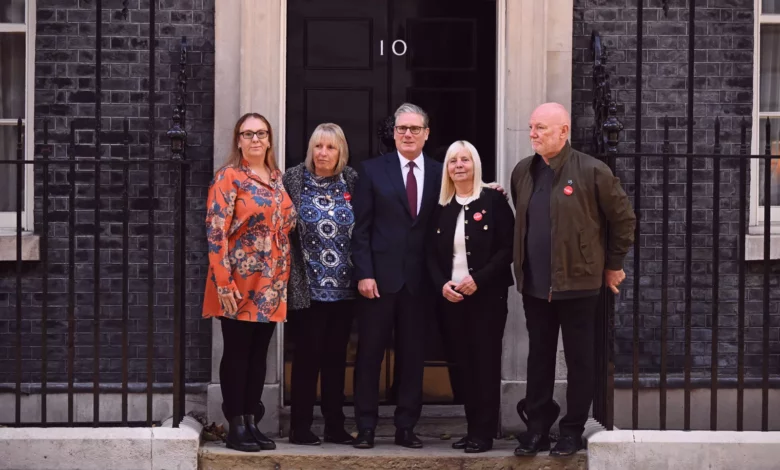
The Prime Minister’s promise is years in the making. He first pledged the law to veteran Hillsborough campaigner Margaret Aspinall while Leader of the Opposition, and later renewed it directly to Charlotte Hennessy, whose father Jimmy was one of the 97 unlawfully killed in 1989. Ms Hennessy, who opened the Labour Party conference alongside Sir Keir last September, has since received the promise again in Downing Street and in Westminster. The bill itself was laid in Parliament last September, shortly before that conference, with the initial aim of securing its passage by the 36th anniversary this April.
That deadline was missed. Now, with Parliament not due to return from recess until 13 April, campaigners are certain another agonising anniversary will pass without the law on the statute book. In a letter to the Prime Minister this week, families from Hillsborough, the Horizon Post Office scandal, the Manchester Arena attack and other tragedies expressed their “very disappointed” and “insulted” feelings at the lack of progress, stating there is “no end in sight”. They warned the delay is “having a serious, negative impact on countless other families affected by or yet to be affected by state-related deaths”.
The Heart of the Dispute: Spies and Candour
The bill’s journey through Parliament initially seemed smooth. It passed its Second Reading with cross-party support on 3 November 2025 and underwent detailed scrutiny in a Public Bill Committee in December. The crisis point came in January, when the government tabled an amendment concerning the intelligence services – MI5, MI6 and GCHQ.
The government’s proposal sought to bring spies within the scope of the duty of candour, but with a critical caveat: disclosure would be subject to the approval of the head of their service. To campaigners and supportive MPs, this was not an inclusion but a “carve-out”. They argued it would allow the very leaders of the security services to act as gatekeepers, deciding whether or not to disclose information, thereby gutting the law’s fundamental purpose of preventing cover-ups.
Facing significant backlash, the government withdrew the amendment on 18 January 2026 and pulled the bill from the agenda entirely, stating it needed time to find a compromise that balanced transparency with national security. In response, Labour MP for Liverpool West Derby, Ian Byrne – a Hillsborough survivor and the campaign’s parliamentary lead – tabled a rival amendment to ensure the duty applied unequivocally to the intelligence services and their workers.
Despite months of talks, campaigners say the government has not explained why it objects to Mr Byrne’s amendment. Charlotte Hennessy has criticised Home Secretary Shabana Mahmood, whom campaigners accuse of being behind the delays, for not meeting with them to discuss concerns. “She is the minister of MI5, and she won’t meet with us to discuss what her concerns are,” Ms Hennessy said. “How are we going to move forward if we can’t have those conversations?”
Mr Byrne stated he does not believe including spies in the duty would threaten national security, and emphasised that the law must not be weakened. “What we don’t want is a Hillsborough Law with holes in it, that can actually enable state cover-ups. You just can’t have that, that’s not a legacy,” he said.
Frustration and a Fight for Legacy
The frustration stems from a deep-seated fear that the legislation, born from decades of struggle by the Hillsborough families, will be rendered meaningless. For Charlotte Hennessy, the fight is intensely personal. Her father, Jimmy, was 29 when he died. Evidence at the inquests suggested he may have shown signs of life after being pulled from the pitch and that earlier intervention could have saved him. Ms Hennessy, who was six at the time, has spoken of how the disaster and the battle for justice “stole her childhood”.
The proposed law aims to prevent such battles for future families. Beyond the duty of candour, it seeks to create a fairer “equality of arms” in inquiries by expanding legal aid for bereaved families when a public authority is involved. Its principles are supported by those affected by a litany of other scandals, including the Infected Blood disaster and the Grenfell Tower fire, who see it as a vital tool to curb state power.
For campaigners now, the political dynamics are baffling. Ms Hennessy questions the Prime Minister’s authority, asking, “Who’s running the country? Is it the home secretary or is it the prime minister?” She warns, “Without this amendment, we don’t have Hillsborough Law in its entirety… So there is a very real prospect here that the prime minister is going to go back on his promise.”
A government spokesperson said: “Our legislation will right these wrongs, changing the balance of power so the state must always act for the people it is supposed to serve. We must take the time to get this right, bringing in a bill that is testament to their decades campaigning, while never compromising on national security. The families and campaigners have always been at the heart of this process.”
As the anniversary looms, the gap between that assurance and the tangible reality of a stalled bill has never felt wider to those who were promised change.