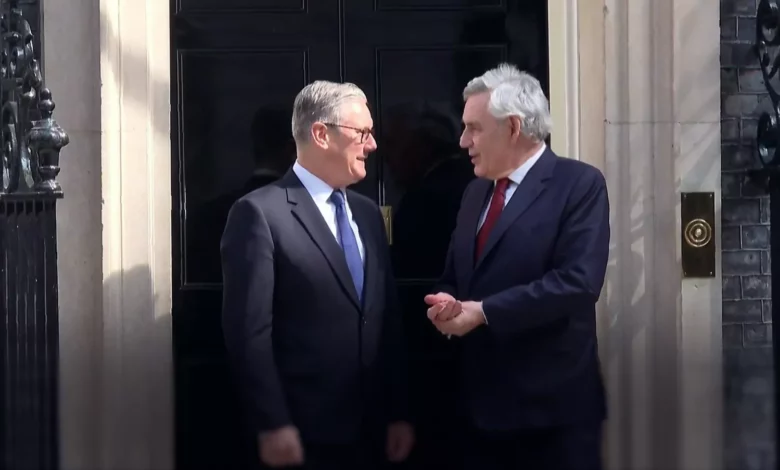
The local election results should have been a tinnitus-inducing alarm call for the Labour leadership. Instead, Sir Keir Starmer ignored the wake-up call entirely. Labour lost control of 38 councils and more than 1,400 seats across England, while Reform UK surged to secure over 1,350 seats and 14 councils — a result that has prompted some Labour MPs to call for the Prime Minister to resign.
What did Sir Keir do the morning after such a drubbing? He wheeled out Gordon Brown as a Special Envoy on Global Finance, complete with a cinematic video more fitting for a hero than the man many voters blame for beginning Britain’s long decline. The decision sent a clear message: Labour still instinctively turns back toward the old managerial political class rather than forward toward the country’s demands.
Starmer’s Misstep
The appointment of Gordon Brown was a political misstep of the highest order. Rather than showing humility, self-awareness or a genuine understanding of why voters are growing angrier by the day, the Prime Minister chose to stand shoulder-to-shoulder with a figure who symbolises precisely the era many believe started Britain down its current path. On election day, GB News saw record viewing figures — an average of 185,700 viewers, trouncing BBC News Channel’s 93,200 and Sky News’s 119,000 — as viewers sought out a channel that treated Reform UK’s success as something other than a national disaster. The Government, however, continues to refuse to engage with GB News, commonly ignoring its reporters and rejecting multiple invitations to appear. Sir Keir has had ample opportunity to grasp the mood of the nation — even a cursory ten minutes on the ‘Your Say’ inbox at GB News would have given him a sense of why voters pummelled him. Instead, his government maintains a boycott that the article calls “startlingly stupid and myopic.”
Data from April 2026 shows GB News averaged 89,500 viewers (1.59% share), ahead of Sky News (86,200, 1.53%). Over a ten-month period from July 2025 to April 2026, GB News averaged 90,300 viewers (1.47% share), ahead of BBC News Channel (83,900, 1.37%) and Sky News (72,000, 1.18%). Yet polling from 2025 indicated that GB News was the least trusted of the five main news broadcasters in Britain. The Government itself has spent over £1 million of taxpayer money on advertising with the channel since its launch in 2021.
The Brown Legacy
Gordon Brown is not viewed by huge swathes of the public as some wise elder statesman floating above politics. He is seen as part of the old New Labour machine — the Blair-Brown years that reshaped Britain in ways millions are now openly questioning. The list of self-harm attributed to that era is long, and it started with the very man Sir Keir brought out to save him the morning after the elections. It was the political equivalent of handing a shot of whiskey to someone nursing a hangover.
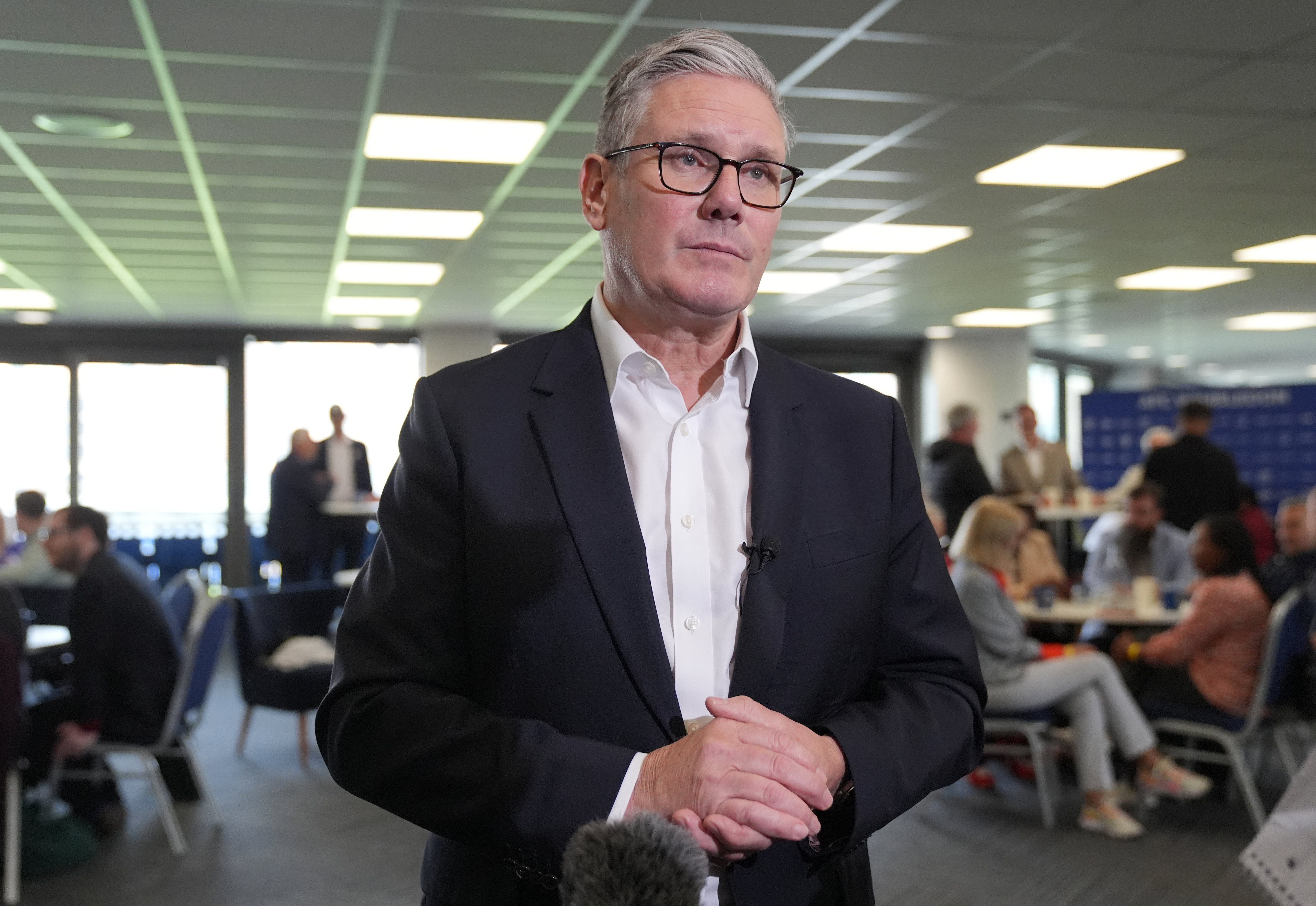
As Chancellor of the Exchequer between 1999 and 2002, Brown sold approximately half of the UK’s gold reserves — 395 tonnes — at an average price of about $275 (£201.65) an ounce, near the bottom of the market. He claimed he wanted to diversify into interest-bearing foreign currency assets such as dollars and yen. But the sale raised only roughly $3.5 billion (£2.57 billion). Now, with a rising price of $4,700 (£3,446.38) per ounce, that gold would be worth more than $50 billion (£36.66 billion). Critics note that the Bank of England was not consulted on the decision, and that the sale was conducted with little consultation.
Anger and fear over uncontrolled legal and illegal migration played a huge part in these local election results, and that phenomenon began under Brown’s New Labour. Communities changed faster than infrastructure could manage. Housing pressure intensified and wages stagnated in many sectors, thanks to people from developing countries working for lower wages while Brown ran the Treasury. Recent polling indicates that a significant majority of UK voters believe immigration levels are too high, with 46% saying they are “much too high” or “a bit too high.” Concerns are particularly high regarding asylum numbers, with poor border control and welfare benefits cited as main drivers. Despite net migration falling by more than two-thirds to a post-pandemic low in the year ending June 2025, a large majority of UK voters believe immigration is increasing. The UK is more likely than any other country to cite immigration as its top national problem, with Reform UK supporters showing particularly high levels of concern.
Trust between the electorate and the political establishment eroded because voters increasingly felt they were never honestly consulted about the scale of change taking place around them. The article traces a wide range of perceived national problems back to the New Labour years: the rise of political correctness and the policing of language; a bloated civil service; the normalisation of a benefits culture; the true beginning of “save-the-planet-panic” and the denudation of energy self-sufficiency; a “medals-for-everyone” non-competitive schools ethos; the greasy slide into the arms of the European Union; and the beginnings of a globalist agenda to survey, track and control the population — an ambition Tony Blair still spearheads today through the Tony Blair Institute for Global Change, which advises governments including those of the UAE and Saudi Arabia. It was Blair and Brown who shot the starting pistol on several subsequent decades of people feeling increasingly helpless as Big Government grew stronger and more arrogant. They remain key actors in the cast of globalist decision-makers earning millions at Davos and setting the agendas of the UN, the WHO and the WEF.
Research shows that New Labour did introduce some modest policies to redistribute income — including the National Minimum Wage, tax credits for low-paid workers and higher benefits for pensioners — which contributed to a reduction in inequality and poverty. However, that reduction was fragile, relying on government benefits rather than underlying income, and vulnerable to austerity measures. The period also saw a rise in government spending and taxes as a share of GDP after 2001, following initially conservative spending plans, alongside significant growth in the finance sector and the introduction of Private Finance Initiative schemes.
A Failure to Listen
The public mood has changed dramatically, but Labour still behaves as though it hasn’t noticed. People are crying out for politicians who understand borders, identity, community, sovereignty and national cohesion. Instead, they see the same globalist worldview being recycled yet again. Gordon Brown belongs to an era that championed open-border economics, constitutional upheaval, relentless bureaucracy and a political philosophy that often appeared to value international consensus over the concerns of ordinary British voters.
Whether establishment figures like it or not, there has been a profound shift in public consciousness over the last six years. Thanks to a pandemic of lies, people are more sceptical of institutions than ever before. They are less trusting of experts who repeatedly get major issues wrong. They are tired of being told their concerns are illegitimate, ignorant or somehow morally suspect. And every time politicians respond to public anger by wheeling out another relic from the New Labour years, they only deepen that frustration.
The article suggests a straightforward solution: Sir Keir Starmer should come and do a shift at GB News. Just one hour as a presenter reading the “Your Say” inbox would allow him to grasp the mood of the nation. Instead, his Government refuses to engage — and in doing so cuts itself off from the people who are collectively turning the political dial. Reform UK, under Nigel Farage, is now “wiping out” Labour in traditional heartlands, winning over 1,350 seats and 13 councils in England, and making breakthroughs in the Welsh Senedd, finishing second with 34 seats. Projections for the 2026 local elections indicated Reform UK was on course to top the poll in many council areas, causing substantial losses for both Labour and the Conservatives, with its vote share growing most in areas of greater socioeconomic deprivation.
First Brexit and now these local elections have exposed the disconnect brutally. People want authenticity and politicians who speak from the heart — even if it makes them unpopular. They want leaders who express and understand patriotism without embarrassment. Above all, they want honesty. And Gordon Brown was the man who smiled to a voter’s face then called her a bigot behind her back.
So much of modern politics in the UK feels staged, managed and curated by communications teams terrified of saying anything genuine in case it upsets a backbencher, donor or globalist mentor. Starmer had an opportunity after these elections to show humility, self-awareness and a genuine understanding of why voters are growing angrier by the day. Instead, the image of him chatting warmly with Gordon Brown sent precisely the opposite message: that Labour still instinctively turns back toward the old managerial political class rather than forward toward the country’s demands. That image said everything: a political establishment talking to itself while the public shouts from outside the room. And the more Westminster refuses to hear those voices, the louder they will become. By the time of the General Election, it will be a roar.