Ministers claim Starmer would have vetoed Mandelson post had Whitehall flagged vetting failure

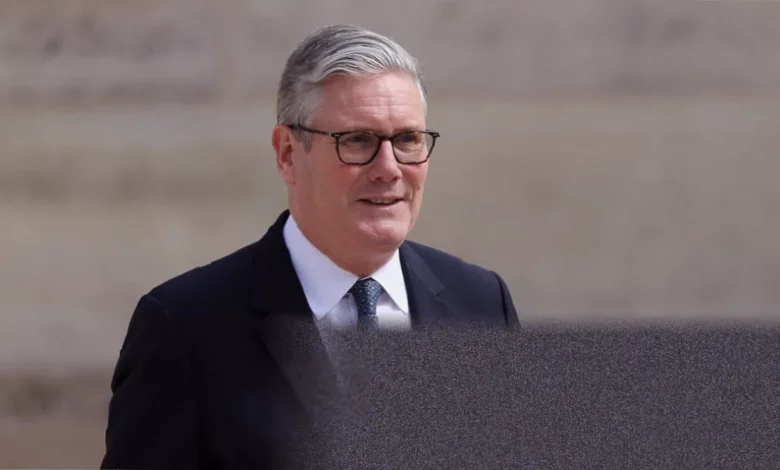
Sir Keir Starmer would have immediately withdrawn the appointment of Peter Mandelson as British ambassador to the United States had he been informed that the peer had failed national security vetting, a senior minister has stated, insisting the timing close to Donald Trump’s inauguration would have been irrelevant.
Technology Secretary Liz Kendall told the BBC that the Prime Minister was kept in the dark about the critical security assessment. “If the prime minister had known that UK security vetting had not cleared him, the appointment would have been withdrawn,” she said. “It wouldn’t have mattered how close that was to the president’s inauguration.” Her defence follows similar assertions from Deputy Prime Minister David Lammy, who said Mr Starmer “would never, ever have appointed him ambassador.”
The Detail Behind the Vetting Failure
New details reveal the specific reasons UK security officials initially denied Lord Mandelson ‘Developed Vetting’ (DV) clearance in January 2025, before his appointment was announced. The concerns centred on his extensive business interests through his lobbying firm, Global Counsel, which he co-founded.
A primary issue was a $3 million contract his firm secured with the Chinese pharmaceutical company WuXi AppTec, which had been targeted in a US national security crackdown over alleged links to the Chinese military. Furthermore, Global Counsel had sought contracts with other state-backed corporations, including Russia’s Rusnano and China’s China International Capital Corporation, shortly after Mandelson left government. The firm also worked to reassure UK stakeholders about the intentions of China Reform, a state-owned enterprise, regarding the British microchip designer Imagination Technologies. Concurrently, Mandelson was serving as president of the Foreign Office-funded Great Britain China Centre.
Despite this negative recommendation from vetting officials, senior figures within the Foreign, Commonwealth and Development Office (FCDO) used a rarely invoked authority to overrule the decision and grant clearance. Sir Olly Robbins, the Permanent Secretary at the FCDO at the time, has since been forced out over the row. Downing Street insists Mr Starmer was unaware of the initial vetting failure until earlier this week, with the Prime Minister stating he is “furious” he was not informed.
Rising Pressure and Political Fallout
The scandal has triggered a severe political crisis for the Labour government, with opposition parties launching fierce attacks. Conservative shadow Cabinet Office minister Alex Burghart placed ultimate responsibility on the Prime Minister. “It was the prime minister’s decision to appoint Peter Mandelson to the most sensitive diplomatic posting we have, and we now know that he appointed someone who was a security risk,” he said, arguing Mr Starmer’s position was “untenable.”
The Liberal Democrat leader, Ed Davey, went further, suggesting the saga risked propelling Nigel Farage into Downing Street. He criticised the Labour government as a “bit of a failure” on the economy and “in chaos,” urging Mr Starmer to “move aside” to prevent handing the keys of Number 10 to the Reform UK leader. Mr Davey has also requested an investigation into whether the Prime Minister breached the ministerial code by repeatedly assuring Parliament that “full due process” was followed.
In defence, Ms Kendall called Mr Starmer a “man of integrity” and asserted that the failure of judgement lay with those who did not inform him. She said Sir Olly Robbins was “wrong” not to tell the Prime Minister or Foreign Secretary. The controversy has already claimed several high-profile resignations, including the Prime Minister’s Chief of Staff, Morgan McSweeney, and his Communications Director, Tim Allan.
Reform UK’s Electoral Threat
The political turbulence coincides with a significant rise in support for Reform UK, which now poses a direct threat to Labour’s standing. Nationally, one poll places Reform on 28%, ten points ahead of Labour. This shift is particularly acute in Scotland, where Reform is vying with Scottish Labour to become the official opposition to the SNP in the Holyrood elections on 7 May, with predictions it could win up to 20 seats.
In areas like the north-east of Scotland—a traditional Tory-SNP battleground with high Brexit support—the collapse of Scottish Conservative support has created a vacuum Reform is rapidly filling. The party’s messaging on immigration, fishing, farming, and oil and gas is resonating with voters. However, the party faces its own controversies, with deputy leader Richard Tice facing allegations of failing to pay almost £100,000 in corporation tax through companies that later donated to Reform. Mr Tice has stated he took professional advice, believes he paid the correct tax, and would settle any underpayment if found.
Reform’s finance spokesperson, Robert Jenrick—a defector from the Conservatives—declined to echo Nigel Farage’s claim that Mr Starmer had lied, but said the Prime Minister was “totally unfit” to lead the country and possessed “terrible judgement.”
Separately, Ms Kendall indicated the government is moving towards regulating addictive social media features, citing a recent US court verdict against tech giants. A public consultation is considering measures like banning under-16s from platforms and restricting designs like infinite scrolling, with a government response expected this summer. Prime Minister Starmer has said such features “shouldn’t be permitted” and the government “is going to have to act.”