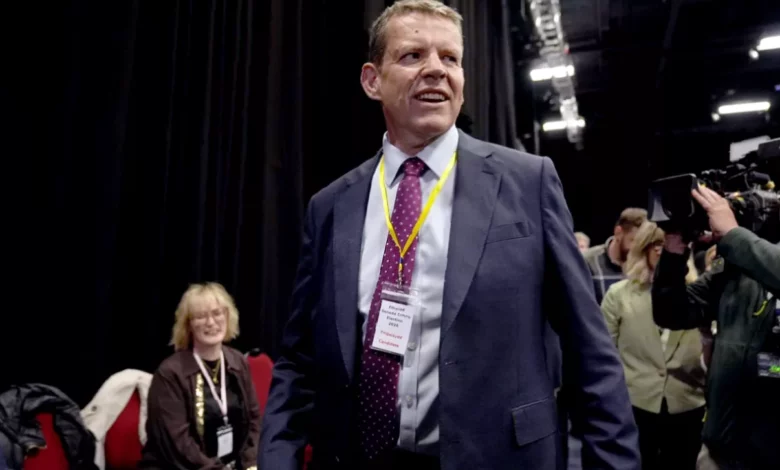
The UK government is launching a new initiative to reset the relationship between Westminster and Cardiff Bay, as Plaid Cymru prepares to take the helm of a Welsh government for the first time in over a century. The party’s leader, Rhun ap Iorwerth, has put his name forward to be nominated as the next First Minister after his party secured 43 of the 96 seats in the Senedd election – making it the largest party and ending a Labour dominance that has lasted since devolution began in 1999. The result, which saw Reform UK come second with 34 seats and Labour collapse to just nine, represents a seismic shift in the political landscape of Wales, triggering calls for the UK Labour government to “change course” after First Minister Eluned Morgan lost her own seat.
Historic mandate and policy vision
The scale of Plaid Cymru’s victory has been described by ap Iorwerth as “a moment 100 years in the making”. The party, founded in 1925 as a centre-left Welsh nationalist movement, has long campaigned for independence but until now occupied a peripheral role in devolved government. Recent electoral trends and a weakening Labour grip have catapulted it into contention, and ap Iorwerth has pledged to “reach out to others” to form a government after falling short of an outright majority. The new, more proportional voting system – which increased the number of Members of the Senedd from 60 to 96 – helped produce the fractured result, and analysts say the Welsh electorate is increasingly dividing along identity lines, with Plaid Cymru attracting progressive, Welsh-identifying voters while Reform UK consolidates support among those who feel more strongly British.
The party’s manifesto, launched on 9 April, outlines an ambitious programme built on “fairness but driven by ambition”. Central to its promises is a package of transformative public service reforms. Plaid Cymru has committed to ending two-year NHS waits within the first year of government, establishing a National Care Service to provide free social care, and expanding free childcare provision. On the environment, it aims to reach net-zero emissions by 2035 and reverse biodiversity decline by 2030 – both targets more aggressive than current UK-wide goals. To fund its ambitions, the party has proposed a Wales Wealth Fund designed to ensure the nation benefits directly from its natural resources, alongside a “Green Economic Stimulus” that would channel investment into green infrastructure.
Ap Iorwerth, elected party leader in June 2023 and noted for his improved communication skills honed during a broadcasting career, has framed the election result as a mandate for fairness, opportunity and prosperity. In a statement that captures the mood of the moment, he said: “This is a moment 100 years in the making, a moment in which we hold the promise and ambition of a nation in our hands, the promise of fairness, of opportunity, of prosperity, of a nation determined in its ambition and uncompromising in its compassion.”
Devolution, coalition dynamics and the independence question
Although Plaid Cymru officially supports Welsh independence, the party has explicitly ruled out holding a referendum during the first term. Instead, it aims to “kick start the national debate on independence” and prepare a white paper laying out a potential path. Polling consistently shows a majority of Welsh voters oppose independence, but the party believes its immediate focus must be on demonstrating competent governance. The Senedd, which was renamed from the National Assembly for Wales in 2020 to reflect its expanded powers, exercises authority over health, education, economic development, transport, the environment, local government and some taxes. Reserved matters – including defence, foreign affairs, immigration, justice and policing – remain with the UK Parliament, funded largely through grants allocated by the Barnett formula.
Forming a government in the 96-seat chamber will almost certainly require a coalition or co-operation agreement. No single party has consistently commanded an outright majority, and the recent Co-operation Agreement between Welsh Labour and Plaid Cymru from 2021 to 2024 set a precedent for cross-party arrangements. However, other parties have already ruled out a coalition with Reform UK, meaning Plaid Cymru’s most likely partners would be from the remaining smaller parties or independents. Ap Iorwerth has emphasised his willingness to negotiate, but also signalled a more assertive stance towards Westminster, pledging to “reset the relationship” on devolved matters. The outcome of these talks will determine whether Plaid Cymru can turn its electoral breakthrough into a durable administration – and whether it can deliver on the sweeping promises that now rest in its hands.