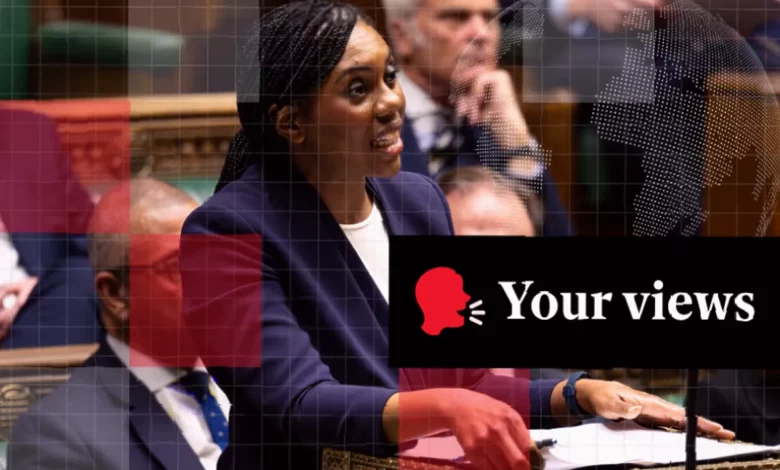
Fresh polling data has injected a dose of tentative optimism into the Conservative Party, suggesting the first green shoots of recovery after a crushing election defeat. Under the leadership of Kemi Badenoch, who assumed the role in November 2024, the party is registering at around 19% in recent Westminster voting intention polls, showing early signs of closing the gap on its rivals.
This marginal recovery, noted by observers, is being attributed by some to Badenoch’s political stature. Having served as Secretary of State for Business and Trade under multiple prime ministers, she is seen by a segment of the electorate as offering a steadier and more credible alternative to the populist pitch of Reform UK’s Nigel Farage. Her leadership is viewed by supporters as a potential return to a more traditional Conservative philosophy, harkening back to the party’s historical ‘One Nation’ strand which emphasised social unity and paternalistic duty.
Fragmentation on the Right
However, this Conservative uptick exists within an increasingly fractured political landscape, particularly on the right of the spectrum. Reform UK, led by Nigel Farage since 2024, remains the largest single party in the polls, commanding between 24% and 26.6%. Yet its support appears potentially brittle, facing a new challenge from its own flank.
The emergence of Restore Britain, a party founded by former Reform MP Rupert Lowe and registered in March 2026, is drawing away a portion of the most ideologically committed voters. Polling at around 4%, Restore Britain advocates for policies including large-scale deportations and the restoration of “Christian principles,” and is seen as competing directly with Reform for the same segment of the electorate. This splintering effect, where fervent early Reform supporters are now looking to Lowe’s party, illustrates a significant fragmentation that could cap Farage’s progress.
This division is exacerbated by the dominant political issue of immigration, a primary driver of support for both Reform and Restore Britain. Reform UK’s platform explicitly campaigns on ending “mass immigration,” while the government has itself published policy documents outlining plans to “restore control” and reduce net migration. The Conservatives’ attempt to address these concerns risks blurring the lines with their rivals, with critics arguing the party has yet to clearly distinguish itself or rebuild trust after past promises on the issue.
Some analysts also point to a transatlantic ‘Trump factor’, with Farage’s longstanding alignment with the former US president influencing the political climate, potentially aiding the Conservatives as they seek to woo Reform voters by adopting a harder line.
The Electoral System Question
The consequence of this right-wing split, alongside a similarly fragmented left-of-centre vote shared between Labour, the Greens, and the Liberal Democrats, brings the UK’s electoral system into sharp focus. Under the First Past the Post (FPTP) system, a party can secure a parliamentary majority with a minority of the national vote if opposition support is divided across multiple parties.
Current polling underscores this reality: with five parties regularly polling between 12% and 27%, it is mathematically possible for a party to win the most seats while only attracting support in the high twenties percentage-wise. This dynamic renews fundamental questions about the system’s fitness for a multi-party era and has fueled discussions about electoral reform, including the potential adoption of ranked-choice voting to better reflect the diversity of voter preferences.
The latest PolitPro poll trends as of 16 April 2026 illustrate the tight, fragmented field: Reform UK at 25.9%, the Conservatives at 18.7%, Labour at 18.2%, the Green Party at 16.5%, and the Liberal Democrats at 11.8%, with others including the SNP and Plaid Cymru making up the remainder.