Reform UK has set out plans to dramatically shift the balance of power inside Whitehall, handing the Prime Minister direct control over policy and the machinery of government by effectively abolishing the Cabinet Office. The proposal, contained in a policy paper titled Fixing the Centre, is the party’s most detailed blueprint yet for restructuring the British state and represents a direct challenge to the traditional role of the civil service.
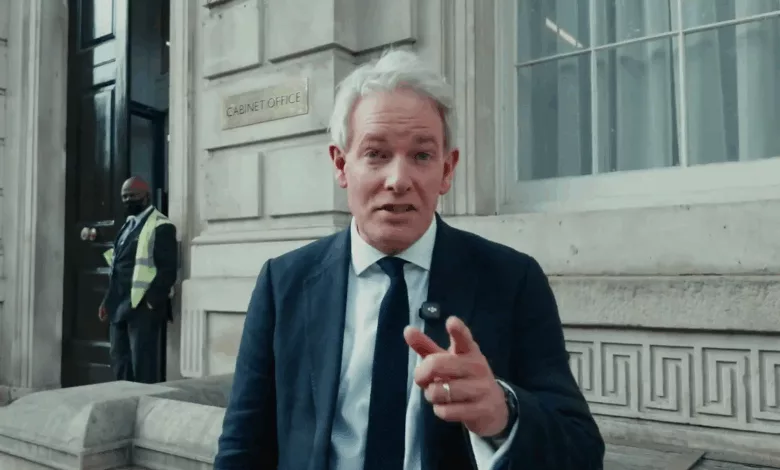
The central mechanism would be the creation of a new “Office of the Prime Minister”, headed by a powerful political Chief of Staff. This office would absorb the policy-making functions currently held by the Cabinet Office and return them to individual government departments. Simultaneously, the role of Cabinet Secretary would be scrapped, along with the Cabinet Office itself. Danny Kruger, Reform UK’s head of preparation for government, said the aim was to “restore power meaningfully to No10”. He insisted that under the new structure “No10 is in charge, not the Cabinet Office. The Prime Minister is in charge, not the Cabinet Secretary.”
Kruger, who defected from the Conservative Party to Reform UK in September 2025, has described the current system as one in which real authority rests with the permanent civil service rather than the elected government. He argues that this arrangement prevents ministers from receiving good advice, blocks effective implementation of decisions, and obscures accountability. His proposed changes are designed to reassert the principle, as set out in Lord Armstrong’s 1985 memorandum, that “the Civil Service as such has no constitutional personality or responsibility separate from the duly constituted Government of the day.”
Radical overhaul of the civil service and Whitehall
Beyond the reorganisation at the centre, Kruger’s plans envisage a new “Department of the Civil Service” with a remit to cut headcount significantly, adopt artificial intelligence technologies, and improve terms to incentivise high performance. Kruger has suggested that a 30% reduction in civil service numbers would be “easily achievable”, targeting what he calls “head office functions” such as communications, human resources, and policy work.
Ministers would also be granted significantly greater powers to hire and fire civil servants, reward high-performing officials, and recruit talent from the private sector. The aim, Kruger said, is to make ministers “properly accountable to Parliament” for both policy and delivery. In a further centralising move, all non-departmental public bodies — commonly known as quangos — and agencies would either be brought back inside government departments or scrapped entirely, returning their powers to ministers. A new “Combined Ministerial Office” is proposed to co-locate ministers, a move intended to improve coordination.
Kruger’s own background combines experience at the heart of Conservative governments with a turn towards more radical reform. He served as a speechwriter for Prime Minister David Cameron and as political secretary to Prime Minister Boris Johnson, and previously worked at the Centre for Policy Studies think tank. He also co-founded the homelessness charity Only Connect. His political philosophy is described as Christian humanist and social conservative, with a strong emphasis on family stability and stricter immigration controls.
Broader economic and policy agenda
The plans for central government reform sit inside a wider Reform UK policy platform. Treasury spokesperson Robert Jenrick has outlined an economic vision focused on supporting working parents by lowering living costs through supply-side interventions: reducing domestic energy bills, implementing targeted tax reductions, and lowering rental costs. Nigel Farage, the party’s leader, has spoken of a commitment to being pro-business and rewarding work, aiming to foster a cultural shift towards success and entrepreneurship.
The party’s manifesto includes proposals to lift the income tax threshold to £20,000, scrap VAT on energy bills, and withdraw benefits from job seekers who do not find work within four months. It also calls for scrapping net-zero carbon emission goals and fast-tracking oil and gas licences.
At a local government level, Reform UK’s approach has already attracted controversy. After taking control of Calderdale Council, the party removed a canon from the local standards board. Opposition parties have accused the new leadership of reducing oversight and weakening the mechanisms for accountability and transparency.
Kruger’s proposals have prompted analysis that, while Whitehall reform may be overdue, the implementation of such radical changes — particularly the 30% cut in civil service headcount — would be significantly challenging. The party is reportedly preparing for resistance from established powers, including the House of Lords, with options such as “packing the Lords” being considered as a potential response to opposition.
Kruger concluded that, under the new arrangements, “it really will matter who walks up Downing Street.”