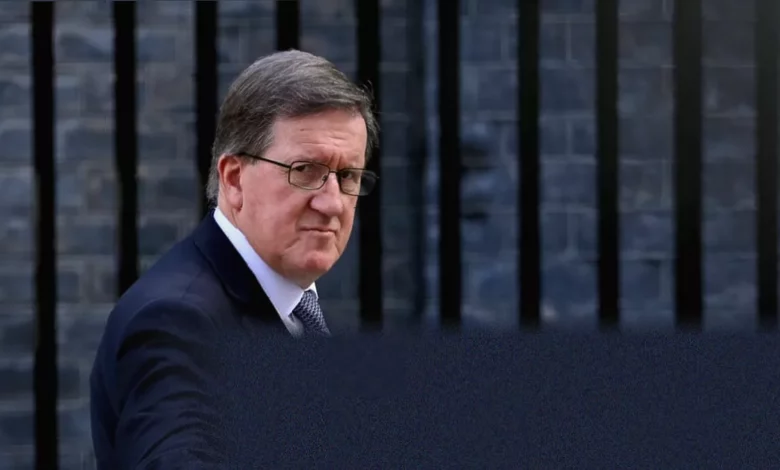
Lord Robertson’s stark warning of “corrosive complacency” in Downing Street over Britain’s safety is less a strategic analysis than a plea for the Treasury to open its chequebook. The former NATO secretary general’s intervention is a calculated effort to pressure the government into funding a specific vision of global power—one that sees Britain’s armed forces primarily as an adjunct to American military might.
The Core Criticism: A Strategy Taken as Gospel
The central thrust of Lord Robertson’s argument—that a £28 billion black hole threatens defence—rests on an assumption he helped embed. The claim assumes the current strategy, with its emphasis on global deployment and alliance commitments, is the correct one. But if that strategy is open to question, the funding gap may reflect strategic overstretch rather than merely insufficient spending.
This model is not new. As the historian Professor David Edgerton noted at the time of Lord Robertson’s 1998 Strategic Defence Review (SDR), Britain was committing itself “to acting primarily with the USA in a wide-ranging programme of global policing.” The structure of the armed forces was designed not for autonomous national defence, but because, as Edgerton argued, “the composition … is what allows Britain to be the USA’s principal partner.” He estimated only 15% to 20% of spending related to purely national defence. In that sense, the model Lord Robertson now defends was never primarily about defending the UK homeland.
The Fractious Funding Debate
The peer’s £28 billion figure is not plucked from thin air. It echoes recent warnings from within the Ministry of Defence, where Air Chief Marshal Sir Richard Knighton reportedly informed Prime Minister Keir Starmer of a £28 billion shortfall between now and 2030. Such gaps have plagued MoD ten-year equipment plans for years, with one estimate in March 2021 pointing to a £17.4 billion deficit.
The causes are multifaceted: higher inflation, pay rises for service personnel, the immense cost of maintaining the nuclear deterrent, and chronic overspending on major procurement projects. Lord Robertson has pointedly accused “non-military experts in the Treasury” of “vandalism,” framing the Treasury as the primary blocker to necessary investment. The government has committed to raising defence spending to 2.5% of GDP by 2030, with ambitions for 3% thereafter, yet the crucial Defence Investment Plan—which outlines how the SDR’s ambitions will be paid for—has been repeatedly delayed, fuelling accusations of a lack of urgency.
This delay comes amidst a fierce economic debate. The Treasury, and critics like Khem Rogaly of the Common Wealth thinktank, question the value of prioritising defence. Rogaly argues defence spending provides a weak economic stimulus compared to public investment and is a poor job creator, noting the sector is “hi-tech and low labour.” Conversely, analyses like one by EY project that increased spending could lift GDP, highlighting that 69% of MoD private sector spend goes to UK-based suppliers. The government faces a brutal choice: find billions for defence from other departments, cut welfare, or increase borrowing.
The American Anchor: Whose Security Is It?
The ultimate question raised by the funding crisis is foundational: what is British defence spending for? Lord Robertson’s model envisages the UK as America’s principal partner, a role cemented by deep industrial and strategic integration. The UK is a Tier 1 partner in the US F-35 programme, with British companies manufacturing critical components. Last year’s purchase of 12 American F-35A jets, capable of carrying nuclear bombs, is symbolic. It reintroduces a nuclear strike role for the Royal Air Force for the first time since the Cold War, not by expanding Britain’s own independent arsenal, but by integrating more fully into NATO’s nuclear sharing arrangements, using US-owned weapons.
This posture faces unprecedented strain. Donald Trump’s previous presidency, and his potential return, have exposed the fragility of Atlanticist assumptions. His criticisms of NATO, his disregard for international law, and his vocal opposition to the UK’s deal with Mauritius over the Chagos Islands—which he called an “act of great stupidity” despite the UK securing a 99-year lease for the strategic Diego Garcia base—highlight the risks of over-reliance. The “special relationship” is now a variable, not a constant.
Lord Robertson, leading the recently published SDR which the government accepted in full, identifies a “deadly quartet” of Russia, China, Iran, and North Korea. In a dangerous world, the calculation in Whitehall appears to be that Britain faces no serious imminent threat, hence spending rises are promised but pushed to the 2030s. The current debate, therefore, is not merely about budgets but about identity. Is the UK funding a force for its own autonomous security, or is it investing to maintain its place as a premium member of a US-led system? As the nation weighs a multi-billion pound commitment, that is the pivotal, and often unstated, question at the heart of the defence spending row.