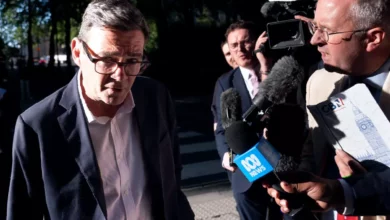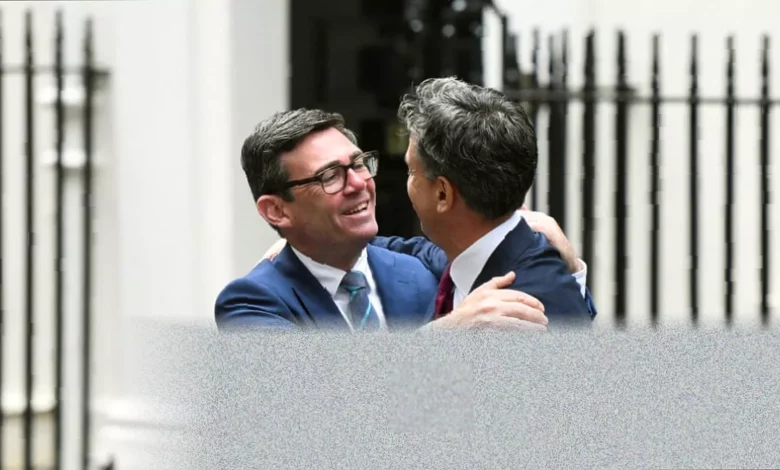
George Osborne, the former Conservative chancellor whose austerity programme redistributed pain downwards while protecting privilege at the top, has surprised Westminster by backing Ed Miliband for the Treasury. On his podcast, Political Currency, Mr Osborne had dismissed Mr Miliband a week ago as too difficult a sell to business and the press. He now joins Labour heavyweights Harriet Harman and Ed Balls – his co-host on the podcast – in recognising what should have been obvious: if Andy Burnham is serious about governing differently, he needs a chancellor with the authority, knowledge and political relationship with the prime minister to bend the Treasury to the project.
The endorsement is striking because Mr Osborne disagreed with Mr Miliband’s decisions on climate, yet acknowledges that the current Secretary of State for Energy Security and Net Zero has been clear in driving his department’s agenda. Mr Miliband, who has been the MP for Doncaster North since 2005, served as Labour leader and Leader of the Opposition from 2010 to 2015, and now co-hosts the podcast Reasons to be Cheerful, is understood to have the fiscal, industrial and climate expertise needed for Number 11. As the former Secretary of State for Energy and Climate Change he oversaw the Climate Change Act 2008, and has held roles including Minister for the Cabinet Office under Gordon Brown. His backers argue he combines the clout to challenge Whitehall’s veto with the ability to navigate markets deftly.
For Mr Burnham, who arrived in the Labour leadership contest as the only declared candidate after dissatisfaction with Sir Keir Starmer’s premiership, the choice of chancellor is arguably the most consequential decision he will make. Mr Burnham served as Chief Secretary to the Treasury from 2007 to 2008, and later as Culture Secretary and Health Secretary under Gordon Brown. As Mayor of Greater Manchester from 2017 until June 2026 – when he won a by-election for Makerfield to return to Parliament – he developed the philosophy known as Burnhamism or Manchesterism: a business-friendly socialism that rejects trickle-down economics, channels growth proceeds to communities, and re-establishes public control of services such as buses via the Bee Network. Devolution is its central plank, but building the institutions capable of changing lives will take a decade.
A strong chancellor is a must because Mr Burnham arrives after the breakdown of the Starmer government as a midterm prime minister, with civil servants wondering whether he is just another temporary leader. If officials think he will soon be gone, Whitehall slows down, hedges, resists and waits. Putting Mr Miliband into Number 11 would signal that Mr Burnham means business. The Treasury is the economics and finance ministry responsible for public spending, taxation and financial regulation, and the chancellor’s relationship with the prime minister often determines electoral success. Mr Burnham needs a chancellor who understands economic strategy, knows the finance ministry and has the political weight to force Whitehall behind an agenda it has often resisted – particularly on real devolution of fiscal powers.
Yet devolution is a long game, and Mr Burnham also needs a cost-of-living offer that buys him political time. Polling by Persuasion UK suggests that without meaningful measures to bring down the costs of essentials – with radical policies such as rent caps – Labour is heading for a heavy defeat at the next election. Mr Burnham’s chancellor must therefore ease the squeeze on household budgets quickly enough to sustain the government, while building the devolved institutions needed for renewal. Mr Miliband, who has been Secretary of State for Energy Security and Net Zero since July 2024, is seen as able to navigate both imperatives. He is more progressive than the alternatives, but the case for him is not merely ideological: it is that he has the experience and political standing to repurpose the Treasury rather than simply reassure it.
Wes Streeting, who resigned as Health Secretary in May 2026 and has since endorsed Mr Burnham, or Shabana Mahmood might offer fresher faces, but neither is steeped in the fiscal politics of the Treasury. For a truly radical break, Mr Burnham could turn to Miatta Fahnbulleh, the economist by training who succeeded Harriet Harman as MP for Peckham in 2024. Ms Fahnbulleh served as Parliamentary Under-Secretary of State for Energy Consumers and later for Devolution, Faith and Communities, and was previously Head of Cities in the Cabinet Office and Chief Executive of the New Economics Foundation. She is considered one of the architects of Burnhamism, and her elevation to the Treasury would electrify the body politic. But Mr Osborne, Mr Balls and Ms Harman – herself a former deputy Labour leader and interim leader – have all lined up behind Mr Miliband as the obvious choice.
Appointing a more centrist figure would suggest that Burnhamism is going to be better marketing for the same policies that failed under Sir Keir Starmer. Unless the chancellor’s job goes to a figure of substance such as Mr Miliband, or a genuinely creative one such as Ms Fahnbulleh, the buzz around Mr Burnham’s arrival in Number 10 may fade quickly. If Burnhamism is to mean anything then it has to be more than a northern accent and better TikToks.