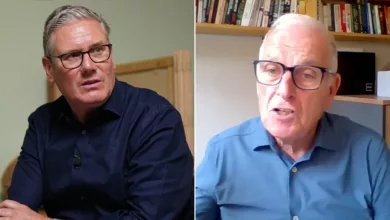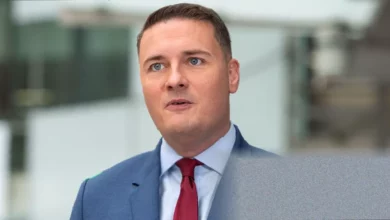
A deepening rift at the heart of government over how quickly to deliver Labour’s promise of the full minimum wage for young people has exposed a clash between economic caution and manifesto commitments. Business Secretary Peter Kyle is understood to believe that now is not the right time to give 18- to 20-year-olds the full rate, amid rising youth unemployment and warnings from the hospitality and retail sectors that higher wage costs could deter hiring. Others inside the government, however, argue that there is little robust evidence to show that recent increases for younger workers have had any effect on their employment prospects.
Treasury Minister Torsten Bell told the BBC on Friday that the government remains committed to its manifesto pledge to equalise the rates, but pointedly noted that the manifesto did not set out a timeline for doing so. “If you look at what the Low Pay Commission said in their annual report, they didn’t find evidence that previous increases in the minimum wage for young people had had an effect on their employment,” Bell said. He added that while he and others in the government believe the pace of rises should be slowed if evidence of an impact on employment emerges, they do not yet believe that evidence exists.
The internal debate has been sharpened by a landmark government-backed report this week from former Labour minister Alan Milburn, which found that youth unemployment is costing Britain more than £125bn a year. The report revealed that the number of young people not in education, employment, or training — known as NEETs — has surpassed one million for the first time in more than a decade. In January to March 2026, the figure stood at approximately 1.01 million, or 13.5% of 16- to 24-year-olds, the highest estimate since October to December 2013. Of these, 613,000 were classified as economically inactive — neither working nor actively seeking work — the highest number since comparable Office for National Statistics data began in 2001. The unemployment rate for 16- to 24-year-olds currently stands at 15.8%; for those aged 18 to 24 it is 14.7%.
The Economic Debate
The core of the disagreement rests on sharply conflicting interpretations of the relationship between minimum wage levels and youth employment. The Low Pay Commission, which advises the government on rates, said last month it did not believe wage rises were contributing to higher youth unemployment. “While the commission recognises that labour market outcomes for young people have deteriorated over the past two years, we are not aware of any robust evidence that higher youth rates have contributed to these falls,” it stated. This view was echoed by Justin Madders, a former employment minister, who said: “The minimum wage is set following submissions made by stakeholders to the LPC, which includes employers. That is why the rates set have always been at a level that do not impact on employment levels – a fact borne out by 25 years of evidence.”
On the other side, business groups and some former Labour figures warn that raising youth rates too quickly could backfire. The Federation of Small Businesses has cautioned that increasing employment costs for young people makes hiring them more difficult. Alan Milburn himself, speaking on the News Agents podcast this week, urged caution: “To get the jobs there for them, you’ve got to make sure the employers are willing to take the risk. If you’re in, say, the hospitality sector or the retail sector, margins tend to be very low. These tend to be sectors that were really badly hit by the cost of living, hospitality in particular.” The Centre for Policy Studies has argued that significant increases in the National Living Wage disproportionately affect such sectors, potentially discouraging job creation and leading to discrimination against younger workers. The concerns are underscored by industry data: pre-tax profit margins in UK retail are projected to fall from 5.5% in 2019/20 to 3.2% by 2024/25, partly due to rising labour, energy, and rent costs, while the UK hotel sector saw its gross operating profit margin slip to 34.5% in 2025, driven by rising labour costs.
The Milburn report highlighted severe lifelong consequences for young people who are NEET, including poorer health and individual lost earnings of up to £300,000. Six in ten have never had a job. The crisis, the report concluded, is the result of a “whole system failure” encompassing education, health, and welfare systems, including a lack of work experience opportunities, a decline in employer investment in training, and a structural breakdown in the transition from education to adulthood, with mental health issues playing a significant role.
These competing pressures have already prompted a subtle but significant shift in government policy. Earlier this year, ministers changed their guidance to the Low Pay Commission, telling it to prioritise employment rates for young people over the previous focus on youth unemployment rates. The government accepted the commission’s recommendation this year to raise the main rate of the minimum wage by 4.1% to £12.71 an hour, while increasing the youth rate for 18- to 20-year-olds by 8.5% to £10.85. The rate for 16- and 17-year-olds and apprentices stands at £8.00. Some in government privately hope that the commission’s next recommendation, due in October for the financial year beginning 1 April 2027, will be significantly lower than this year’s increase. Ministers are not bound to accept those recommendations, though Chancellor Rachel Reeves has made a virtue of following them in the past. If they wish to further slow the pace, they could change the guidance once more.
Political and Union Pressure
While ministers row over the evidence, trade unions and some Labour MPs are urging them not to row back on the manifesto promise. Kate Bell, assistant general secretary of the Trades Union Congress, dismissed the cautionary arguments. “There is no good evidence that the minimum wage has caused a jump in youth unemployment,” she said. “This is a talking point which business always resorts to, but the evidence shows the picture is much more complex than that.” She argued for real solutions including an ambitious jobs guarantee and an end to insecure employment. Joanne Thomas, general secretary of the shop workers’ union Usdaw, struck a firmer note: “We are deeply concerned by voices within the government suggesting that Labour’s manifesto commitment to end minimum wage rip-off youth rates should not be delivered in full. We are clear that the general election manifesto is for the lifetime of this parliament, and that is when the policy should be delivered.” Andy Prendergast, national officer of the GMB union, added that equalising the rates was a manifesto promise and that young workers are not less productive.
The internal division comes amid a broader tussle over the future direction of the Labour party. Andy Burnham has promised a shift to the left on certain policies if he wins the Makerfield by-election and then becomes prime minister, while Tony Blair warned in an essay this week that policies such as increasing the minimum wage — which he introduced — had created “headwinds, not tailwinds, for businesses.” The government has yet to signal when it intends to fulfil its promise to remove the discriminatory age bands, but the pressure from unions and backbench MPs is growing.