A federal judge has invalidated a key US vaccine advisory committee, leaving the country without a functioning body to recommend crucial immunisations and throwing the national vaccination programme into disarray.
The Judicial Blow
The upheaval stems from a ruling by a US federal judge, who stayed the appointment of 13 members to the Advisory Committee on Immunization Practices (ACIP). The court found the members, appointed by Health and Human Services (HHS) Secretary Robert F. Kennedy Jr., were unqualified and not selected through the proper legal process. This decision effectively invalidates their roles and any official actions they took since joining.
The ruling is a victory for the American Academy of Pediatrics (AAP) and other medical groups, who sued the government. Their lawyers argued that Secretary Kennedy’s overhaul of the committee violated the Federal Advisory Committee Act and that changes to vaccine policy bypassed required procedures under the Administrative Procedure Act. The judge’s order has reversed federal vaccination policy changes made since May 2025, reinstating the previous childhood immunisation schedule.
Malone’s Exit
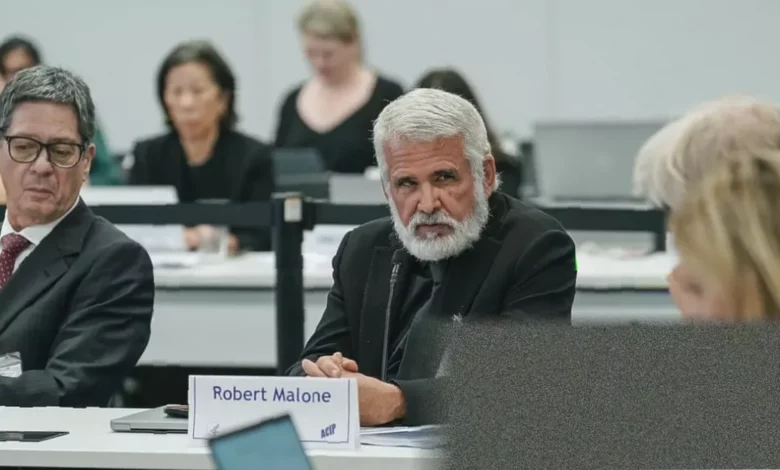
In the wake of this ruling, Dr Robert Malone, the controversial former co-chair of the reconstituted ACIP, has announced he is stepping down. Malone, who has repeatedly made disputed claims about vaccine safety and was once banned from Twitter for alleged misinformation, told Roll Call he was “done with the CDC and ACIP.”
He cited “unpaid labour,” “incredible hate,” and “sabotage” as reasons, adding that a public dispute with HHS spokesperson Andrew Nixon was “the last straw.” Malone confirmed that if offered a place on a relaunched committee, he would decline. His departure was noted by Joseph Hibbeln, another committee member appointed in June, who said Malone’s wish to “decrease drama” contrasted with his prior statements.
Martin Kulldorff, who chaired ACIP after Kennedy’s reconstitution, has since moved to a new role as chief science officer for HHS’s internal policy think tank. Of Malone’s decision, Kulldorff said he could “sympathize,” given the court ruling and the volunteer time required.
Vaccines in Limbo
The immediate consequence of the legal ruling is a vacuum in official vaccine guidance. The US now has no functioning advisory committee, meaning several key vaccines lack a current recommendation. This includes the latest versions of flu and Covid-19 shots, which are updated annually, and the inclusion of the RSV vaccine for infants in the federal Vaccines for Children programme.
While the judge’s order ensures insurance companies, Medicare, Medicaid, and the Vaccines for Children programme must continue covering vaccines as they did in January 2025, administration faces new hurdles. Pharmacists in some states may be wary of giving shots without an active ACIP recommendation, even though the PREP Act provides liability protection for administering Covid-19 and flu vaccines if they are CDC-recommended.
Richard Hughes IV, a lawyer for the AAP, stated, “We will challenge anything short of a qualified committee selected through the proper process.”
Leadership Uncertainty at the CDC
Adding to the institutional instability, the Centers for Disease Control and Prevention (CDC) itself is awaiting new permanent leadership. The agency is currently led by its fourth acting director in a year, Dr Jay Bhattacharya, who simultaneously runs the National Institutes of Health (NIH). Bhattacharya, a co-author of the sceptical Great Barrington Declaration, has been critical of past Covid-19 policies.
A new director must be named imminently, as federal rules require an appointment within 210 days of the previous director’s departure, after which acting directors can no longer serve.
HHS spokesperson Andrew Nixon has indicated the government intends to appeal the court’s ruling, calling it another attempt to hinder the administration. However, no official appeal has yet been filed, and the department is also reportedly considering the lengthy process of appointing an entirely new committee, which could take four to six months.
For now, the path forward for US vaccine policy remains blocked. As committee member Joseph Hibbeln observed, “It is better to make public health decisions based on data, not drama. Drama distracts from the real enemy… the new virus creating a new pandemic.”