In a race against time to salvage vanishing climate archives, scientists have inaugurated the world’s first natural deep-freeze repository for mountain glacier ice cores on the remote Antarctic plateau. The Ice Memory Foundation’s sanctuary, a specially excavated ice cave at the joint French-Italian Concordia station, is designed to preserve these irreplaceable records for future generations as the climate crisis accelerates glacier melt globally.
The inaugural cores, extracted from two rapidly shrinking Alpine glaciers, underscore the project’s urgency. They completed a meticulous 50-day journey to Antarctica, transported at a constant -20°C by sea aboard an icebreaker and then by plane, handled by the Italian National Antarctic Research Program (PNRA). Now secured in the ice cave, where temperatures are even colder than the station’s average of -52°C, they represent the first entries in what scientists hope will become a comprehensive library of Earth’s cryospheric past.
The Frozen Archives
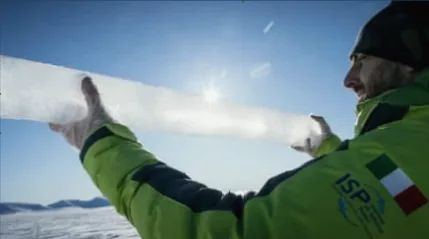
Ice cores are more than just ice; they are precise time machines. Drilled in segments typically 10 centimetres in diameter and over a metre long, they contain trapped air bubbles that snapshot ancient atmospheres, alongside dust, isotopes, and traces like pollen or lead pollution from the Roman era. This data allows researchers to reconstruct past temperatures, greenhouse gas concentrations, and environmental changes over hundreds of thousands of years—with the oldest continuous records extending up to 800,000 years in Antarctica. This historical baseline is critical for distinguishing natural climate variability from human-induced change and for validating models that predict future scenarios.
The Ice Memory project, launched in 2015 by an international consortium including France’s CNRS and IRD, the University of Grenoble-Alpes, Italy’s CNR and Ca’ Foscari University of Venice, and Switzerland’s Paul Scherrer Institute, aims to systematically collect and safeguard cores from endangered glaciers worldwide. The sanctuary’s inauguration on January 14, 2026—a live-streamed event at Concordia with over 300 scientists, diplomats, and journalists—marks a pivotal step in this mission, supported by funding from the Prince Albert II Foundation.
Engineering a Legacy in Ice
Antarctica was chosen for its uniquely stable natural cold, with temperatures at Concordia remaining between -50°C and -54°C year-round, eliminating the need for energy-intensive refrigeration. The station itself, perched on Dome C at 3,233 metres altitude, is one of the coldest and most remote places on Earth, with winter temperatures plunging to -80°C and crews isolated for up to nine months—conditions akin to a space station. Here, the ice cave provides a permanent, sunless vault.
Logistics are formidable. Extracting cores from remote glaciers requires specialized drills, and transport risks are high; a refrigeration failure could erase millennia of data. The project employs redundant systems and careful handling to mitigate this. Future expeditions are already planned to gather cores from threatened glaciers in the Andes, Pamir, Caucasus, and Svalbard regions. An international governance framework is being established to manage this archive as a lasting legacy for humanity, ensuring transparent access for scientists worldwide.
This endeavour aligns with the UN International Decade of Action for Cryospheric Sciences (2025–2034), highlighting the acute need to understand and address ice loss. Since 1975, glaciers have shed over 9,000 billion tonnes of ice—a volume equivalent to a block the size of Germany and 25 metres thick—disrupting water supplies and ecosystems. While other storage facilities exist, such as the National Science Foundation Ice Core Facility in the USA, the Antarctic sanctuary’s reliance on natural cold for centuries-long preservation is unique. It builds on a long history of ice core research, which even saw early projects like the US Camp Century in Greenland serve covert Cold War interests before being abandoned.
As the climate crisis intensifies, turning glaciers into ephemeral features, the race is on to secure these frozen diaries before their stories melt away forever. The Ice Memory Foundation’s sanctuary stands as a bulwark against that loss, a scientific investment in understanding our planet’s past to better navigate its future.