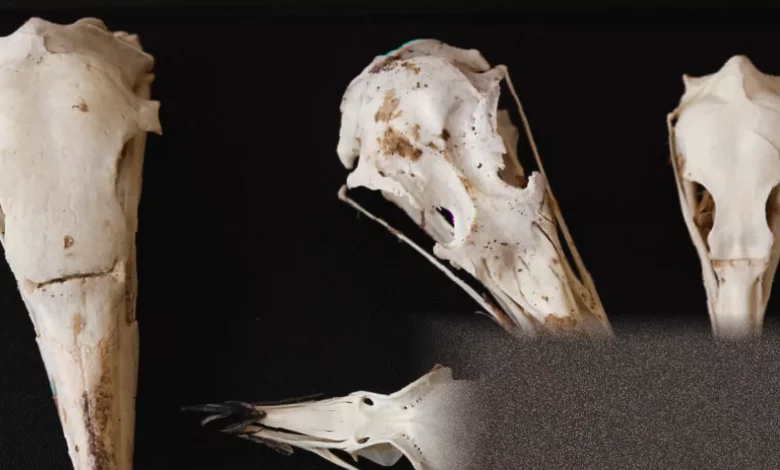
Scientists are turning to the behaviour of modern birds to unlock the secrets of what was going on inside the head of Tyrannosaurus rex, opening up the possibility of probing the cognitive lives of dinosaurs that have been dead for 66 million years.
At first glance, the link between a chicken pecking at a seed and a nine-tonne apex predator might seem tenuous. But the scientific consensus is clear: birds are a group of maniraptoran theropod dinosaurs that originated during the Mesozoic era, and they are the only dinosaur lineage to have survived the catastrophic asteroid impact that ended the Cretaceous period. As Professor Steve Brusatte, a palaeontologist at the University of Edinburgh, puts it: “I don’t think it’s totally percolated into the popular consciousness that birds are dinosaurs. They are real, true dinosaurs. This is not a turn of phrase.”
The challenge of reading a fossil mind
The core of the research is an attempt to infer the intelligence and mental capabilities of long-extinct dinosaurs by studying the brains of their living relatives. “We can’t put T rex through those tests,” Brusatte acknowledged. Instead, he and an international team of researchers are looking for “distinctive features of the brain that maybe tell you with 95% confidence that the animal with that kind of brain is capable of that kind of behaviour today”. If such features can be identified in modern birds, they argue, the same patterns can be sought in the fossilised braincases of dinosaurs like T. rex.
The approach is something of a long shot, but it is grounded in a rigorous comparative methodology. Scientists already know that some bird species are capable of complex cognitive feats — making and using tools, planning ahead, and even showing basic forms of empathy. Laboratory tests have suggested that emus can recognise that other birds might have different experiences or perspectives. The question is whether these behaviours leave a detectable signature in the structure of the brain. By examining the brains of modern birds that exhibit such traits, and comparing them to the brains of species that do not, researchers hope to build a catalogue of anatomical markers that correlate with specific cognitive abilities. Those markers can then be sought in the fossilised skulls of non-avian dinosaurs.
Brusatte, writing in his new book The Story of Birds, explains that the team is also looking for evidence of shared behaviour seen in modern animals — not just brain anatomy, but patterns of social interaction, problem-solving, and environmental adaptation that might have parallels in the fossil record. It is a multidisciplinary effort that draws on palaeontology, neurology, and comparative psychology.
Modern bird intelligence and the dinosaur connection
That birds are capable of such sophisticated cognition is a relatively recent revelation. Studies have shown that some corvids and parrots can solve multi-step problems, use tools, and even plan for future needs — abilities once thought to be the exclusive domain of mammals. The emu research adds a further dimension: an awareness that other individuals may hold different knowledge or experiences, a trait that suggests a rudimentary theory of mind.
These findings make birds the logical starting point for any attempt to reconstruct the mental life of dinosaurs. “If there are some distinctive features of the brain that maybe tell you with 95% confidence that the animal with that kind of brain is capable of that kind of behaviour today, then we can at least make predictions about these fossils,” Brusatte said.
Feathers, flight, and the long road from dinosaur to bird
The journey from T. rex to a robin was not a single mutation but a long, gradual process of evolution through natural selection. “It’s not like a T rex mutated into a chicken one day, and that’s how you got a bird from a dinosaur,” Brusatte noted. The first theropod dinosaurs appeared around 231.4 million years ago in the Late Triassic, and birds eventually evolved from small, specialised coelurosaurian theropods in the Late Jurassic.
Features now associated with birds — hollow, pneumatised bones, gastroliths, nest-building, and brooding — were already present in many non-avian dinosaurs. Feathers, too, evolved long before flight. “It just so happened that you had feathers that had probably originally evolved for insulation to keep these dinosaurs warm,” Brusatte said. “They’ve been modified into these display structures, these advertising billboards sticking off of the arms of some of these dinosaurs [as wings].” Without any grand plan, some small dinosaurs became light enough and had wings large enough to gain a little lift and thrust. Early birds still had teeth, claws, and long tails, and there were likely many different approaches to getting airborne. “There was a whole fantastic aviary of birds flapping and fluttering overhead of T rex and Triceratops until the asteroid hit,” Brusatte added.
The evolution of the bird beak itself was a modification of the dinosaur snout, a development that occurred as birds lost their ancestral hands and claws. The remarkable diversity in beak shapes among modern birds reflects their adaptation to countless ecological niches.
The asteroid that changed everything
Around 66 million years ago, a massive asteroid roughly 10–15 kilometres wide slammed into what is now Mexico’s Yucatán Peninsula, creating the Chicxulub crater. The impact triggered an “impact winter” — vast amounts of dust and aerosols blocked sunlight, caused global cooling, and devastated food chains. About 75% of Earth’s species perished, including all non-avian dinosaurs. Prolonged volcanic activity from the Deccan Traps may have acted as a buffering agent, mitigating some climate effects, but the extinction was overwhelmingly driven by the asteroid.
The only archosaur lineages to survive were those leading to modern birds and crocodilians. The feathered dinosaurs that made it through had a good hand of cards, Brusatte explained. They were strong flyers, grew rapidly from chick to adult, lived on the ground, and waded in shallow water — a bonus given that forests collapsed in the impact winter. Crucially, they had toothless beaks that allowed them to eat seeds, a food source that remained in the soil even after trees, leaves, and fruits were gone.
“All of those birds then died. Except for the modern-style birds,” Brusatte said.
Terror birds: a second reign of predators
In the wake of the extinction, evolution soon gave rise to creatures every bit as fearsome as the dinosaurs that had perished. The terror birds (Phorusrhacids) stalked South America for tens of millions of years, reaching up to 10 feet in height, with a head larger than a horse’s skull, fearsome claws, and a beak that was both hooked and razor sharp. “This was basically T rex reincarnated, a top predator, really big, tiny little arms, ferocious head,” Brusatte said. While predominantly South American, fossil evidence suggests terror birds may have also lived in Europe and Africa during the Eocene epoch, with some species — such as Titanis — migrating to North America and surviving until around two million years ago.
Living evidence in DNA and embryos
The evolutionary link between birds and dinosaurs is not just written in fossils; it is also revealed in their DNA. A six-day-old quail embryo has a pelvis that looks just like the hips of a theropod dinosaur such as T. rex. By tinkering with the genes of a chicken in an egg, it is possible to trigger — albeit fatally for the chick — the development of teeth. “When I look at these things and I see the photos of these genetic experiments, and I read the research papers, my mind is blown,” Brusatte said.
Then and now
The Story of Birds is not short on charismatic creatures, from the 150-million-year-old Archaeopteryx — the oldest fossil bird that became crucial in the fight to establish the theory of evolution — to the enormous “Demon Ducks”, whose eggs were eaten by the first Australian settlers, flightless birds like the doomed Dodo, and the hoatzin, a punky leaf-eating bird that lives in South America today and is constantly belching.
Yet birds today face significant threats: avian flu, habitat loss driven by urbanisation and agricultural expansion, poisons, killer cats, and collisions with glass buildings. Conservation efforts are crucial to protect and restore bird habitats. Despite these pressures, Brusatte remains upbeat. “Birds are survivors. They are adaptable, they evolve quickly, they change quickly. When they are confronted with a crisis, maybe not all of them make it through, but some of them do, and they can repopulate really quickly. That is the story of the asteroid. They were the only dinosaurs to survive.”