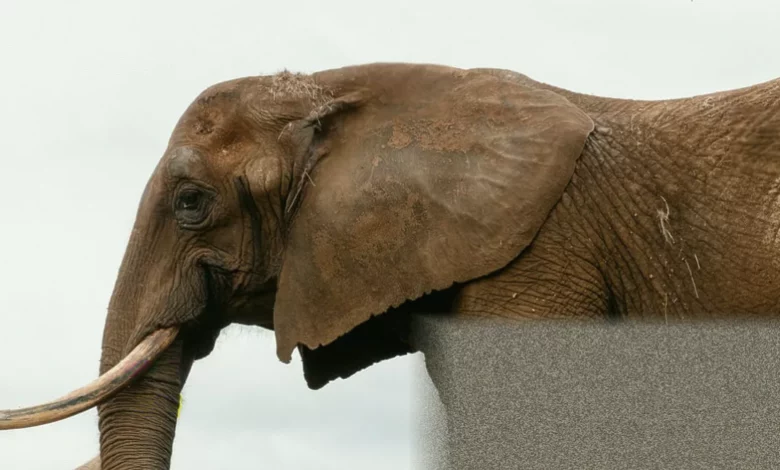
Europe’s first large-scale elephant sanctuary has opened its doors in the Alentejo region of Portugal, offering a more natural home for some of the hundreds of captive elephants still held across the continent. The multimillion-pound facility, run by the animal charity Pangea, will initially receive two African elephants in their forties: Julie, Portugal’s last circus elephant, and Kariba, who has been living alone in a Belgian zoo since her companion died.
First arrivals and their journeys
Julie will be moved next month from the Cardinali circus, where she had been cared for since being acquired from a German zoo in 1988. Her relocation follows Portugal’s ban on wild animals in circuses, which came into full effect in 2025, making her the last such animal to be rehomed under a voluntary agreement between the circus and Pangea. Vítor Hugo Cardinali, the circus director, said the decision was difficult but that working closely with the charity on her transition was a critical factor. “This has not been an easy decision, as she has been a deeply loved member of our family for decades, but we believe it is the right decision for Julie,” he said.
Kariba, also in her forties, is being relocated from Pakawi Park Zoo in Belgium, where she had been kept alone after the death of her companion, Jenny, in 2022. Originally captured in the wild in Zimbabwe in the mid-1980s after her family was lost to an ivory cull, she was sent to a German zoo as an orphaned calf and has spent approximately four decades in European zoos. She has been described as the last African elephant in Belgium.
Both elephants were caught in the wild and brought to Europe in the 1980s and are now reaching the end of their lives. The sanctuary’s managing director, Kate Moore, said: “Kariba and Julie will live in an expansive natural habitat where they can roam freely, bathe and socialise in compatible groups. That autonomy is really critical but they will also have expert care as well. Elephants are one of the most sentient and intelligent animals on earth and so they have very complex needs.”
Addressing the complex needs of captive elephants
Across Europe, around 600 elephants remain in captivity. Of these, 36 live in solitary confinement in zoos, and about 40 are still required to perform tricks in circuses. The plight of captive elephants is well documented: studies have found that African females in zoos live on average just 17 years, compared to 56 years in the wild when human-caused deaths are excluded. First-year mortality rates for captive-born Asian elephants in North America and the EU stand at about 30%, while wild African elephants experience mortality of 10–15%. Captive elephants are also susceptible to lameness, arthritis and stereotypic behaviours such as rocking and swaying caused by long-term psychological distress.
The Pangea sanctuary has been ten years in development and is situated on a former cattle ranch covering 402 hectares, with the initial enclosure spanning 28 hectares. Phase one construction of the first barn and enclosure was completed by December 2025. The charity plans to expand the site across the full 405 hectares through further fundraising, at which point it could house 20 to 30 elephants living “naturally”, roaming, grazing and wallowing in the lakes. The sanctuary will not be open to the public, although plans for a local Discovery Centre are underway.
Moore emphasised that the site’s rewilding principles are central to meeting the animals’ needs. The region was once home to straight-tusked elephants that roamed the Iberian peninsula 40,000 years ago, and the degraded ranch is being restored to a diverse ecosystem. “We’ve put a lot of effort into helping the nature recover on what was a degraded cattle ranch, following basic rewilding principles,” she said. “We know elephants can normally strengthen the ecosystems if we get the stocking density of the elephants right. It gives us this really interesting opportunity to see how the elephants are responding to the land and vice versa.”
Broader impact and the challenge of transition
The opening of the sanctuary comes at a time when many circuses and zoos across Europe are struggling to keep elephants due to changing legislation, the loss of companions, or a recognition that they cannot meet the animals’ complex needs. Although most EU countries have banned the use of wild animals in circuses, Germany remains an exception with only regional restrictions. In many cases, governments cannot confiscate animals from circuses because there are no sanctuary spaces available.
In the UK, the last circus elephant, Anne, was rehomed at Longleat Safari Park in 2011 after rescue from abuse. Now in her seventies, she lives alone and has not interacted with another elephant since 2001. Paignton Zoo in Devon decided in April 2022 to stop keeping elephants, stating it could not provide the necessary environment for such highly intelligent animals.
Pangea’s approach is to work in partnership with owners. Moore said: “Across Europe, circuses and zoos are reaching the point where keeping elephants is no longer possible or appropriate – whether through changing legislation, the loss of a companion, or a decision to move on. Working in partnership with owners to find the right solution is central to how we operate, as it has been with the Cardinali family. Elephant relocations are complex, and their continued involvement is invaluable. Our priority is to offer spaces to elephants in circuses or solitary confinement in zoos, but we’re very happy to work with anyone looking to transition away from elephants.”
Once fully expanded, the sanctuary could provide a natural life for up to 30 elephants, offering a model that campaigners hope will be repeated elsewhere. Training for Kariba’s move is scheduled for April 2026, with the first arrivals expected to settle into their new home in the months ahead.