Case before US supreme court could restrict consumers’ right to sue over lack of product risk warnings

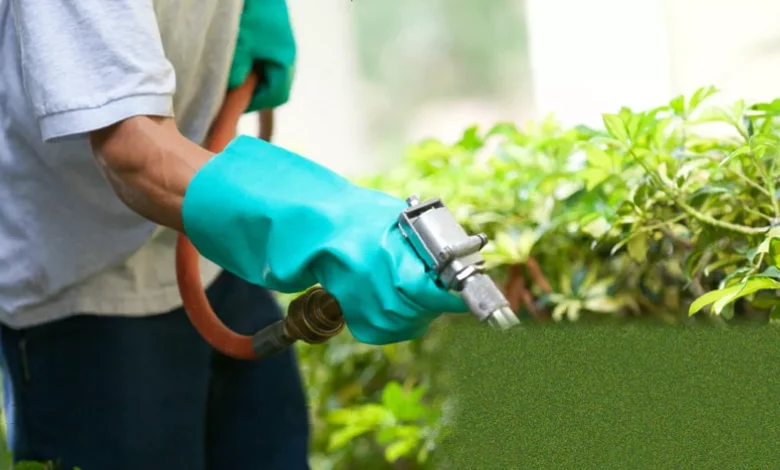
The US Supreme Court is set to hear arguments on Monday in a case that could reshape the legal landscape for consumer product lawsuits, with the justices asked to decide whether federal pesticide law strips people of the right to sue manufacturers over missing health warnings.
The dispute, Durnell v. Monsanto, centres on glyphosate, the active ingredient in the herbicide Roundup. The chemical has been classified by the World Health Organization’s cancer research arm as a probable human carcinogen, and thousands of Americans have brought claims alleging it caused non-Hodgkin lymphoma and other cancers. The case before the court arises from a lawsuit filed by John Durnell, who said his exposure to Roundup led to the disease. A Missouri jury awarded him $1.25m in damages, a verdict later upheld by the Missouri Court of Appeals.
Monsanto, now part of the German conglomerate Bayer, has spent the past decade fighting more than 100,000 lawsuits claiming it failed to warn customers of the cancer risk. Bayer has sought to put the litigation behind it, recently proposing a $7.25bn settlement to resolve tens of thousands of current and future claims. But the company is also asking the Supreme Court to rule on a legal question that, if answered in its favour, would pre-empt many of those lawsuits entirely.
The legal argument: FIFRA and the limits of state lawsuits
At the heart of the case is the Federal Insecticide, Fungicide, and Rodenticide Act (FIFRA), the US law that governs pesticide labelling. Monsanto argues that because the Environmental Protection Agency (EPA) has approved Roundup’s label without requiring a cancer warning, state-level failure-to-warn claims are blocked — a doctrine known as pre-emption. The EPA’s official position is that glyphosate is “unlikely” to be carcinogenic, and the company maintains that it cannot be held liable for failing to warn of a risk that the federal regulator has not recognised.
“If you have a pesticide label with a zillion different warnings, how is the user supposed to know the ones that really matter, the ones that EPA really has … determined are necessary?” said Lawrence Ebner, general counsel for the Atlantic Legal Foundation, which has filed a brief supporting Monsanto’s position.
Plaintiffs and their advocates disagree. They argue that state laws should allow people to sue for inadequate warnings even when the EPA has not mandated a specific label statement, and that the agency’s determinations are not legal barriers but merely scientific opinions. A ruling that sides with Monsanto, they contend, could leave victims without any legal recourse and allow companies to hide product risks with little accountability.
The legal landscape is divided. The Third Circuit Court of Appeals has held that FIFRA does pre-empt such claims, while the Ninth and Eleventh Circuits have ruled the opposite way. The Supreme Court’s decision, expected by the end of June, will resolve that split and determine the balance between federal regulatory authority and state-level consumer protection.
Jim Jones, who served as assistant administrator for the EPA’s office of chemical safety and pollution prevention under Barack Obama, has argued that states play a complementary role in pesticide regulation. He is among a group of former EPA officials who filed an amicus brief opposing Monsanto’s position. “It’s the perspective I’ve held throughout my career at EPA. I think it is the correct one,” Jones said in an interview.
The implications extend beyond Roundup. Syngenta, a Chinese-owned agrochemical company, is facing thousands of similar lawsuits alleging it failed to warn users about links between its paraquat herbicides and Parkinson’s disease. Other pesticide makers could also see their legal exposure limited if the Supreme Court rules for Monsanto, according to legal experts. The American Farm Bureau Federation and other agricultural groups have backed Monsanto, arguing that a loss could lead to glyphosate being removed from the market, jeopardising food production.
What is glyphosate and why does it matter?
Glyphosate is a weed-killing chemical first introduced by Monsanto in the 1970s. It became the active ingredient in Roundup, one of the most widely used herbicides in the world. In 2015, the World Health Organization’s International Agency for Research on Cancer classified the chemical as a probable human carcinogen, drawing on multiple studies that linked it to cancer. Bayer, which bought Monsanto in 2018, has consistently maintained that glyphosate‑based products are safe and do not cause cancer.
The scientific and regulatory debate is far from settled. The EPA’s own assessment holds that glyphosate is “unlikely” to be carcinogenic. But some former EPA officials and legal experts point out that the agency has not always adequately assessed health risks, and that it has routinely declined to require cancer warning labels even when ingredients were likely to cause cancer. That patchwork of federal and state positions has created what observers describe as a “patchwork of confusion” for consumers, farmers, and manufacturers alike.
A political divide: Trump administration versus the MAHA movement
The case has exposed a growing fracture between the Trump administration and grassroots elements of the “Make America Healthy Again” (MAHA) movement. Donald Trump’s solicitor general will deliver oral arguments before the court in favour of Monsanto, and in February the president issued an executive order to protect the production of glyphosate herbicides, citing their importance to national security and the agricultural economy.
Opposition to that stance is being voiced by health advocates who have organised a rally outside the Supreme Court building, branded as the People v Poison protest. “The Trump administration should know that siding with Bayer over American families is a losing position,” said Vani Hari, a leading health advocate and organiser of the rally. “People expect leadership that puts their health first – not policies that protect corporations from being held responsible.”
The Atlantic Legal Foundation and the American Farm Bureau Federation are among the groups filing briefs in support of Monsanto, arguing for uniformity in pesticide labelling. On the other side, environmental groups, public health advocates, and a cohort of former EPA officials are backing the plaintiffs, warning that a ruling for Bayer could erode decades of consumer protection law.
This story is co-published with the New Lede, a journalism project of the Environmental Working Group.