The chief constable of the Police Service of Northern Ireland has urged political leaders to stop “sniping” at each other and instead “advocate together” for policing, warning that a league table of who offers the most support only undermines the fight against terrorism.
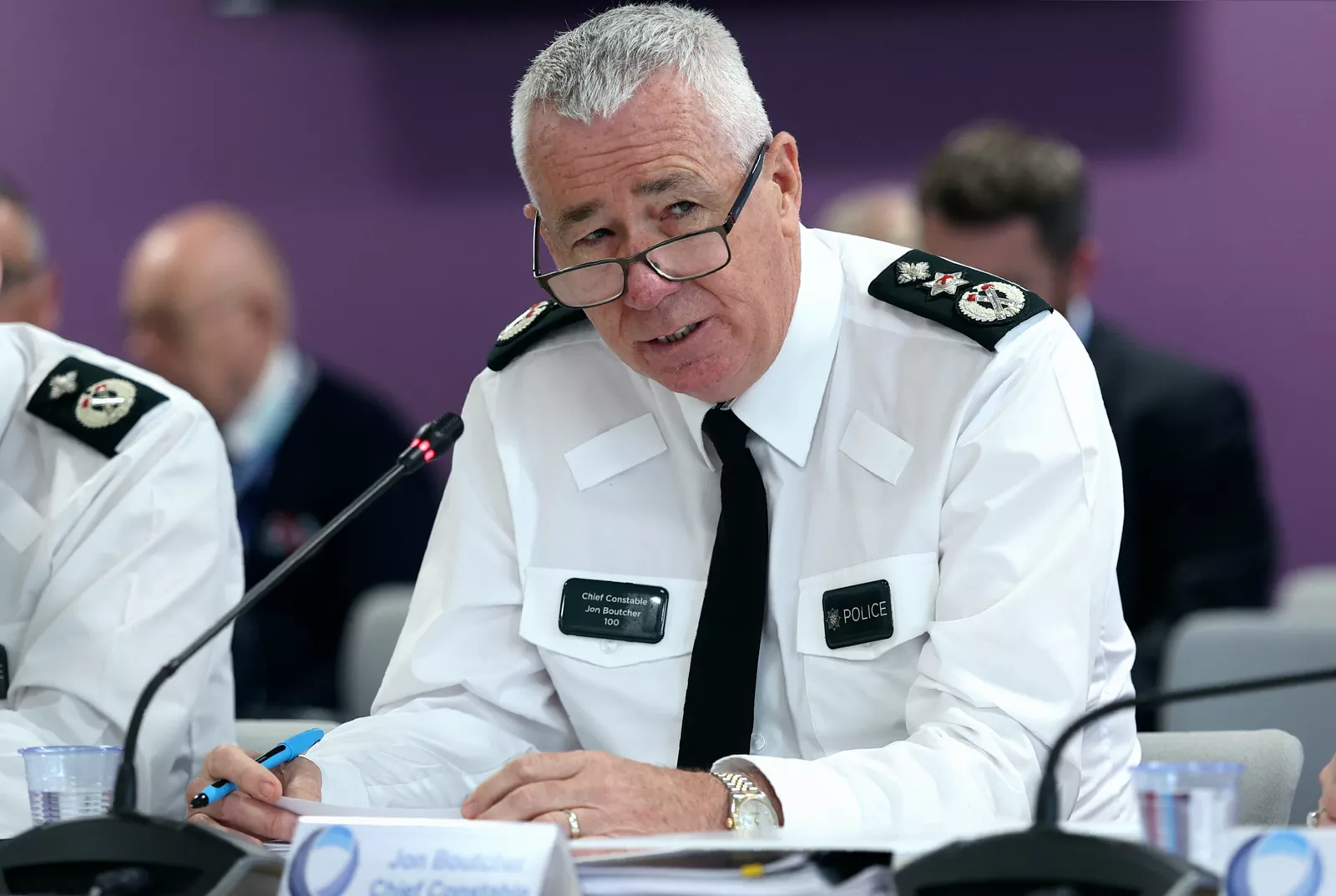
Jon Boutcher, speaking at the Policing Board, said he would not be “dragged into politics” but insisted the region needed a moment of unity comparable to when Ian Paisley and Martin McGuinness came together to pave the way for power‑sharing. “What I don’t want is a league table of who supports policing more,” he said. “These attacks are criminal terrorist attacks, they all need to be condemned.”
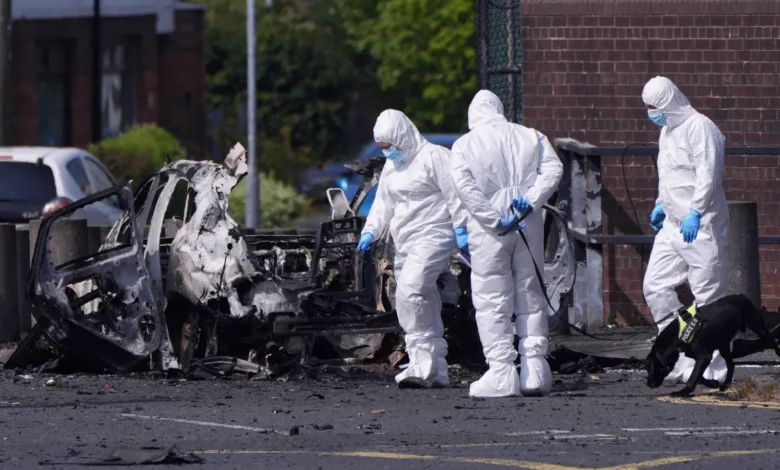
His remarks follow two recent dissident republican assaults on police stations—one in Dunmurry on 26 April and a foiled attempt in Lurgan on 30 March—both claimed by the New IRA. The Dunmurry attack involved a hijacked delivery car packed with a gas‑cylinder device that exploded outside the station. Mr Boutcher described the perpetrators as “cowards” who had treated a member of the public like a “human bomb”. “Even amongst the list of abhorrent terrorist tactics, this is a disturbing low,” he said. A 66‑year‑old man has since been charged with attempted murder and explosives offences. In the Lurgan incident, a food‑delivery driver was hijacked and forced to drive a device to the police station; three people—a 15‑year‑old boy, a 48‑year‑old man and a 39‑year‑old woman—have been arrested.
Political fall‑out after joint show of unity
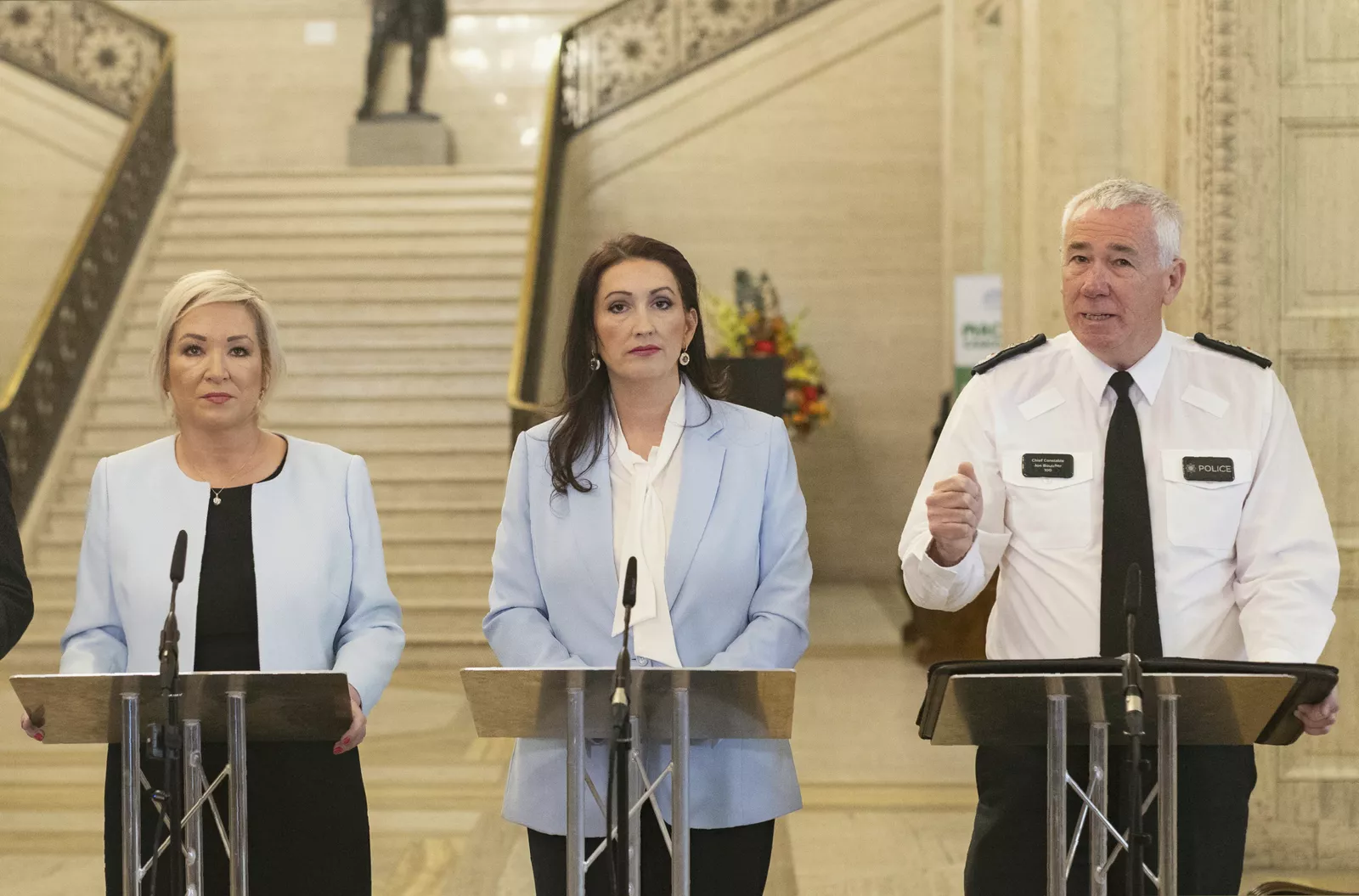
Immediately after the Dunmurry attack, First Minister Michelle O’Neill of Sinn Féin and Deputy First Minister Emma Little‑Pengelly of the DUP stood alongside Mr Boutcher at a press conference to condemn the bombing. That display of solidarity, however, quickly unravelled. DUP leader Gavin Robinson later questioned Sinn Féin’s level of support for policing, specifically challenging the party over its response to criticism of the chief constable visiting a school in Twinbrook. DUP board member Keith Buchanan amplified the attack, accusing political leaders of sending “mixed messages” about terrorism.
Mr Buchanan said: “Some political leaders will condemn an attack in 2026 but won’t condemn an attack in 1976. Yes, that’s 50 years ago, but the effects of that is still there. My point being groups seeing that and listening to that, an attack in 2026 is wrong, all attacks were wrong. You have to condemn all attacks. You just can’t say they’re regrettable.” He directly asked Mr Boutcher whether the failure to condemn all historical attacks “giving credence to some of these new groups that think what may have worked for them may work for us”.
Sinn Féin, through its Policing Board representative Gerry Kelly, has reaffirmed the party’s commitment to impartial policing and to its role on the board. But the DUP’s insistence on “visual and vocal support” beyond condemnation has reopened a long‑running debate about the depth of republican backing for the PSNI.
Chief constable’s plea for collective advocacy
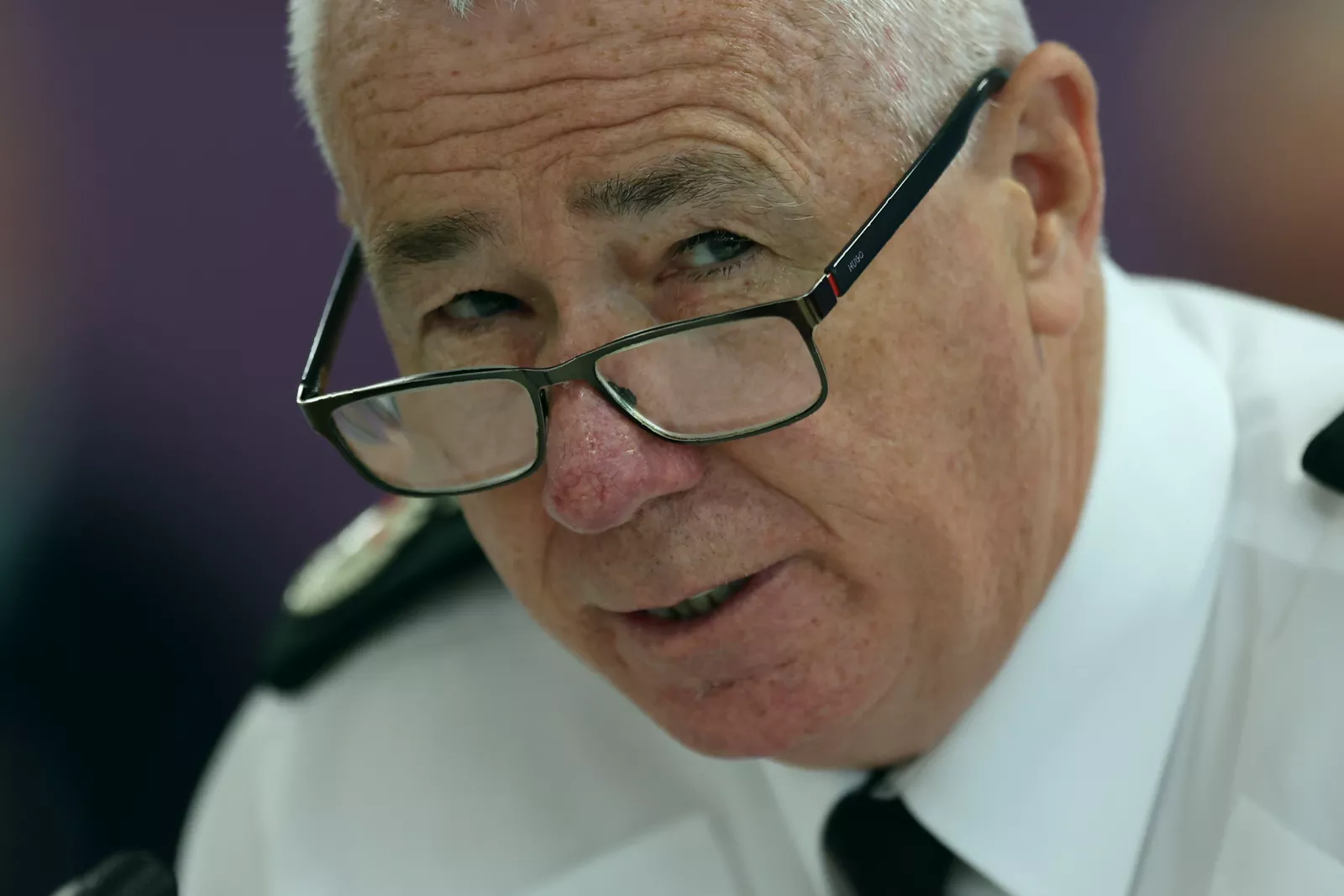
Mr Boutcher made clear that he saw the political squabbling as a distraction from the real challenge. “I’m speaking to political leaders because I don’t think enough has been done to advocate for policing, collectively, jointly,” he said. “What we need is a moment where we’ve seen previously with Reverend Paisley and Martin McGuinness coming together to make sure that this place moved forward.” He added that he had asked party leaders to “come together to advocate for policing together, not separately, not try to snipe at each other, together”.
The chief constable also voiced concern that political divisions were deterring people from joining the PSNI. He noted that the percentage of new Catholic applicants is at its lowest in more than a decade and that the number of Catholic officers “isn’t good enough”. Some recruits from nationalist backgrounds, he said, feared ostracisation from their own communities. He pointed to the Patten Report, which recommended that political leaders should actively encourage recruitment. “Community and political leaders should actively encourage people to join the police,” he said. “That’s what we need, that’s what the men and women of the PSNI need, and that’s what I’ve asked for.”
The wider context for Mr Boutcher’s appeal includes serious resourcing pressures that have forced the force to cut services, as well as recent findings of “institutional misogyny” and “systemic failures” within the PSNI. The chief constable has pledged zero tolerance for misogynistic behaviour, warning that officers who display it “will very quickly lose your job”. But he insisted that none of those internal problems should be used as an excuse for political point‑scoring over counter‑terrorism.
Mr Boutcher described the Dunmurry attack as “futile, senseless, unacceptable”. He paid tribute to officers who “ran towards the threat to evacuate nearby homes and bring residents, including families and very young children, to safety”. The PSNI has increased proactive patrols and vehicle checkpoints across the country in response. “We’re aware this may cause some inconvenience,” he said, “and we’re asking for patience as we strive to keep everybody safe.”
One person has appeared in court in connection with the Dunmurry bombing. The New IRA claimed responsibility for both attacks, which are seen as an effort to undermine the 1998 Good Friday Agreement and “make themselves relevant” by provoking fear.