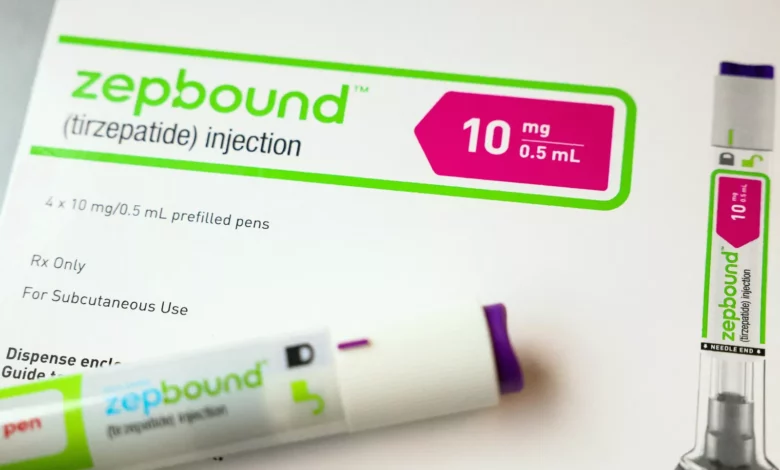
CVS Health has announced it will resume covering Eli Lilly’s weight-loss drugs, restoring the popular injectable Zepbound to its formulary and adding the newly approved oral pill Foundayo for the first time.
Reversal of a previous decision
The move, confirmed on Thursday, overturns a decision taken by CVS Caremark – one of the largest pharmacy benefit managers in the United States – which had removed Zepbound from its covered list on 1 July last year. At that time, the company chose instead to reimburse Novo Nordisk’s competing drug Wegovy, citing a more favourable pricing agreement. Following the announcement, Eli Lilly’s shares rose by more than 5% in morning trading.
Zepbound (tirzepatide) is now scheduled to return to CVS Caremark’s commercial formularies as an additional preferred option from 1 October. Foundayo (orforglipron), a once-daily oral pill with no food or timing restrictions, will be included in the standard commercial formulary template as a co-preferred weight-loss drug from Monday, after the removal of a new-to-market block that had previously excluded it.
What the new coverage means
Both drugs will sit alongside Novo Nordisk’s Wegovy as co-preferred options on CVS Caremark’s standard commercial formulary. A CVS spokesperson explained: “What this change means is that, for those clients that do choose to provide coverage, they will have equal access to both the Novo and Lilly products, and consumers will have the same copays for each.”
The decision means that all three of the largest US pharmacy benefit managers now cover Eli Lilly’s full portfolio of obesity medicines. BMO Capital Markets analyst Evan Seigerman noted that more affordable access through CVS’s network of approximately 90 million patients could significantly boost sales of Foundayo in the second half of the year.
How pharmacy benefit managers shape access and cost
Pharmacy benefit managers (PBMs) such as CVS Caremark act as intermediaries between drugmakers, health insurers and patients. They negotiate rebates with pharmaceutical companies and manage formularies – the lists of drugs that a health plan will cover – effectively deciding which treatments patients can obtain and at what price. Because PBMs control access to millions of covered lives, their formulary choices have a major influence on market competition and patient affordability.
The latest coverage expansion reverses a period in which CVS Caremark had favoured Novo Nordisk. In July last year, it removed Zepbound from its preferred formulary, elevating Wegovy after reaching a pricing agreement with Novo. That exclusion prompted patient pushback and a pending class-action lawsuit. Data from Truveta, a health research firm, indicates that following the May 2025 formulary change favouring semaglutide (the active ingredient in Wegovy), there was a significant but short-lived surge in patients switching from tirzepatide (Zepbound).
While CVS Caremark’s formulary now includes both Lilly and Novo products, individual employers and health plans that use CVS Caremark’s services retain discretion over whether to offer coverage for these drugs. The company has framed the change as part of a broader effort to improve affordability for employers that choose to include GLP-1 weight-loss treatments, stemming from negotiations with its pharmaceutical partners.
The situation highlights the powerful role PBMs play in the US healthcare system. In contrast, access to these drugs in the UK is governed by a different set of rules: GLP-1 medications are prescription-only and available on the NHS only for patients meeting strict criteria set by the National Institute for Health and Care Excellence (NICE). Private prescriptions are significantly more expensive than the NHS flat rate of £9.90 per item in England, although generic versions of older drugs such as liraglutide are becoming available.
Patient costs under the new regime
Eligible patients with commercial coverage can expect to pay as little as $25 a month for both Zepbound and Foundayo, aligning with the copay structure for Novo Nordisk’s Wegovy. The list price for Zepbound is approximately $1,086 per month, though Lilly offers reduced pricing for insured patients. Foundayo’s self-pay price starts at $149 per month for the lowest dose through LillyDirect, with eligible commercially insured patients able to reach the same $25 level using a savings card. For comparison, the cash price for a 28-day supply of Wegovy at CVS in 2026 averages $1,449, while Novo Nordisk’s direct-to-consumer programme lowers the cost of Wegovy injections to $349 per month and its oral option to $299 per month, with introductory offers as low as $199 for the first two months.