London Book Fair highlights thriller rights for Idris Elba, surging romcoms and censorship clashes

The final curtain fell on this year’s London Book Fair on Thursday, marking the end of an era for the industry’s largest gathering. As 33,000 publishers, agents, and authors departed Olympia for the last time before the event moves to a new venue, they left behind a marketplace buzzing with multimillion-pound deals and a series of urgent conversations about the future of the written word.
Star Deals and Market Trends
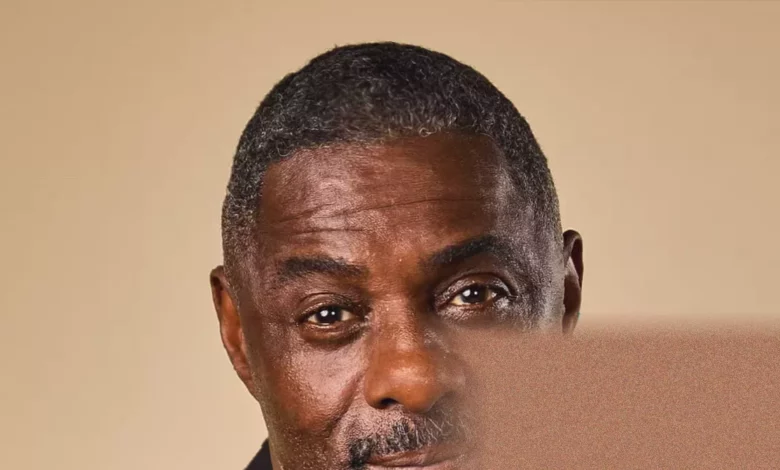
Leading the week’s high-profile acquisitions was a new thriller series, “Exiles,” co-authored by actor Idris Elba and screenwriter Adam Hamdy. The first book, set for release in May 2027, will see MI6 operative Joe Kane deployed to Mauritius to investigate an attempted murder. The deal, secured by Bantam in the US and Simon & Schuster in the UK, includes translation rights sold in 16 territories, with Elba’s production company holding the film and TV options.
Elsewhere, fantasy and romance proved robust market drivers. Sphere acquired journalist Moya Lothian-McLean’s debut “sharp, sexy romantic comedy,” Matchmakers, while two adult fantasy novels by Shannon Chakraborty were snapped up in a seven-figure deal. In nonfiction, current societal debates fuelled acquisitions: Dr Federica Amati’s guide to nutrition around GLP-1 medications, The Appetite Reset; Millie Gooch’s book on sober curiosity, Hangxiety; and ITV News editor Paul Brand’s examination of assisted dying, Fight to the Death.
Significant memoirs also found homes, with Macmillan and Bedford Square Publishers acquiring Alex Ferguson’s first autobiography in 13 years, Games of My Life, and Pan Macmillan securing the life story of designer Paul Smith, co-written with Richard Williams. DK Children’s will publish broadcaster Mishal Husain’s debut children’s book, which aims to equip young readers with skills to navigate information.
The National Year of Reading: A Launchpad, Not a Quick Fix
A major theme across the fair’s panels was the government’s National Year of Reading campaign. Conceived in late 2024 by Penguin chair Gail Rebuck during a meeting in the House of Lords with the Publishers Association’s Dan Conway, the initiative aims to combat a decline in reading for pleasure. Campaign director David Hayman reported that 16,000 of a targeted 100,000 volunteers have been recruited for the “Go All In” themed campaign.
Rebuck encouraged international publishers to adopt similar efforts using the UK’s “playbook.” However, Rosemary Thomas of the National Literacy Trust injected a note of realism, cautioning that “behaviour change doesn’t happen in a year.” She framed the campaign as a necessary “launchpad” for longer-term work, a sentiment echoed by Penguin Random House UK CEO Tom Weldon, who stressed the importance of building sustainable audience pipelines.
Confronting Censorship and DEI Rollbacks
Some of the most pressing challenges facing the industry were debated at English PEN’s literary salon. One panel grappled with whether US-style book censorship is spreading to the UK. Alison Hicks, an associate professor in library and information studies at UCL, cited her qualitative study, noting that while anecdotal evidence of removal requests—particularly for LGBTQ+ titles—is rising, challenges in the UK tend to come from individuals like parents or headteachers, “rather than organised groups as in the US.”
Louis Coiffait-Gunn, CEO of the Chartered Institute of Library and Information Professionals, underscored a critical lack of data. “There’s a sense of rising censorship as the UK catches a cold from America’s current ailments. But we do rely too much still on a few deeply worrying anecdotes,” he told audiences. Author Juno Dawson, whose This Book Is Gay is among the most-banned titles in the US, spoke alongside him.
A separate discussion focused on worrying rollbacks in diversity, equity, and inclusion. Selina Brown, founder of the Black British Book Festival, said she sees fewer books by Black authors presented in publisher meetings each year. “Some of the major publishers have even said, ‘We don’t have any books for you this year,’” she said. “They would never turn around and say, ‘We’ve got no white books.’ That would be mad.” Brown challenged “deeply embedded” stereotypes, including the notion that “Black people don’t read.”
Author Nikesh Shukla added that many books on race published in the wake of George Floyd’s murder in 2020 were rushed out “without much editorial work,” potentially forcing authors to pivot from their preferred genres to “meet a moment.”
Publishing Under Authoritarian Pressure
The threat of authoritarianism to publishing was another key focus for English PEN. Arabella Pike, publishing director at William Collins, stated that “books are the absolute opposite” of authoritarianism, detailing her defence of titles like Catherine Belton’s Putin’s People and Tom Burgis’s Kleptopia against intimidatory SLAPP lawsuits—strategic litigation against public participation.
Pike, who published Ukrainian writer Victoria Amelina’s Looking at Women Looking at War before Amelina was killed by a Russian missile in 2023, also revealed that HarperCollins had decided to continue selling books in Russia after the full-scale invasion of Ukraine. The rationale, she said, was that it remained “incredibly important” for Russian people to have access to fact-checked books not “distorted by censorship.” She called for reform of the UK’s “hideously” outdated defamation laws, citing their abuse by oligarchs with “very deep pockets.”
Author and poet Kit Fan, who renounced his Chinese citizenship, argued that authoritarian leaders “are shit-scared of these things called books.” He noted that the “first thing” totalitarian governments do is “burn all the records,” but that stories and poems persist by being “transmitted from one person to another.”
Audio Growth and AI Protests
Amid the debates, the audio sector was highlighted as a major market driver. Audible marked its 20th anniversary in the UK, with CEO Bob Carrigan stating that audio has become a “primary storytelling engine” for engaging new audiences.
However, a shadow was cast by ongoing tensions over artificial intelligence. Ahead of a government assessment on copyright law, a protest saw authors distributing “empty” books to highlight concerns that AI firms are using copyrighted works without permission or compensation—a technological challenge adding to the industry’s list of existential debates.