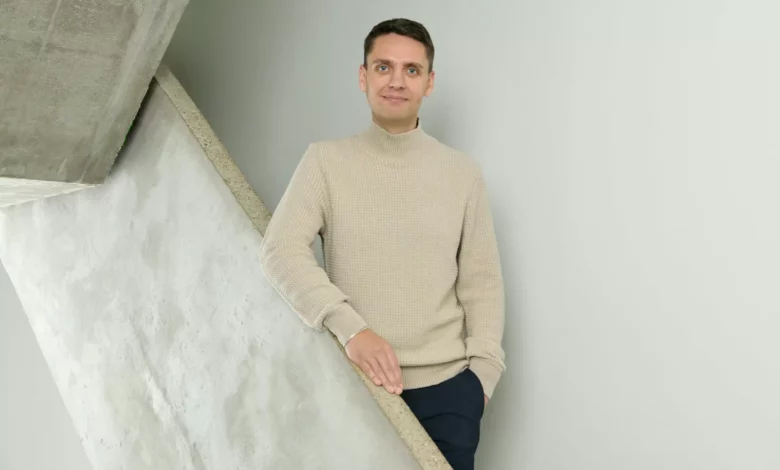
Young adults now capture more than 1,500 photographs every year, swelling digital archives that have turned smartphones into deeply personal storehouses of identity, relationships and life experience, according to Liam Houghton, founder and CEO of the photo product company Popsa. The sheer volume of images being recorded – more than the total number taken in the entire 19th century every two minutes, Houghton says – is driven largely by 18-to-24-year-olds and the visual nature of modern communication. But what appears to a machine as a vast image dataset is, for its owner, an intimate diary of moments that carry far more emotional weight than the numbers suggest.
The human weight of a crowded camera roll
For many people, the smartphone has become a storage device holding tens of thousands of pictures. Houghton, whose London-based company Popsa has spent years building artificial intelligence that works directly with users’ photo libraries, argues that the scale of images is not merely a technical problem but a profoundly human one with real consequences for health and wellbeing. The constant pressure to share – to update others on location, activity and company – creates an ongoing tension between public vulnerability and the desire for validation, particularly on social media platforms where photographs are heavily edited and scrutinised. Yet Houghton notes a recurring pattern in the camera rolls his systems engage with: the photos people care about most are rarely the ones they ever posted.
This observation chimes with broader research into digital memory, which suggests that our curated archives significantly affect psychological wellbeing. Digital artifacts can evoke nostalgia and reinforce identity, but the sheer volume of images can also be overwhelming. Studies indicate that people feel social pressure to capture their lives photographically, and an over-reliance on digital records may diminish the richness of independent recall – a phenomenon sometimes described as digital amnesia. Popsa’s own mission, Houghton says, is to help users process their lives and relationships through reflection on their photos, aiming to boost self-esteem and emotional wellbeing by surfacing forgotten moments and meaningful experiences rather than “highlight reel” content.
How AI is learning to navigate personal memory
Less attention has been paid to the positive role artificial intelligence can play in helping people manage overwhelming camera rolls. Houghton describes how computer vision systems, including those built by Popsa, can detect faces, landmarks and objects with high accuracy, enabling them to cluster similar photos and resurface moments users had forgotten. Popsa, founded in 2016 by Houghton and Tom Cohen, operates an online platform for personalised photo products and has grown rapidly: revenues reached £33.4 million in 2024, serving over 10 million customers in 50 countries. The company has raised more than $18.6 million from investors including Pembroke VCT, Guinness Global Investments, Octopus Investments and Gresham House Ventures.
Popsa’s proprietary “PrintAI” algorithm, released in 2018, analyses photo libraries to create automatic layouts, suggest titles and captions, and organise images by identifying faces, landmarks and objects. The company emphasises a privacy-first approach, using edge computing – running AI models on users’ own devices – wherever possible to keep personal data local and minimise transfer to the cloud. It also employs generative AI, including Amazon Bedrock models, for features such as creative title suggestions across multiple languages. Over time, Popsa’s system builds a “Popsa Experience Graph”, aiming to develop a deep understanding of users’ memories and life patterns through continued use. The company achieved B Corp certification, signalling a commitment to governance, employee treatment, community engagement and environmental stewardship.
Houghton stresses that technology should be designed for reflection, not validation. He argues that the greatest positive impact comes when AI helps individuals reconnect with relationships, experiences and genuine meaning, breaking the cycle of endless comparison that social media can encourage. The challenge, he says, is building systems that encourage context and meaningful connection rather than feeding a demand for external approval.
Ethical guardrails in the age of AI memory curation
The ability to explore identity and share experiences digitally can be hugely positive, particularly for younger generations growing up in a tech-influenced world. But Houghton warns that the greatest responsibility emerges when technology interacts directly with personal photo libraries, which have become increasingly diary-like, containing the full spectrum of human experience: celebrations, grief, illness, relationships, children, ageing parents and deeply emotional life events. “Our photos show us who we really are,” he writes. At first glance, automated organisation seems straightforward, but when dealing with libraries of tens of thousands of images, the AI is making thousands of decisions on each user’s behalf – choosing which moments to prioritise, which relationships to surface and which memories deserve revisiting.
At that scale, even a small error rate can be emotionally significant. A resurfaced image shown in the wrong context can unexpectedly reopen grief or misrepresent deeply personal experiences. Popsa has designed specific guardrails around this, but Houghton acknowledges the company does not believe it has fully solved the problem. The limits of automated interpretation are clear: a young person may have photos that, when revisited, surface trauma, while an image that looks insignificant to an algorithm might carry enormous emotional weight because of who was present or what happened immediately afterwards. “Perfectly understanding the meaning an image holds for a specific individual is rarely possible,” he says.
The UK does not currently have a single, overarching AI-specific law. Instead, artificial intelligence is regulated through existing frameworks, with sector-specific guidance from bodies such as the Information Commissioner’s Office (ICO). Key legislation includes the UK GDPR and the Data Protection Act 2018, which govern the processing of personal data and mandate principles of fairness, transparency and accountability. The ICO has provided guidance on AI and data protection, emphasising fairness and the need for Data Protection Impact Assessments for high-risk applications. The UK government’s approach is principles-based, focusing on safety, security, transparency, fairness, accountability and contestability. Popsa states its systems are configured to comply with GDPR and uses measures such as encryption and the principle of least privilege, alongside edge computing to minimise data transfer.
Broader ethical concerns raised by the research briefing include the risk of privacy and surveillance blurring into invasive monitoring, bias in training datasets that can produce discriminatory outcomes, and the need for transparency and accountability when AI decisions affect individuals. Houghton argues that anyone building AI systems that interact with personal memories quickly realises these decisions are not purely technical. Privacy, trust and human context must shape these platforms from the outset. The role of AI, he says, should not be to determine meaning on someone’s behalf, but to surface moments people may want to revisit while recognising that the emotional interpretation ultimately belongs to the individual. “When technology curates memories, it is interacting with identity, relationships and personal history,” he writes.
Success, in Houghton’s view, lies not simply in building systems that organise photos more efficiently, but in creating technology that understands the emotional weight behind memory, identity and wellbeing. As AI capabilities expand, the temptation will be to automate more of our digital lives – but any system entrusted with personal data must recognise that it is operating in one of the most deeply human spaces technology can enter.